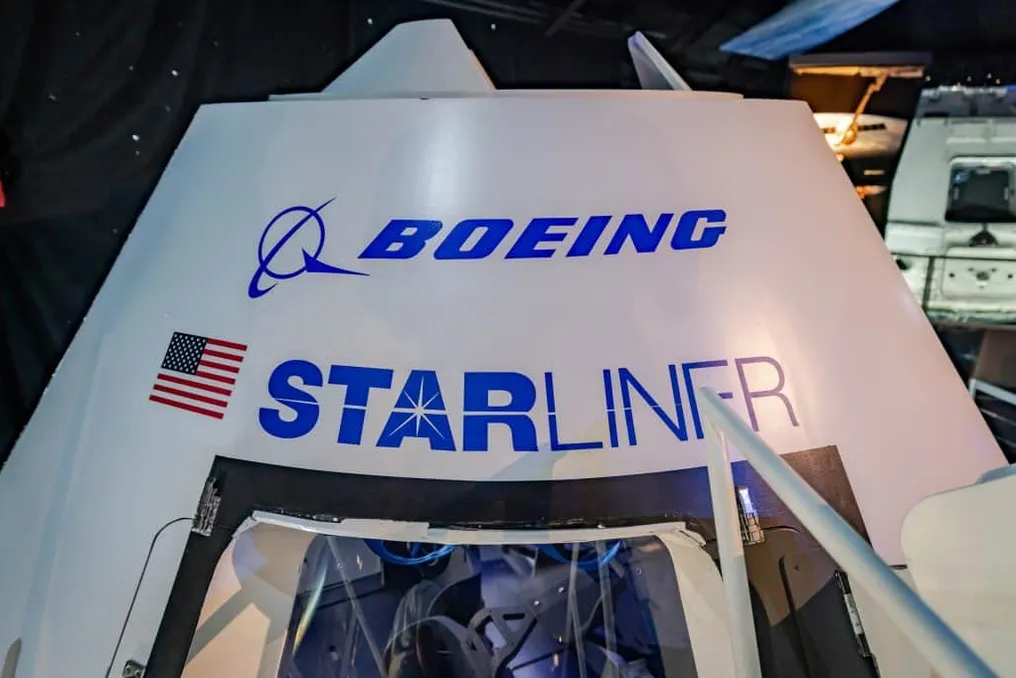
NASA announced on Monday (28) the plan to conduct two new missions to boost the operational entry of Starliner, the spacecraft developed by Boeing, which faced problems during a crewed flight in 2024.
The first flight will be conducted without astronauts and is scheduled for mid-2027. This test aims to confirm the modifications implemented after the setbacks of the previous mission before considering a new crewed flight, planned for 2028.
This decision was made months after NASA concluded an analysis of the 2024 crewed flight. The report pointed to failures on both the part of Boeing and the agency itself, warning that the mission could have resulted in a tragedy.
During the problematic flight, the propulsion system experienced failures. Consequently, NASA opted to return Starliner to Earth without a crew and contracted SpaceX to bring astronauts Suni Williams and Butch Wilmore back. These two remained at the International Space Station (ISS), an orbital laboratory located around the Earth, for more than nine months.
With this new schedule, the agency intends to apply the changes in an uncrewed mission before resuming the transport of people aboard. The next flight destined for the ISS is scheduled for December 2026. Jared Isaacman, NASA administrator, stated that this mission will enable the validation of recent corrections and the collection of data for subsequent phases.
Isaacman detailed the planning, stating: “From there, we will gather information, continue implementing the other recommended changes (…) and plan a Starliner 2 crewed mission in 2028.”
The resumption of Starliner is also linked to NASA's current dependence on SpaceX's Crew Dragon. Since 2020, this spacecraft has been the only American space vehicle used for trips to the ISS.
This situation may change in the coming years, as SpaceX has announced its intention to end the production of the Crew Dragon, which intensifies NASA's interest in having a secondary alternative for astronaut transport.
Additionally, Starliner may be used in missions destined for future commercial space stations, which are expected to succeed the ISS after its orbital decommissioning, anticipated around 2030. The new flight will serve to confirm whether the implemented corrections allow Starliner to proceed to a crewed mission.