
IHH plans to increase stake in Fortis to 51% following Supreme Court ruling on forensic audit
Read more
Business Standard
business-standard.com

IHH plans to increase stake in Fortis to 51% following Supreme Court ruling on forensic audit

Malaysian healthcare giant IHH Healthcare confirmed on Tuesday its intention to continue plans to increase its stake in the Fortis Healthcare hospital network to 51% over the next three to five years. This will allow for an expansion of total capacity to approximately 10,000 beds by 2031.

The company stated in a transaction report that India remains a key strategic market for IHH, and it intends to deepen its presence and increase investments in the country through Fortis.

Audit Details

This statement followed just days after the Supreme Court upheld the Delhi High Court's decision, which mandates a forensic audit regarding the alleged asset stripping by former Fortis promoters, brothers Malvinder and Shivinder Singh. These actions took place during enforcement proceedings initiated by Japanese pharmaceutical manufacturer Daiichi Sankyo.

The audit will cover not only the brothers but also banks and financial institutions involved in the transactions concerning assets claimed to be available for repayment of the awarded sum. Fortis, its directors and officers, company secretary, compliance officer, registrar and transfer agent, custodian, and other intermediaries will also be under close scrutiny.

IHH publicly declared its full willingness to cooperate with the forensic audit, expressing confidence that the independent review will objectively establish the facts concerning this transaction.

IHH currently holds a 31.17% stake in Fortis Healthcare; of this amount, 31% was acquired through its subsidiary NTK Ventures in November 2018 via a preferential placement of newly issued Fortis shares worth 4,000 crore rupees.

However, this deal came under legal scrutiny after Daiichi alleged that the Singh brothers sold assets, pledged shares, including Fortis Healthcare shares, and diverted funds in violation of a court arbitration award amounting to 2,562 crore rupees.

IHH argued that this transaction received all necessary corporate, shareholder, and regulatory approvals, including those required under the Competition Commission of India (CCI) merger rules and Securities and Exchange Board of India (SEBI) regulations.

The statement also emphasized that the secondary shares were not purchased from the former promoters and debtors, Malvinder Mohan Singh and Shivinder Mohan Singh, and no payments were made to them.

IHH added that the Singh brothers left the Fortis board of directors in March 2018, after which the company was controlled by a reconstituted three-member independent board appointed by activists among minority investors. The company reported that IHH was among several bidders invited to the sale process. The statement said: 'IHH's investment in Fortis occurred in November 2018, many months after the Singh brothers left the Fortis board of directors.'

IHH stated that it was not a party to the dispute or the enforcement proceedings between Daiichi Sankyo and its debtors. Nevertheless, the company noted that it incurred losses due to delays in obtaining mandatory tender offer approvals necessary for acquiring Fortis.

As a result, IHH and its subsidiary NTK demanded compensation of up to 10,930 crore rupees from Daiichi, which was rejected by the Tokyo District Court in early September. IHH contended that Daiichi's actions prevented NTK from making open offers to acquire additional shares in Fortis and Fortis Malar Hospitals. The Malaysian company was forced to suspend its mandatory open offer to acquire an additional 26% in Fortis seven years after Daiichi filed a contempt of court suit against the Singh brothers.
Similar stories

Experts Discuss Investment Potential and Job Creation in Bihar on 'Panchayat Aajtak Bihar' Platform
Read more
www.aajtak.in

Experts Discuss Investment Potential and Job Creation in Bihar on 'Panchayat Aajtak Bihar' Platform

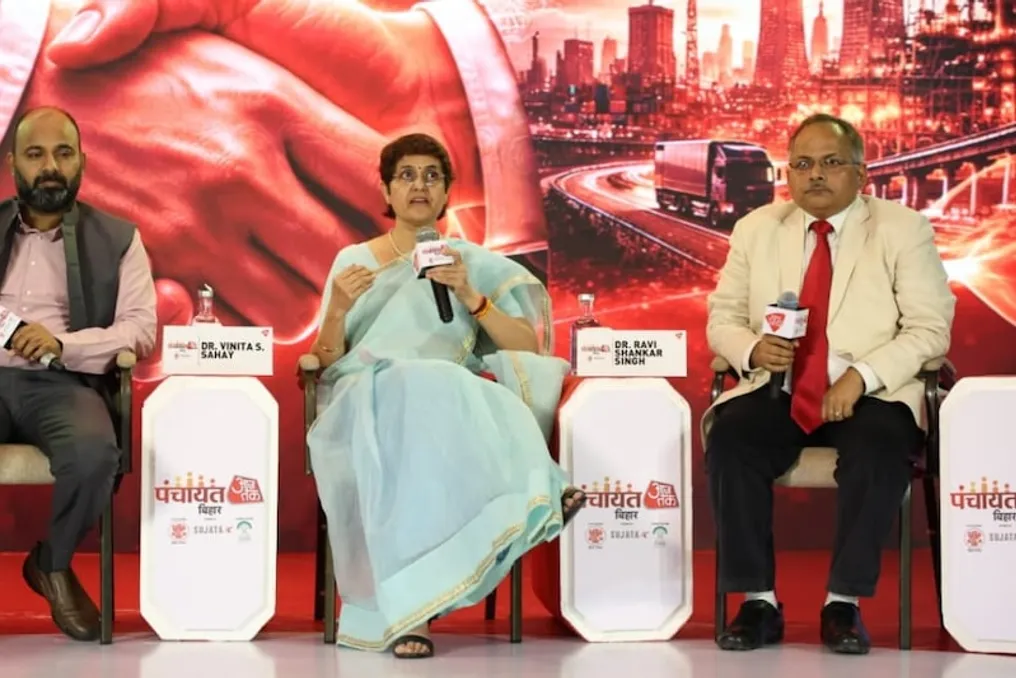
During the session 'Business ki Bahar hai... Naya Bihar hai!' on the 'Panchayat Aajtak Bihar' platform, a detailed discussion was held regarding business prospects, employment, and investment in Bihar. The discussion included Nitish Kumar Singh, Director of Mefeir Hotels; Dr. Vinita S. Sahai, Director of IIM Bodh Gaya; and Dr. Ravi Shankar Singh, Medical Director of Medanta Patna.

Throughout the discussion, all three speakers shared their views on the challenges hindering investment in Bihar, changes in the current environment, and potential areas such as education and healthcare, as well as the overall image of the state.

Nitish Kumar Singh, Managing Director of Mefeir Hotels, emphasized that commercial viability is the most crucial aspect of any enterprise. He noted that significant structural changes have occurred over the last two decades, preparing Bihar to receive investments. According to him, roads, electricity, and a safe environment are necessary for any industry. He mentioned projects like the Patna-Poonya Expressway, noting that transport accessibility will improve in the future, and the power supply situation has also changed significantly, providing energy to industrial enterprises.

Singh believes that Bihar is now ready for investment, and it is a 'time to start.' However, he also pointed out the need to build trust between industrial circles and to change mindsets among the general public. Entrepreneurs are often perceived solely as profit-seekers, whereas any company provides jobs, pays salaries to employees, and its success benefits the entire economy.

He added that there has long been a strong preference in Bihar for government service, with families often favoring young people in government roles when choosing a spouse. Singh insisted on the necessity of changing this attitude towards supporting entrepreneurship and business.

Dr. Ravi Shankar Singh, Medical Director of Medanta Patna, shared his experience working in Bihar's healthcare sector. He stated that previously, one of the major problems was land availability: large plots were difficult to access, and obtaining land faced numerous obstacles. However, according to him, the situation is changing due to the creation of land funds and the invitation of investors. He also noted that Bihar must define its priority sectors, as it is impossible to develop in all areas simultaneously.

Singh named education and healthcare as areas with great potential for Bihar. Since Bihar's population is about 140 million, the healthcare sector can become a large market. Medical education and universities can also become centers for attracting investment and jobs. Nevertheless, this requires large land parcels and active dialogue with investors.

Dr. Singh recalled that initially, there was a question of whether a large hospital could survive and if people would use its services. But gradually, the situation has changed, and large medical institutions have appeared in Bihar. These hospitals are not only functioning successfully but are also setting new standards of medical care. He stressed that this progress indicates both potential and demand in Bihar's healthcare sector. At the same time, he clearly stated that business does not develop solely through divine grace or private efforts; the support of the state machinery is critically important for any major investment.

Ravi Shankar Singh concluded that the medical services market in Bihar is so vast that providing quality healthcare for its own population requires a large number of large hospitals and institutions. He also noted that the number of doctors and specialists in the state is growing compared to the past, and the emergence of large hospitals reduces the forced need for residents to seek treatment outside the state.

Dr. Vinita S. Sahai, Director of IIM Bodh Gaya, viewed the issue of economic growth and employment in Bihar from a different perspective. She noted that while statistics show positive GDP growth in Bihar, the flip side must also be considered. The state's economy is growing rapidly, but the picture changes when looking at per capita income, so relying solely on a high growth rate is insufficient.

Citing the example of IIM Bodh Gaya, she said that in a state often viewed as having a shortage of industry and corporate sector, students and talent come from different parts of the country to study at IIM Bodh Gaya. In her opinion, such educational institutions can play an important role in changing the public perception of Bihar.

Popular