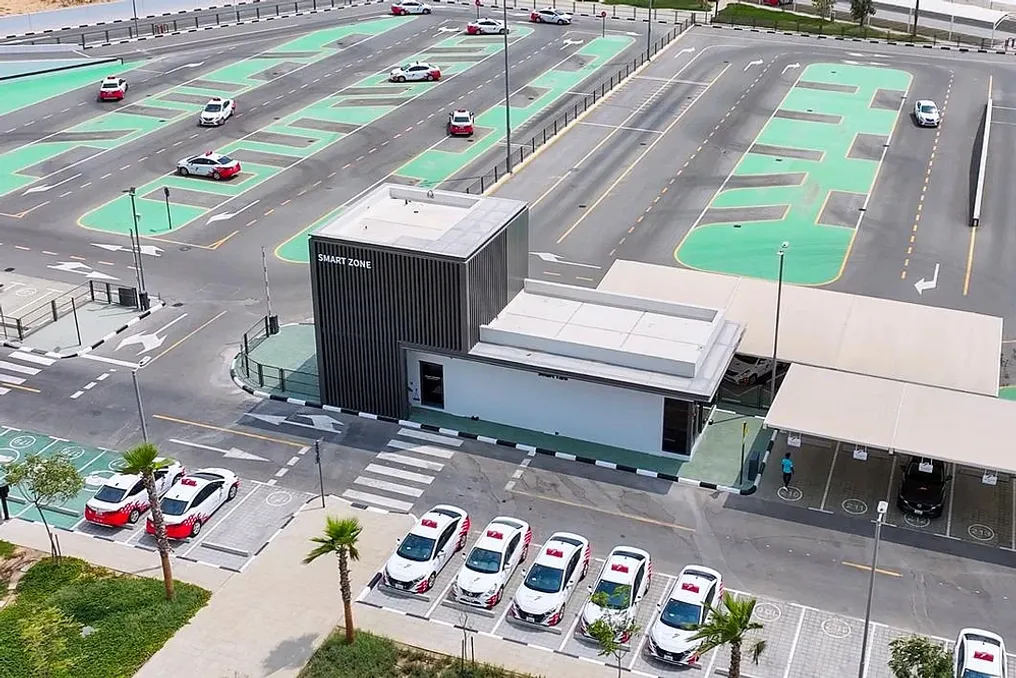
Drivers obtaining licenses in Dubai can now review their test drives and understand the reasons for failure thanks to the updated intelligent testing system implemented by the Roads and Transport Authority (RTA).
The new Smart Test System enables trainees to replay their vehicle's route and study the mistakes made through visual evidence. An interactive 3D map displays the path taken during the test and marks locations of both serious and minor faults, helping trainees understand what they need to work on to improve their skills.
This system is used when checking maneuvers in passenger vehicles. It utilizes artificial intelligence, computer vision, and data analysis to monitor driving maneuvers in real-time and calculate results according to established criteria, without human intervention in the scoring process.
Sultan Al Akraf, Director of Driver Licensing at the RTA Licensing Agency, noted that this system promotes consistency in evaluations and provides trainees with a clearer understanding of their results. He emphasized: 'The system goes beyond simply automating test result calculation. It provides an integrated framework for monitoring and analyzing a trainee's performance in various maneuvers, presenting recorded errors in an understandable visual format.' He added that this allows clients to understand the reasons for their results and identify areas needing improvement.
Intelligent cameras monitor whether trainees look in mirrors and check blind spots, as well as how they position their hands on the steering wheel while performing maneuvers. Facial recognition is used to confirm the trainee's identity and link the result to the correct person. The update also includes vehicle tracking technology with positioning accuracy up to two centimeters. This technology, known as real-time kinematic positioning, helps the system detect errors related to the vehicle's trajectory and parking position.
For the trainees themselves, the recorded route provides more information than just a 'passed' or 'failed' result. They can see exactly where the error occurred and why it was recorded, giving them a clearer picture of the skills they need to work on before the next test. The system is also equipped with safety features designed to prevent collisions in the testing area. Its automatic braking system intervenes if a situation arises that could lead to an accident or endanger the trainee, the vehicle, or the surrounding area.
Al Akraf stated that AI-based collision prevention and proactive emergency braking will help create a safer testing environment, mitigating risks before an incident occurs. According to RTA data, the system is designed to operate stably in various weather conditions and lighting, both day and night, thereby reducing the influence of external factors on the evaluation process. Test results can also be linked to the educational system, allowing performance data to be used to determine each trainee's individual needs. This can be applied to adapt curricula and focus training on areas where the trainee requires additional practice.