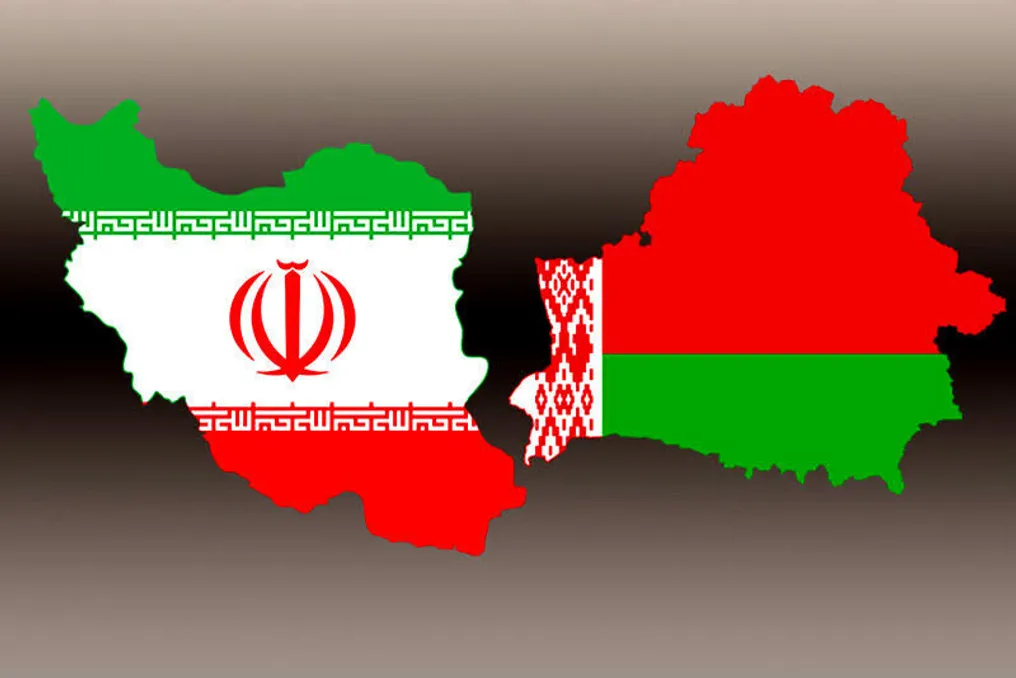
Ahead of the joint economic committee meeting of Iran and Belarus, the General Director of the Center Asia, Caucasus, and Russia Department of the Iranian Trade Promotion Organization announced that the trade volume between Iran and Belarus in 2025 amounted to $76 million.
According to IRNA, citing the Iranian Trade Promotion Organization, Mehdi Babaei noted that agricultural and petrochemical products constituted the largest share of Iran's exports to Belarus. He also stated that the 19th meeting of the Joint Committee on Economic Cooperation between Iran and Belarus will take place with the participation of the Minister of Industry, Mining, and Trade, as well as the Minister of Industry of the Republic of Belarus.
Babaei considers the holding of joint committees to be the foundation for strengthening and expanding mutual cooperation between the two countries. The focus of this meeting will be on developing interaction in the fields of trade and industry, agriculture, investment, healthcare, and pharmaceuticals, as well as strengthening ties between the private sectors of both countries to maximize economic and trade relations between Iran and Belarus.
According to him, following this meeting, a memorandum of understanding will be signed between the ministers of industry of the two states. Other planned events include a meeting with the Prime Minister and officials of the Republic of Belarus, as well as the opening of a special Iranian trade pavilion for Eurasian Economic Union member states at the 'InnoProm Belarus' exhibition.
In mid-August, the Deputy Minister of Agriculture of Iran for Planning and Economic Affairs held a meeting with the Minister of Agriculture and Food of Belarus, emphasizing the need to develop bilateral cooperation in the areas of agricultural fertilizers, mechanical engineering, and joint investments.
According to Mehr News Agency, Akbar Fati, Deputy Minister of Agriculture of Iran for Planning and Economic Affairs, met with Yuriy Gorlov, Minister of Agriculture and Food of the Republic of Belarus, within the framework of the seventh meeting of the Council on Agricultural and Industrial Policy of the Eurasian Economic Union, which took place in Almaty, Kazakhstan.
During this meeting, potential opportunities and directions for agricultural and economic cooperation between the Islamic Republic of Iran and the Republic of Belarus were discussed. Both sides emphasized the importance of strengthening bilateral contacts and utilizing available resources to develop trade and investment in the agrarian sector.
One of the key areas of negotiation was the continuation and development of cooperation in the supply and trade of potassium and phosphate fertilizers. In this regard, existing opportunities for expanding trade interaction were considered, as were areas for joint investment in the production and supply of agro-food resources.
The Iranian side, pointing to the importance of stable supply of resources necessary for agriculture, emphasized the use of the capacities of EAEU member states to diversify supply sources and develop long-term partnerships.
The meeting also discussed possibilities for joint cooperation in the field of agricultural machinery and equipment. The parties agreed to identify the potential of manufacturing companies and private sector activists of both countries to pave the way for exchanges, technology transfers, and joint investments in agricultural machinery.
Another focus was the trade of agricultural and food products between Iran and Belarus. In this context, the potential for increasing trade turnover in areas such as poultry meat, dairy products, and various fruits was analyzed, and the need to facilitate trade and create favorable conditions for greater presence of producers and exporters of both countries in each other's markets was emphasized.
Furthermore, the issue of developing trade ties and utilizing existing agreements and mechanisms to increase the volume of exchange of agricultural and food products was considered. At the end of the meeting, both sides stressed the need to continue consultations and subsequent monitoring of the issues raised in order to develop joint investments, increase agricultural trade, strengthen cooperation in resources and agricultural machinery, and create new opportunities for private sector interaction.