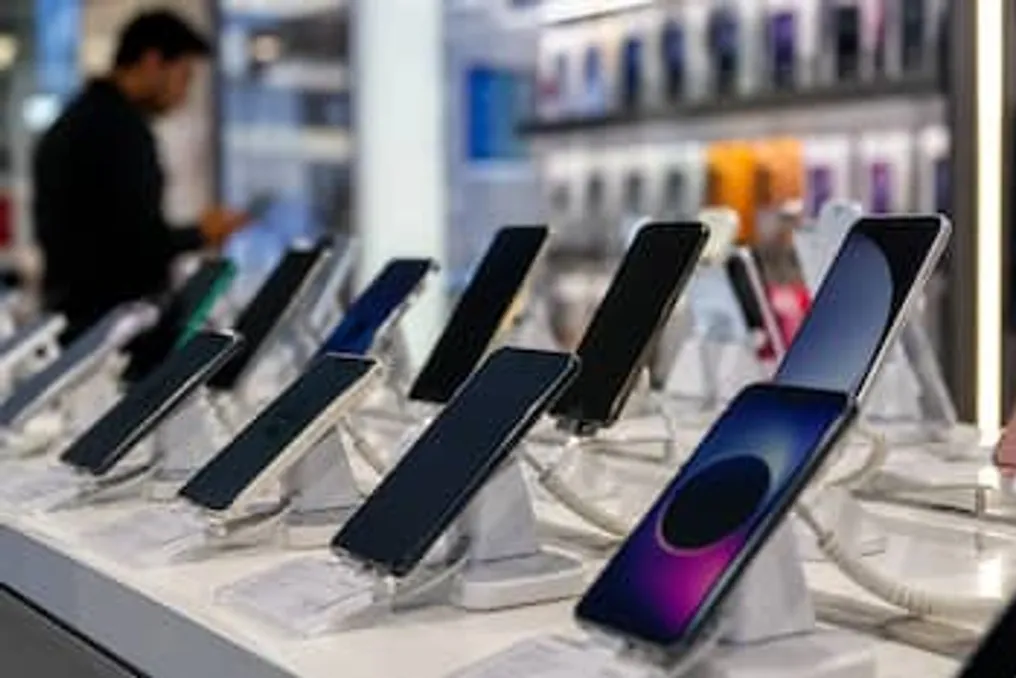
Due to the sharp increase in smartphone prices this year, retailers are forced to balance margin reduction, cautious inventory management, and consumer demand for deep festive discounts that buyers are accustomed to.
The festive season in India is traditionally associated with big discounts by smartphone buyers. Consumers often expect offers in October that include significant price reductions and other bonuses. For retailers, such promotions have always served as the main sales driver during the holiday period.
However, this time, smartphone retailers in India find themselves in a difficult situation. The price rise is mainly attributed to the increased cost of memory and other components, leaving fewer opportunities to offer the deep discounts consumers anticipate.
To cope with this issue, brands and retailers are moving away from simple price markdowns, shifting towards a combination of cashback, exchange offers, and simplified financing to make phones more accessible, if not cheaper.
Reasons for the Sharp Rise in Smartphone Prices
The price increase is most noticeable in the mass-market and budget model segments. According to a specification analysis by Counterpoint Research, the cost of components for similar budget smartphone configurations has risen by 70% year-over-year in the quarter, with almost all the growth attributed to memory. Counterpoint's global price tracker showed that retail prices for existing smartphones rose by 15% worldwide in 2026, while the increase in India was 21%, the highest among tracked markets.
Data collected by the All India Mobile Retailers Association (AIMRA), representing 150,000 major retail outlets, indicates a significant price hike across several smartphone models since November last year. For example, the Vivo T4 Lite 6GB/128GB variant, released for ₹10,999 in June 2025, is now selling for ₹20,999, representing an increase of nearly 91%.
The Oppo F series also demonstrates massive growth. The F31 8GB/128GB model cost ₹26,999, while the upcoming F35 8GB/128GB is priced at ₹42,999. The new model offers minimal upgrades, including a 50MP front camera versus 16MP on the F31 and an 8,000mAh battery versus 7,000mAh on the F31, yet the price has grown exponentially by 59%.
Rajvir Shah, Global Head of Strategy at MITSUMI Distribution, noted that brands have passed a significant portion of the price increases through revised price lists, but distributors and retailers have partially absorbed these costs to maintain shelf prices during the festive period. Wholesale price increases were faster for premium models, while some mass-market brands held prices longer.
Navin Malpani, Partner and Consumer & Retail Goods Industry Leader at Grant Thornton Bharat, predicts further upward pressure from component costs.
The Shape of Festive Discounts is Changing
Brands and channel partners are increasingly using targeted support instead of simply lowering wholesale or retail prices. According to Shah, this includes margin support, price protection guarantees, and sales incentives tied to retail movement.
Retailers are observing the same trend. Shibashish Roy, CEO and Managing Director of Infiniti Retail Limited, which operates Croma, stated: 'We expect fewer direct smartphone price cuts this festive season compared to last year. Offers are likely to shift towards affordability-focused deals, such as EMI and exchange bonuses.'
The offer package for the Oppo F35, launching on October 10, exemplifies this structuring. Customers can opt for interest-free financing up to 18 months for the F35 Pro and 15 months for the F35, or take advantage of a nine-month interest-free installment plan with an instant 10% cashback via selected bank cards. Full payment and UPI transactions also qualify for 10% cashback. The package additionally includes an exchange bonus of up to 10%, guaranteed buyback up to 70% for ₹399, and a 50% discount on OPPO Enco Buds3 Pro+ when purchased with the phone.
Retailers Feel Margin Pressure
This shift also reflects pressure within the retail channel. Shah noted that device margins were under strain, prompting distributors to rely more on volume-linked incentives, financial partnerships, trade-in programs, and after-sales support.
Kailash Lakhyani, Chairman of AIMRA, stated that traditional brand support has also become more limited as brands increasingly depend on bank cashback, upgrade bonuses, trade-in programs, and longer-term interest-free installment schemes.
Retailers are also exercising greater caution regarding inventory. Instead of stockpiling large volumes anticipating higher prices, distributors are aligning stock with confirmed brand commitments and pre-ordered demand, according to Shah.
Financing Takes Center Stage Online
Amazon India anticipates high smartphone demand during its Great Indian Festival, starting October 8. Zeeba Khan, Consumer Electronics Director at Amazon India, reported that the company's goal is accessibility, not just price reduction. She noted: 'During Prime Day 2026, a significant portion of buyers utilized financing for upgrades, with one out of four electronics purchases made on installment, and four out of five on interest-free installments. This value is already realized in our early offers, where customers can combine an instant 10% discount with SBI credit and debit cards and credit card installments with exchange value and interest-free installments, plus receive a 5% cashback for Prime members using the Amazon Pay ICICI Bank credit card. For anyone considering an upgrade, this is the ideal window with the strongest value of the year and the widest range of price categories.'
Navin Malpani from Grant Thornton Bharat believes that this festive season marks a transition from growth based on deep discounts to accessibility based on value. Consumers are increasingly utilizing exchange offers, bank cashback, and interest-free installments, while some may prefer previous-generation models, cheaper devices, or extending their replacement cycle. Refurbished phones may also benefit from this shift.
However, Lakhyani from AIMRA sees a sharper divide between income and price segments. He emphasized that buyers with access to financing are opting for longer installment periods, while more price-sensitive consumers are moving towards lower-spec, refurbished, or used phones, or simply continuing to use their current devices for another six to twelve months.
Croma's experience is somewhat different. CEO Roy stated that demand in the mid-range and premium segments remained stable, and the retailer observed no significant signs of declining buyer levels or postponed purchases. He noted that weakness in the lower price segment was more a supply issue than a demand issue.
These two views point to a widening gap between price segments. Counterpoint also found that the ultra-premium segment remains relatively resilient due to financing, while the sub-₹15,000 segment showed a much sharper contraction.
Festive Price Relief May Be Short-Lived
Currently, brands and channel partners are prepared to absorb some of the cost increases on volume-driving models during the festive period. However, Shah warned that this is only a short-term support measure. Industry players suggest that some price hikes may occur after the festive quarter, leaving retailers with a narrow window of opportunity.
For consumers, the festive benefit will increasingly lie not in a large drop in the phone's sticker price, but in how the purchase is executed, what old gadget is exchanged, and what additional benefits are included in the deal.