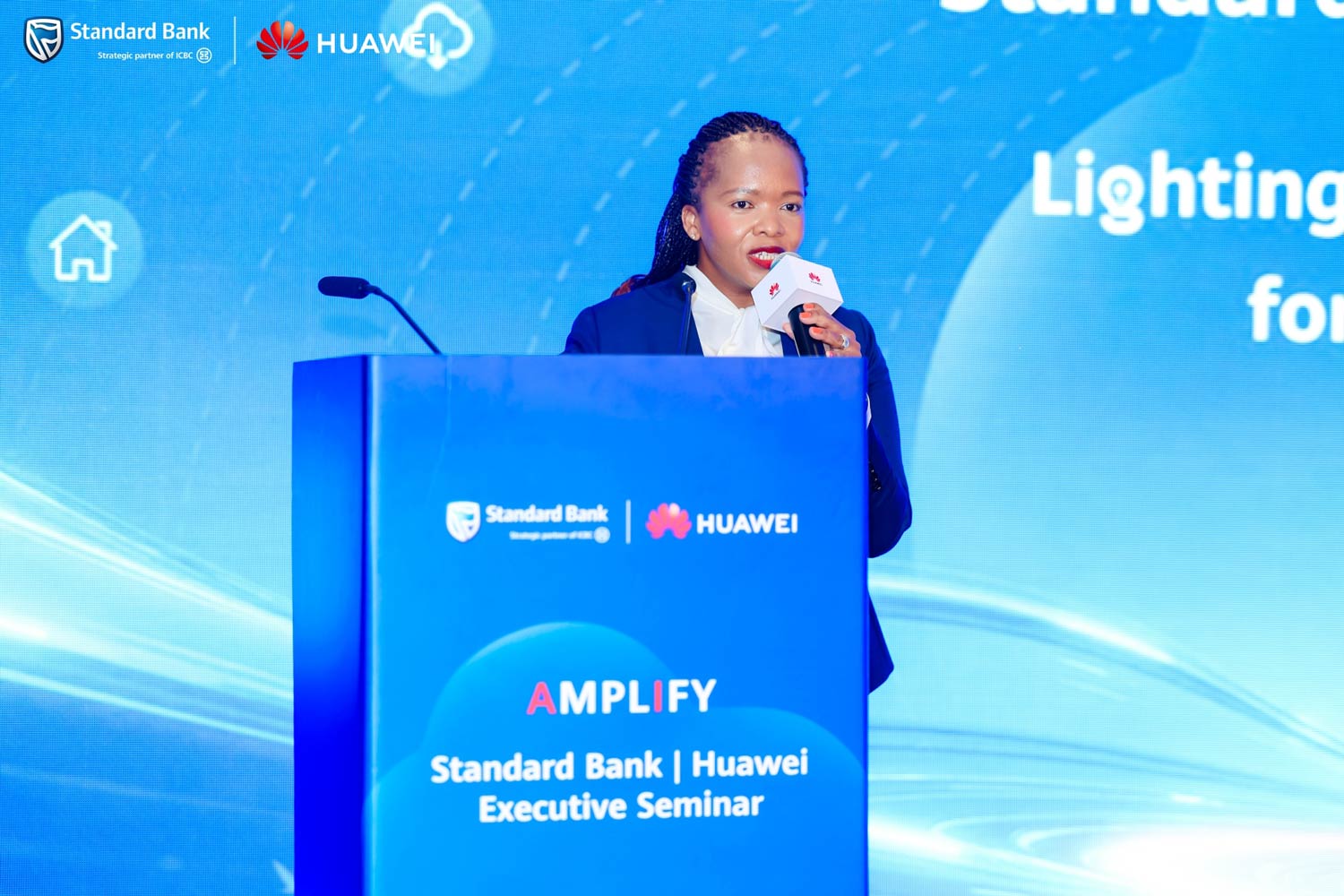
Standard Bank has deepened its strategic technology collaboration with Huawei as the group accelerates the modernization of its banking platforms. The goal of this modernization is to support growth, implement innovations, and enhance financial accessibility across the continent.
The expanded partnership, announced at the Huawei Connect 2026 event in Shanghai, will focus on application modernization, cloud technologies, data capabilities, and artificial intelligence (AI). This will enable Standard Bank to create a more flexible, scalable, and resilient technological foundation for its operations on the African continent.
Standard Bank Group, Africa's largest bank by assets, operates in 21 countries and serves millions of customers across various markets, each with unique regulatory, infrastructure, and customer requirements. The group's technology strategy aims to build a more integrated banking platform that improves customer experience, strengthens resilience, and supports long-term growth.
Executive Statements on the Significance of the Partnership
During the signing ceremony, Funeka Montjane, Chief Executive Officer of Standard Bank Group for Personal and Private Banking, emphasized that access to modern technologies is critical for expanding financial services to a larger number of people on the continent. She noted that when technology reduces servicing costs, it makes it commercially viable to reach communities previously excluded from traditional financial services. In her view, technology can play a powerful role in increasing access to banking services, helping people save, invest, and build a better future.
The new agreement builds upon the strategic partnership established between Standard Bank and Huawei in 2024, now expanding the scope of cooperation to include cloud solutions, AI, and data processing capabilities.
Leo Chen, Senior Vice President and Head of Corporate Sales at Huawei, characterized the partnership as a new beginning for both organizations. He stated that Huawei will continue to invest in computing power, AI infrastructure, cloud services, data, and software development. Chen added that by working closely with Standard Bank, Huawei will support the modernization of core systems, strengthen AI infrastructure, and scale AI applications to create a more flexible, resilient, and intelligent banking infrastructure.
Jason Cao, General Manager of Huawei's Digital Finance Business Unit, noted that Standard Bank's decision to entrust Huawei with critical core banking infrastructure demonstrates Huawei's potential and its long-term commitment to the financial sector. Huawei intends to leverage its technical expertise alongside software partners to provide a secure, reliable, and flexible technological foundation for modernizing Standard Bank's core banking systems. This collaboration will help the bank transition from legacy infrastructure to a cloud architecture, increase IT efficiency and agility, and ensure faster and more personalized digital financial services for customers.
Cao also stressed that Huawei will continue to work with clients and partners to support digital transformation in the financial services industry through a secure and reliable hybrid cloud infrastructure, providing a robust digital foundation for finance in Africa and globally.
Agreement Signing and Prospects
The agreement was signed by Tsebeletso Mashau, Chief Information Officer (CIO) for the African region and Deputy Group CIO for Personal and Private Banking at Standard Bank Group, and Kui Zheng, Deputy General Manager of Huawei Enterprise South Africa, on behalf of their respective companies.
Mashau called this stage an important step in Standard Bank's digital transformation, noting that its significance goes beyond mere technological investment. She stated that the essence lies in the possibilities it unlocks for serving customers brilliantly and intelligently. Mashau also highlighted the joint effort of the two organizations to turn strategy into tangible action, acknowledging the dedication and hard work of the teams in executing the project. According to her, this agreement will be remembered not so much for the technology investments, but for what it made possible for customers and for the future of banking in Africa.
Khomotso Molabe, CIO for Personal and Private Banking and Deputy Group CIO at Standard Bank, stated that the group is focused on simplifying and modernizing its technology environment to support future growth. He reported that they are creating a high-performance, resilient, and customer-centric technology platform. Standardizing and modernizing the technology landscape in key areas creates the necessary foundation for greater flexibility, security, scalability, and cost-effectiveness while meeting evolving customer needs across Africa.
Will Meng, CEO of Huawei South Africa, added that he hopes this strategic partnership will lead to real, high-quality projects, innovative breakthroughs, and a strong team of key specialists. Furthermore, by working together, Huawei aims to become Standard Bank's most trusted implementation partner, most dedicated innovation partner, and longest-term strategic partner on its digital transformation journey.
Under this collaboration, Standard Bank and Huawei will continue to explore opportunities in areas such as AI-powered customer service, fraud detection, risk decision-making, and intelligent operations. The cloud platform will be implemented in phases to meet the changing needs of the group's business and customers.
This collaboration is part of Standard Bank's broader commitment to leveraging technology and innovation to drive sustainable growth, improve customer experience, and advance financial inclusion across the continent.