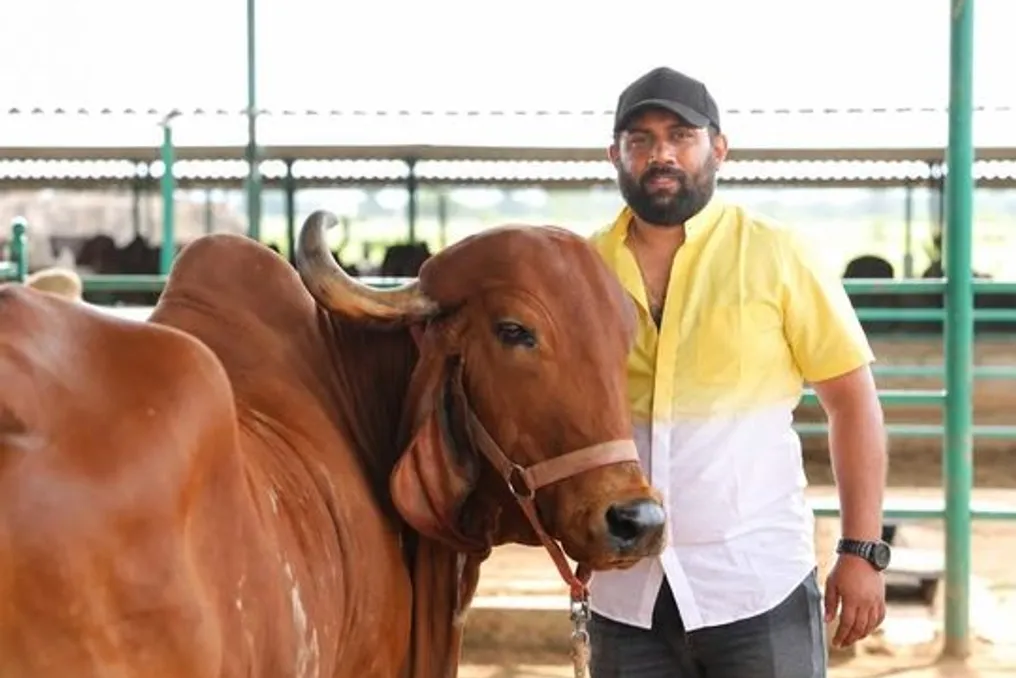
Former bank employee founded 650-acre farm generating 21 crore rupees and employing 3000 women
Read more
The Better India
thebetterindia.com

Former bank employee founded 650-acre farm generating 21 crore rupees and employing 3000 women

Amit Kishan worked for eight years in financial institutions such as ICICI, Bajaj, Axis, HDFC, and PNB in Bengaluru. However, he always felt an attraction to agriculture, much like his grandfather, who was a renowned farmer.

Today, he manages his agricultural enterprise in Andhra Pradesh. He recalls that his grandfather was a recognized farmer in the area, and as a child, they often visited the farm, playing in the soil while his grandfather worked in the fields. This memory left a deep mark on his soul.

After a client passed away from cancer within a year and a half, Amit handled the insurance claim for the family. He decided he wanted to rectify this situation, as all circumstances pushed him toward finding a better path.

He left his banking job and became a farmer. The first few months were difficult because they did not know what or when to grow, and they initially confused the Kharif and Rabi seasons.

Amit spent three years studying agriculture and interacting with organic farmers. In 2019, he co-founded Hebbevu Farms with his brother Ashrit. They started everything from scratch.

Adopting natural farming proved to be a challenging process. People mocked him, calling him foolish. Since neighboring farms used chemicals, Amit's fields were attacked by insects, making survival difficult.

He began digging the soil up to four feet deep to improve root growth and replaced chemical fertilizers with cow dung and urine, as well as bananas to increase potassium levels in the soil. As a result of this approach, according to Amit, earthworms reappeared in the soil. He also introduced local animals, which gave the farm an extra boost.

Starting with a loan of 1.5 crore rupees and a 15-acre plot, Amit now manages a 650-acre farm with an annual income of 21 crore rupees (as of June 2023). The farm also houses 700 local cows and buffaloes.

Furthermore, as of June 2023, Amit has provided employment to over 3000 women from 18 nearby villages. Each woman receives 25 liters of milk daily for the production of ghee, paneer, and other dairy products.

He notes that previously he worked for others, exhausting himself, whereas now he works for himself and his village. For him, farming has brought a more balanced lifestyle and the opportunity to spend time with his family in the village.
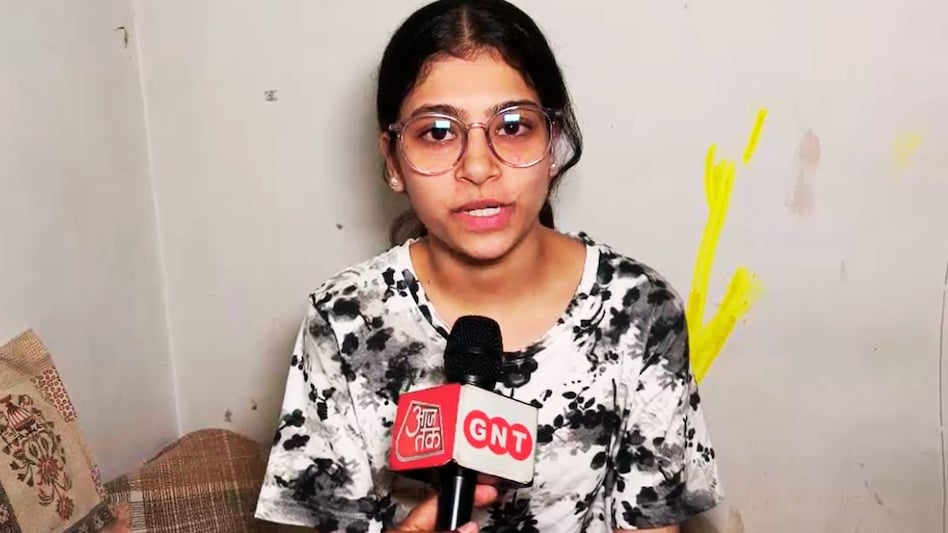
Similar stories

Two sisters from Saharanpur started a business with minimal investment using their skills at home
Read more
www.aajtak.in

Two sisters from Saharanpur started a business with minimal investment using their skills at home

Previously, threads and ribbons lying around the house served only as decoration or a hobby. However, two sisters from Saharanpur found a way to earn money from these items. They are Ayushi and Khushi Diman. Neither sister developed a large-scale business plan, invested millions, nor opened big shops; they started with what they already had at home.

Ayushi began her journey with just 250 rupees. She is educated: she holds diplomas in B.Com, M.Com, and B.Ed. For about two years, she worked as an assistant professor in a college, but health problems and daily commutes made the job difficult, so she resigned. Then the question of the future arose.

Ayushi has always been interested in handicrafts, and her mother knew how to crochet. Seeing her mother work with threads, Ayushi felt a desire to try this skill. Soon, she decided to turn her hobby into a business.

About a month ago, Ayushi made a crocheted flower ring for a college friend. The friend liked the small item so much that orders started coming in afterward. First rings, then cosmetic bags, then phone keychains, and the list of works gradually grew. Now, Ayushi creates bouquets, jackets, sweaters, and soft toys using crochet. Thus, the thread that started it all opened a path to entrepreneurship for her.

Ayushi says that she initially spent about 250 rupees. Currently, sales have reached approximately 4500–5000 rupees, and her net profit has reportedly reached 2500–3000 rupees. But there is more to this story than just earning money. For Ayushi, working with crochet is a kind of solace. She believes that creating something with your hands helps reduce stress. In an era where machines and artificial intelligence perform many tasks, Ayushi believes that handmade items have a special value.

Meanwhile, her sister Khushi saw a video on social media about ribbon products. She had ribbons at home and decided to try making something herself. It worked on the first attempt. That's when Khushi realized that she also had a talent that could be monetized. After that, ribbon flowers, then bouquets, rings, and individually decorated gift baskets started being created.

Khushi's work is characterized by the fact that she uses cardboard boxes that are usually thrown away after consuming chips and snacks, turning them into boxes for gift sets. She then decorates them with chocolate, snacks, jewelry, and other items according to the client's wishes. That is, Khushi prepares the basket exactly as the customer requests. Her products are delivered to clients via Instagram and WhatsApp. However, for Khushi, this is not just a business; there is an old family history behind it.

In 2015, her father passed away. After that, her mother took responsibility for the family, working and raising the children. Being the eldest in the family, Khushi now wants to stand on her own feet independently. Her goal is simple: never to reach a point where she has to ask anyone for help. She wants to earn on her own and become a support for her mother.

Khushi also works employed, continuing to develop her own business in parallel. Her mother never insisted that she focus only on work or only on business. But now, seeing her daughter trying to succeed on her own, her mother feels proud. The business of both sisters is still small: on one hand, it is crochet work started with 250 rupees, and on the other, gift baskets made from household ribbons and old boxes. But their dreams are big.

The story of Ayushi and Khushi perhaps suggests that self-sufficiency does not always begin with large investments or offices. Sometimes it starts in a corner of the house among threads, sometimes from a piece of ribbon, and sometimes from just 250 rupees.

Popular