Vodacom implements compact antenna system to increase capacity of 4G and 5G networks in limited spaces
Read more
TechCentral
techcentral.co.za

Vodacom implements compact antenna system to increase capacity of 4G and 5G networks in limited spaces

Vodacom has developed and tested a compact antenna system that allows for increasing the capacity of 4G and 5G networks at sites where there is no room for additional equipment. The company plans to implement this system in various parts of its network.

System Testing

This system was created in collaboration with Nokia and underwent pilot testing in the Western Cape. It combines traditional passive antennas and 'massive MIMO' (multiple input, multiple output) active radio receivers into a single unit. The Massive MIMO technology uses large arrays of antenna elements to direct signals to individual users, which increases the station's throughput.

According to a statement from Vodacom on Tuesday, this unit operates in Massive MIMO mode simultaneously on two frequency bands: 2.6 GHz and 3.5 GHz. Operators often face the problem of lack of space on existing towers and rooftops, while building new sites is time-consuming and costly.

Vodacom reported that the pilot project demonstrated the possibility of installing this technology where limited space or existing infrastructure would hinder standard upgrades. The company now intends to deploy this system at 'certain sites requiring additional capacity.'

The company did not specify how many sites will be covered, over what period, or what capacity increase was achieved during the pilot. Beverly Ngwenya, Technical Director of Vodacom South Africa, noted in a statement that as the demand for mobile data continues to grow, it is necessary to constantly improve the network to ensure the quality and stability of service expected by customers.

Vodacom emphasized that residents of densely populated urban areas, where space is limited and expanding the network using traditional methods is more difficult, will benefit most from this technology. In such areas, users experiencing high demand should notice more stable 4G and 5G network performance, including faster data loading and smoother streaming video playback.

Similar stories

Iran and Russia are preparing to establish a joint commission on science and technology
Read more
www.tehrantimes.com

Iran and Russia are preparing to establish a joint commission on science and technology

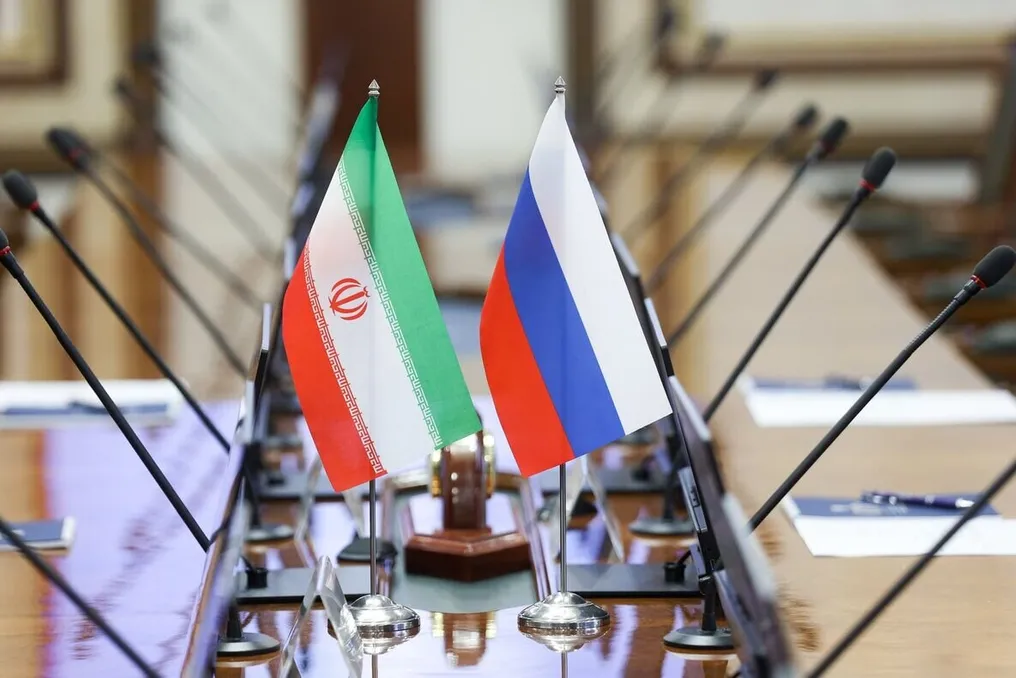
Iran and Russia are working on establishing a joint commission on science and technology. Within this commission, a document on international scientific cooperation between the two states is planned to be signed.

Ehsan Kabul, head of the Center for International Scientific Cooperation of the Iranian Ministry of Science, Research and Technology, stated Iran's firm commitment to expanding ties with Russia. He outlined the next steps that Tehran and Moscow will take to strengthen bilateral interaction, including the formation of the mentioned commission.

Kabul reported that the Minister of Science, Research and Technology intends to visit Moscow within the next three months to finalize the document on international scientific cooperation between Iran and Russia. Furthermore, plans have been announced to implement 500 joint programs with Russian universities and scientific institutions.

These programs include conducting 100 joint educational courses with the participation of Russian professors, the opportunity for 100 doctoral and master's students to choose a second supervisor among faculty members of Russian universities, and organizing 100 technological events aimed at expanding bilateral cooperation from the fields of science and education into the technological sector.

Moreover, Kabul mentioned planned initiatives such as 100 joint cultural events with Russian universities and academic and educational institutions, as well as 100 scholarships for Russian students. Priority for receiving these scholarships will be given to students wishing to study Persian language and literature.

The official also emphasized Iran's support for Persian language programs in Russian universities, noting that Iranian professors are ready to teach Persian to Russian speakers both in person and online.

In June, the Iranian Minister of Science, Research and Technology, Hossein Simai-Sarraf, and the Russian Minister of Science and Higher Education, Valery Falkov, reviewed strategies for developing scientific, educational, and academic cooperation between the countries. Special attention was paid to increasing faculty and student exchanges, strengthening research partnerships, and facilitating academic interaction.

Simai-Sarraf considered the establishment of Russian language departments in Iranian universities and Persian language departments in Russian universities as a sign of deepening scientific and cultural ties between the two states.

For his part, Falkov noted the start of a new admission period at Russian universities and welcomed Iranian students wishing to study at the country's universities. He emphasized the importance of providing employment opportunities and utilizing the academic potential of graduates after their return to Iran.

In December 2025, the second scientific conference between Iran and Russia took place in Moscow. The event was attended by the Iranian Ambassador to Russia, Kazem Jalali, scientific attaché Hadi Gudarzi, as well as representatives of universities and scientific institutions from both countries.

Referring to Iran's unique history and the civilizational commonalities between the two countries, Russian Presidential Assistant Andrey Fursenko stressed the need to strengthen cultural and academic relations between Iran and Russia. As reported by msrt.ir, he noted: 'The Russian government is fully ready to facilitate cooperation with Iran in the fields of science and technology. Russia and Iran must rely on their capabilities in striving for global development and play their historical role.'

In turn, Jalali emphasized the Comprehensive Strategic Partnership between Iran and Russia, as well as the need to activate ties in scientific, technical, and cultural areas.

In February, Evgeny Primakov, head of the Federal Agency of the Russian Federation for CIS Affairs, Compatriots Residing Abroad, and International Humanitarian Cooperation, expressed his country's interest in expanding scientific and academic ties with Iran for further technological cooperation. As quoted by IRNA, Primakov stated: 'The main goal of the organization is to lay the foundation for developing joint efforts with the University of Gilan. We look forward to recognizing the potential of both sides and studying ways to implement cooperation more effectively.'

This official continued that scientific ties will lead to the development of joint projects, exchange of teachers and students, and the creation of joint research networks.

Saidamir Jafarov defends his dissertation in medical sciences philosophy
Read more
uza.uz

Saidamir Jafarov defends his dissertation in medical sciences philosophy

Information was provided regarding Saidamir Muradovich Jafarov defending his PhD dissertation in medical sciences.

The dissertation topic is titled 'Differential-integral approaches in selecting invasive treatment methods in patients suffering from combined atherosclerosis of coronary and cerebral arteries.'

Optical Illusion: How Many Horses Are in This Photo?
Read more
www.aajtak.in

Optical Illusion: How Many Horses Are in This Photo?

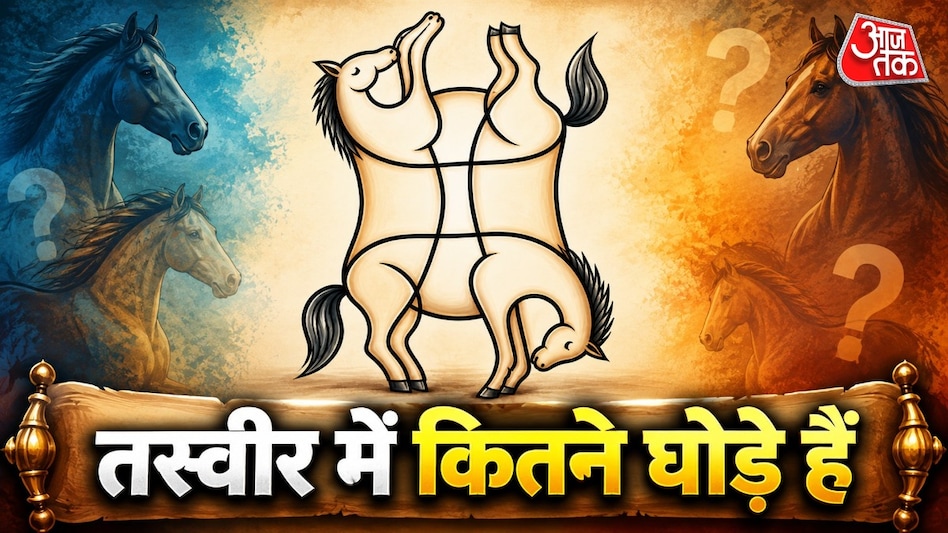
Photographs that use optical illusions often attract the attention of users on social media. In such images, the initial perception may differ from the true meaning, which becomes apparent upon closer examination. One such photograph prompts people to question the total number of horses depicted in it.

At first glance at the image, most people notice only two horses. One is shown standing with its head raised, and the other has its head lowered. However, if you spend more time and attention on the picture, it turns out that four horse figures are hidden in this composition, which is the essence of this optical illusion.

Upon initial inspection, the horse located at the top is the most obvious, whose head, neck, and body are clearly distinguishable. Then the gaze moves to the bottom part, where a second horse is seen bowing its head. This is why, during a quick viewing, the brain tends to assume that only two horses are in the picture.

Attention must be paid to the central and lower areas of the image. Another horse figure is located here. Its body and legs are integrated among other shapes in such a way that it is difficult to identify as a separate animal at first glance. Upon careful study, its hindquarters, legs, and tail become discernible; the part that initially seemed like part of another horse actually contains the contour of a third horse.

Examine the lower right part of the photo. A horse with its head lowered is depicted there. Although its head and legs are easy to spot, it is important to note that the boundaries of its body merge with neighboring shapes. Because of this, many mistakenly take it for part of the second horse. Nevertheless, upon detailed analysis of the entire silhouette, a clear separate figure of a fourth horse is found.

Optical illusions are created in such a way that our eyes and brain try to instantly recognize certain shapes. The brain usually registers the clearest figure first, and the other elements are merged with it. In this case, something similar happens: the lines of the bodies, legs, necks, and tails of the horses intertwine with each other. Therefore, at first glance, the brain recognizes only two distinct figures. When you look at the image again and focus on individual elements, the hidden contours begin to appear.

If you view the photograph in the standard way, you will see two horses. But upon careful examination of the hidden elements of the photo, the total number of horses reaches four. This is the specialty of this optical illusion: the same picture can be perceived differently by different people, and their initial answers may vary. The viewer is invited to examine the image independently and determine how many horses they saw at first glance and how many after repeated study.

Popular