Lençóis Maranhenses: Brazilian landscape resembling a desert that fills with freshwater lakes
Read more
Getaway
getaway.co.za

Lençóis Maranhenses: Brazilian landscape resembling a desert that fills with freshwater lakes

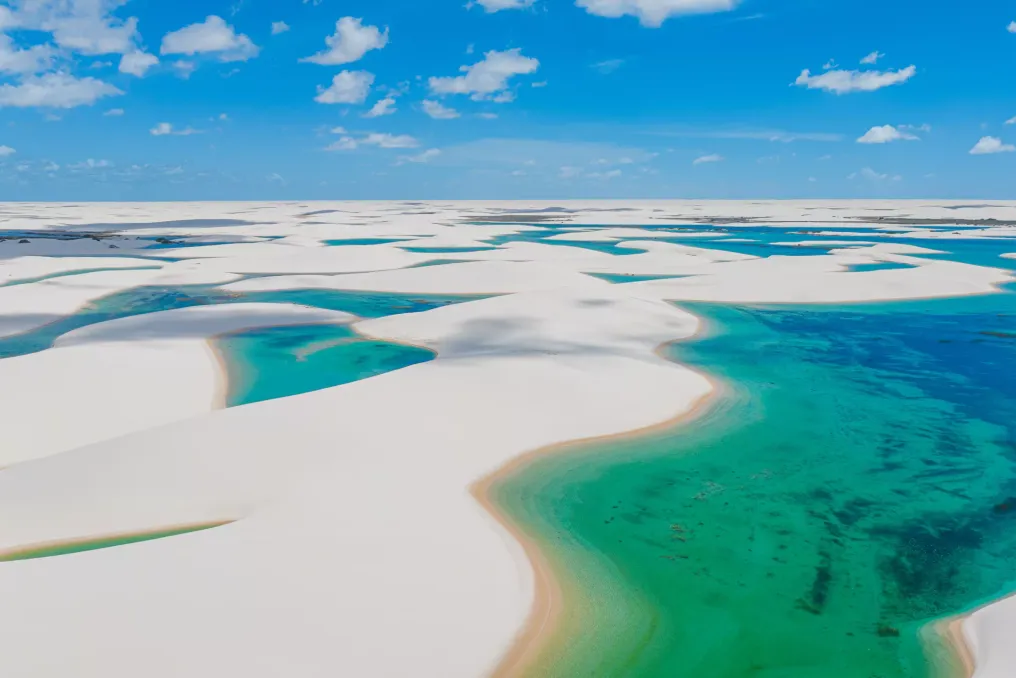
At a glance, Lençóis Maranhenses appears to be a desert that somehow ended up on the Atlantic coast of Brazil. Endless white dunes stretch to the horizon, interrupted only by bright blue and green lagoons.

However, there is an irony in this landscape: it is not a desert at all. Located in the state of Maranhão in northeastern Brazil, Lençóis Maranhenses is an extensive coastal landscape shaped by wind, rain, sand, and the Atlantic Ocean. During the rainy season, fresh water collects between the dunes, transforming the seemingly barren landscape into something almost otherworldly.

Water appears in this area for several months. The name Lençóis Maranhenses translates approximately to 'sheets,' which aptly describes the vast dunes undulating across the landscape. The national park covers an area of over 156,000 hectares, of which about 90,000 hectares are dunes. Some of these reach heights of about 30 meters, and the dune fields extend for tens of kilometers along the coast.

Nevertheless, calling it a desert is inaccurate. The region has a clearly defined rainy season, and abundant rainfall accumulates in the depressions between the dunes. As the groundwater level rises beneath the sand, hundreds of temporary freshwater lagoons begin to form. The result of this process is truly extraordinary: white sand runs everywhere, interspersed with bodies of clear, blue-green water.

These dunes are constantly moving. The wind carries sand from the coast inland, giving it characteristic crescent shapes that define the park's appearance. Some dunes can migrate more than 20 meters per year, slowly changing the surrounding landscape. The lagoons are also temporary; they fill mainly with rainwater and groundwater, not rivers. When the dry season arrives, evaporation causes many of them to shrink and disappear, after which the cycle resumes with the rains.

Perhaps the most fascinating thing about Lençóis Maranhenses is that the landscape visible today might look different next year. The dunes move, the water comes and goes, and nature quietly reshapes this scene.

Although the park looks almost desolate from a distance, a surprisingly diverse ecosystem hides beneath the endless expanse of sand. Lençóis Maranhenses is located at the junction of the Cerrado, Caatinga, and Amazon biomes, creating a mix of dunes, freshwater zones, mangrove swamps, rivers, and coastal habitats. Even the temporary lagoons support life, and the plants growing among the dunes have adapted to an environment where water and sand are constantly changing.

Despite the outward impression that nothing can survive here, the situation is quite the opposite. Among the main entry points to the park are Barreirinhas, Santo Amaro, and Atins. From Barreirinhas, visitors can reach some of the most famous lagoon areas, while Santo Amaro provides access to other parts of the dunes. Atins, once a small fishing village, is located near the mouth of the Preguiças River and has become another popular base for exploring the landscape.

For those wishing for a deeper immersion, the multi-day trek Travessia dos Lençóis crosses the park between Atins and Santo Amaro. This is a different way of experiencing the landscape: instead of simply arriving, taking photos, and leaving, tourists traverse the dunes, swim in the lagoons, and spend nights in the park using local community accommodations along the route.

For such a vast place, slowing down the pace seems the most suitable way to explore it. The landscape undergoes radical changes throughout the year. Lagoons usually reach their maximum volume after the rainy season, with May to September often offering some of the best conditions for observing them filled with water. Exact conditions vary depending on the amount of rainfall each year. By the end of the dry season, some lagoons may recede or completely disappear, and paradoxically, this makes the landscape even more attractive.

What is depicted in the photograph is just one moment in the life of Lençóis Maranhenses. The park was declared a national park in 1981 and was included in the UNESCO World Heritage List in 2024 due to its exceptional natural beauty and geological significance. The park is carefully managed, with visitor access and vehicle use regulated to protect the fragile dune and lagoon ecosystems.

The reason for such regulation is easy to understand. It is a landscape not created for stillness. It is shaped by rain and wind, constantly shifting underfoot and changing with the seasons. There is something wonderfully strange about Lençóis Maranhenses: a dry appearance is brought to life by rain, seemingly permanent dunes are constantly moving, and freshwater lagoons appear among the sand for a time and then vanish. Nothing here is as fixed as it first seems, and perhaps that is what makes this corner of Brazil so captivating. It is an unusual reminder that nature does not always follow our expectations.

Similar stories

Relationships between the Baron of Mauá and the Baianinho de Mauá
Read more
super.abril.com.br

Relationships between the Baron of Mauá and the Baianinho de Mauá

Irineu Evangelista de Sousa, known as the Baron of Mauá (1813 – 1889), was fundamental to the start of industrialization in Brazil. He conceived the Mauá Railway, which became the country's first railway line, earning him the title of baron.

On April 30, 1854, Dom Pedro II (1825 – 1891) inaugurated the first 14.5 km segment of this railway, connecting the Port of Mauá to Fragoso, both located in the municipality of Magé, Rio de Janeiro.

Henry Chamberlain

Henry Chamberlain (1796-1844), the son of a prominent English diplomat residing in Brazil, was one of the individuals who addressed letters to Pedro I on September 7, 1822, encouraging him to proclaim the independence of Portugal.

Sir Neville Fitzgerald Chamberlain

Sir Neville Fitzgerald Chamberlain (1856-1944), a British officer, served in India under the rule of the United Kingdom. It was he who established the rules for a variation of billiards that became popular among soldiers: pool.

Baianinho de Mauá

Josué Ramalho da Silva, known as Baianinho de Mauá (1973 -), was born in Paulo Afonso, Bahia. He won several pool championships throughout Brazil, most of which occurred in bar tables. His nickname derives from the period he lived in the city of Mauá, in São Paulo, which is named in honor of the Baron of Mauá.

Fundudzi Lake in the Limpopo Mountains: A Sacred Place with Ancient Geological History
Read more
getaway.co.za

Fundudzi Lake in the Limpopo Mountains: A Sacred Place with Ancient Geological History

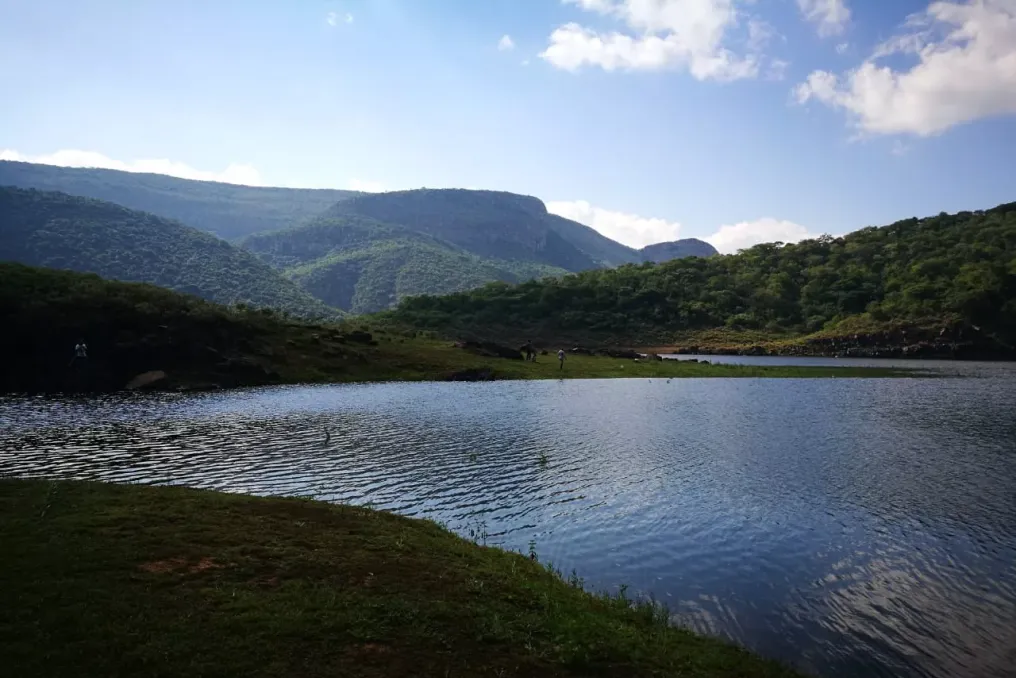
Fundudzi Lake is located in the Southpansberg area of the Limpopo province, amidst forested slopes and ancient rocks, far from the more well-known landscapes of South Africa. It is a small, quiet, and exceptionally old lake. However, its uniqueness is defined not only by its formation process but also by the deep significance it holds for local residents over many generations.

For the Venda people, Fundudzi Lake is sacred. It is connected to ancestors, spirits, fertility, and rituals, while its unusual geological origin tells a completely different story. The combination of these two aspects makes Fundudzi one of the most remarkable landscapes in Limpopo.

Fundudzi is situated in the upper reaches of the Mutale River system in the Southpansberg mountains. Thousands of years ago, a massive landslide dammed the Mutale River, creating a natural barrier behind which the lake formed. Research suggests this event occurred approximately 20,000 years ago, and sedimentological data indicates that the lake itself has existed for at least 10,000 years.

Today, the lake covers an area of about 140 hectares and stretches approximately 3 kilometers across the surrounding mountainous landscape. Although it can be imagined as pristine wilderness, Fundudzi has always been more than just a geographical feature; it had its own history long before travelers began seeking remote places.

The lake is particularly sacred to the Vhavhatsindi people, who are traditionally considered its custodians. According to Venda oral tradition, a traveler arrived in a village where he was refused food and shelter. He cursed the inhabitants, after which a landslide occurred, flooding the settlement and forming the lake. It is said that the deceased transformed into spiritual beings connected to the waters of the lake.

There are also legends associated with the large white python, which is associated with fertility and water. This snake is linked to the Venda initiation and fertility dance, while another traditional tale speaks of a white crocodile guarding the ancestral spirits beneath the lake. These stories are not merely mystical tales for a tourist route; they are part of the cultural and spiritual understanding of this landscape.

Arriving at Fundudzi, one enters not an empty desert awaiting discovery, but a place possessing its own meaning. The history becomes even richer beyond the water. The nearby Tate Vondo forest is also considered sacred, and the forest, rivers, wetlands, and lake form part of a broader cultural landscape. Venda traditions have long linked natural elements such as forests, waterfalls, rivers, and ponds to the spiritual world.

These beliefs have also contributed to environmental protection. Traditional restrictions around sacred sites regulated the use of natural resources, effectively creating a form of conservation long before the modern term 'conservation' emerged.

However, today the landscape faces more common challenges: agriculture, forestry, settlements, erosion, and sedimentation have affected the entire watershed, while conservation programs work to restore parts of the wetland system.

Fundudzi is not a place you simply come to, park, and go to the water. Historically, access to it was controlled by local custodians, and research has noted community concerns regarding tourism development near the lake. This underscores the importance of responsible planning. Visitors should check current access conditions in advance and, if necessary, use the services of authorized local guides or interact with local custodians.

Furthermore, it is important to approach with the right mindset. The lake can be a beautiful photograph, but the photograph is not the main goal. Time must be spent understanding the significance of this landscape. One should consider the mountains around the water, learn about the traditions associated with the lake, and pay attention to the forest and river systems that sustain it. There is another kind of pleasure in visiting a place that cannot simply be consumed.

Fundudzi is located in the Wembe region, which is one of the most biodiverse and culturally significant landscapes in Limpopo. Southpansberg supports an astonishing diversity of habitats and endemic species, and nearby areas like the Tate Vondo forest and Piphidhi waterfall demonstrate the depth of the Venda connection to nature. Together, they offer a different type of journey where the landscape is not just a backdrop to the trip, but part of the story itself.

Fundudzi is extraordinary in every way: it was created by an ancient landslide, exists as a rare inland lake, and is situated in a biodiverse mountain landscape. But its greatest value cannot be measured in hectares or geological age. For generations, it has been a sacred place, and this changes the approach to its perception.

Fundudzi does not need to be turned into another bucket-list attraction, nor does it require exaggerated legends to be interesting. Its history is wonderful in itself: an ancient lake, a living culture, and a landscape where water, ancestors, culture, and faith remain closely intertwined. Sometimes the most valuable places are not those that give you the most to do; they are those that make you stop long enough to understand where you are.

Analysis of Characters and Plots in the Brazilian Naturalist Novel O Cortiço
Read more
super.abril.com.br

Analysis of Characters and Plots in the Brazilian Naturalist Novel O Cortiço

Published in 1890, O Cortiço is considered one of the most relevant naturalist novels in Brazilian literature. The work was written by Aluísio Azevedo (1857-1913) and explores life in 19th-century Rio de Janeiro society, detailing the daily life of a housing complex where the lives of the residents intertwine in a complex scenario of passions, ambitions, and tragedies.

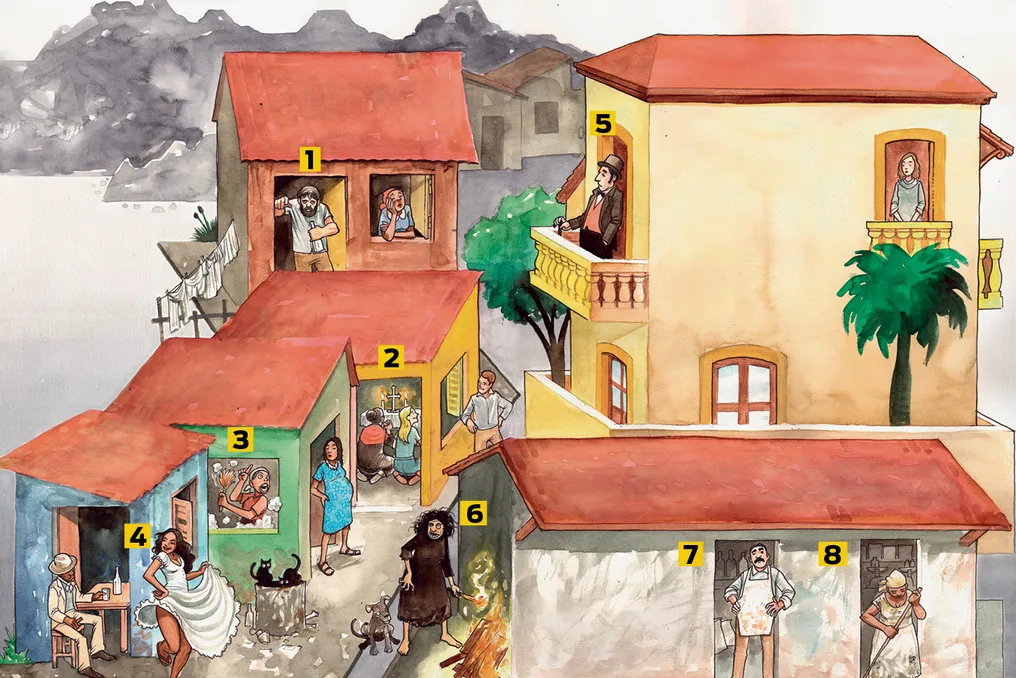
The narrative presents various stories and relationships between its characters, as illustrated in specific scenes:

Love Goes Mad

Jerônimo and his companion, Piedade, lived in room 35. His character and strength guaranteed him respect at the quarry adjacent to the tenement. However, his life took a turn after witnessing Rita Baiana dancing. Passionate, he began consuming cachaça, spending excessively, and finally abandoned his wife and daughter to dedicate himself to Rita.

Vocation for Mother-in-Law

Dona Isabel, a resident of house 15, dedicated herself entirely to educating Pombinha, aiming to marry her to João da Costa, a merchant, with the goal of restoring her former social status. The mother only permitted the marriage after the young woman's first menstruation. However, the union was brief because Pombinha betrayed her husband, was expelled, and ended up becoming a prostitute.

Painted Dirt

In number 12, where Marciana lived, another dramatic situation occurred. She was extremely meticulous about cleaning the house, but went mad when her daughter, Florinda, only 15 years old, became pregnant by an employee of the shop, João Romão. Since he did not assume paternity, the girl ran away after being assaulted by her mother. Consequently, Marciana was evicted from the tenement.

What Does the Baiana Have?

Rita Baiana lived in number 9. Beautiful and skilled at samba, she was the lover of the capoeirista Firmo, but also attracted the interest of the neighbor, Jerônimo, who was Portuguese. During the dispute over Rita's affection, Firmo wounded the Lusitanian with a razor. Later, Jerônimo recovered and eliminated his rival in an ambush.

Neighbors and Rivals

Miranda acted as an antagonist to João Romão. He lived in the townhouse next to the store and watched his property gradually surrounded by the growth of the tenement. The merchant valued status above all else; he married Dona Estela because of the dowry and harbored doubts about whether he was truly the father of his daughter, Zulmirinha. This generated envy in him regarding how Romão prospered and his relationship with Bertoleza.

The Witch's Bonfire

Paula, known as the Witch, possessed striking physical characteristics, such as being ugly, corpulent, having bulging eyes, and threatening teeth. Furthermore, she was capable of treating skin problems and fevers through prayers and blessings. She wished to burn down the tenement and succeeded in doing so on the second attempt. After the fire, João Romão had to rebuild the place, transforming it into a grand and aristocratic space.

The Owner of the Place

João Romão started his venture by inheriting the tavern where he had worked for twelve years. Later, he bought land behind the tavern at an auction and built three small houses, marking the beginning of the tenement. He used Bertoleza's money to expand the business (in addition to owning a quarry in the back). Although he liked to delay payments, he was effective at collecting debts, which made him even richer. In his pursuit of social ascent, he distanced himself from Bertoleza to try to marry Zulmirinha.

Eternally Slave

To achieve her freedom, the slave Bertoleza gathered twenty thousand reis. However, she was tricked by her lover, João Romão: the Portuguese provided her with a false freedom document and used the money to increase sales. This happened because Bertoleza did everything for him, working from early morning until late at night, taking care of the shop and the residence they shared.

Popular