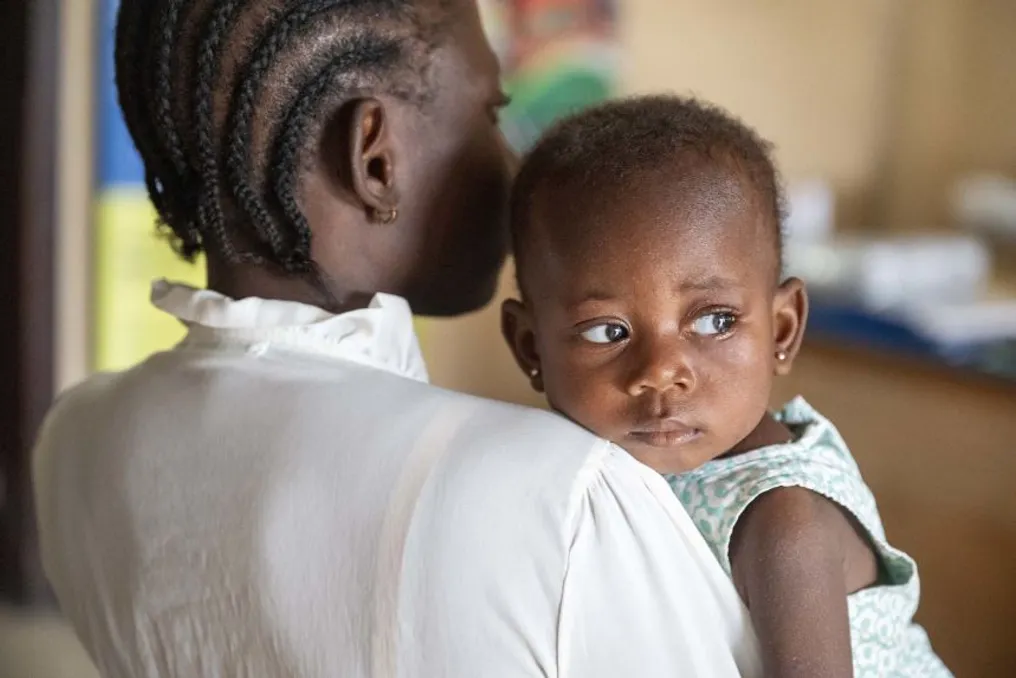
The Trump administration stated its intention to prioritize ending mother-to-child HIV transmission. However, medical workers note that these measures resulted in service reductions.
In January 2025, pediatrician Dr. Theopista Masenge, working at Mbeya Hospital in Tanzania, which implemented a program to assist infants, children, and pregnant women affected by HIV, received an order to halt all operations. This program was aimed at supporting children with high viral loads of HIV.
The program, run by Masenge, suddenly ceased after receiving a letter from the defunct U.S. Agency for International Development (USAID). Masenge reported that this happened very abruptly, and a system that had been functioning for almost 40 years disappeared practically overnight. She also noted that disruptions in HIV/AIDS services for children and pregnant women persist in Tanzania more than a year later, despite partial funding returns from the U.S. government.
According to a new study by the AIDS Foundation (amfAR), conducted jointly with Johns Hopkins University and published in July, global healthcare funding cuts by the Trump administration and the dissolution of USAID have seriously disrupted the flagship U.S. AIDS control program, PEPFAR. The study covered 166 organizations that received PEPFAR funding last year in 46 countries, representing 23% of all PEPFAR partners.
Despite the U.S. government stating in September last year that it prioritized and protected mother-to-child HIV prevention services from cuts, the amfAR survey showed that 63% of respondents reported failures in providing these services. Of these, 22% of surveyed organizations completely stopped providing mother-to-child HIV prevention services due to funding cuts.
Alice Lankevich, a senior policy specialist at amfAR, explained that even if the administration did not intend to affect these programs, PEPFAR grants were usually not specific enough to protect individual elements of the system during the dismantling of other parts.
According to the surveyed organizations, 1,714 medical clinics supported by PEPFAR closed worldwide last year. Masenge, now president of the Tanzanian Pediatric Association, expressed concern not so much about medications as about the quality of medical care for children and mothers, noting that people are not returning to facilities for medicine due to deteriorating service quality, and early infant diagnostics suffer similarly.
The PEPFAR program, established by George W. Bush's administration in 2003, has saved over 26 million lives and prevented millions of infections, primarily in Africa, according to the World Health Organization and the program's own data. It is one of the iconic U.S. global health programs that is currently experiencing significant funding reductions as the administration shifts to a strategy of making new agreements with recipient countries and requiring greater co-financing from them.
A U.S. State Department representative told CNN that the amfAR survey methodology is 'imperfect,' stating that 'the Trump administration strengthened PEPFAR through clear strategic direction, promoting greater accountability from recipient countries, and sharpening the program's focus on measurable health outcomes. As a result, the number of children tested for HIV and receiving treatment continues to decline.'
Experts argue that the decrease in the number of children starting new HIV treatment is not necessarily a sign of success. According to Elizabeth Glazer of the AIDS Pediatric Programs Fund, the reduction in children undergoing HIV testing and monitoring indicates a loss of access to medical care and their falling out of the system.
The State Department added that the current focus is on real results: reducing new infections, transitioning mature programs to local management, and advancing countries toward long-term self-sufficiency. Data for the fourth quarter of fiscal year 2025 shows that as of September 30, 2025, the U.S. government supported vital HIV treatment for 20.6 million people living with HIV in more than 50 countries.
Elizabeth Glazer of the AIDS Pediatric Programs Fund called the drop in pediatric diagnosis and treatment indicators a 'hidden HIV crisis.' The fund stated that 'every indicator in the pediatric HIV cascade is declining.' The fund's president, Dr. Doris Macharia, emphasized: 'Where the program (PEPFAR) reaches children, it works. But the data tells us that far fewer children are being reached now.'
Despite U.S. government exceptions to continue 'rescue' work for pregnant and breastfeeding women, amfAR's analysis of recent U.S. government data showed a slight decrease in HIV testing among pregnant women by 2% by the end of 2025 compared to the same period the previous year. Infant testing decreased even further, by at least 6%, although some medical facilities reported much worse infant testing figures.
Furthermore, amfAR survey respondents reported serious disruption to the Orphan and Vulnerable Children Program, which aims to help at-risk children access medical care for HIV and other general health services. The non-profit organization KFF found that the number of children and family members served by this program decreased by approximately 4.8 million in 2025 compared to the previous year.
A recent analysis by the Clinton Health Access Clinic showed that the number of children receiving HIV treatment drugs decreased by 15% in 2025 compared to the previous year in eight studied countries. The organization attributed this to the negative impact of HIV test kit shortages, as well as 'the ongoing integration of pediatric HIV services into general medical facilities without adequate staff training and support.'
According to HIV/AIDS experts who spoke with CNN, PEPFAR previously provided numerous supplementary services aimed at preventing infections, encouraging marginalized people to visit clinics, and preventing medication discontinuation. Lankevich from amfAR suggested that these supplementary services would be the first to disappear, especially in countries with limited resources to compensate for PEPFAR losses.
When it comes to mother-to-child HIV prevention, these supplementary services include paying local healthcare workers to monitor maternal appointment schedules or providing educational materials on how HIV can be transmitted to infants. Experts believe that the continuation of these services will depend on the ability of each country's government to sustain and pay for them.
Lankevich also added that there is a cash flow problem: 'Even if PEPFAR received a regular allocation from Congress last year, that money is effectively not arriving.'
CNN previously reported that the Trump administration under-spent about $1.7 billion approved by Congress for the flagship AIDS control program and redirected $2 billion intended for global health programs to cover USAID closure costs.
Changes in PEPFAR implementation and spending cuts have affected not only medical services but also data collection. Reliable PEPFAR data collection was previously a valuable resource for researchers and healthcare workers worldwide. However, the Trump administration stopped publishing quarterly program reports and concealed some data.
The State Department stated earlier this year that the U.S. government 'has greater confidence in the data' for the fourth quarter of fiscal year 2025, but added that 'earlier quarters faced reporting and implementation challenges that limit data interpretability.'
Experts warn that this data chaos hinders a full picture of medical service disruptions and ultimate outcomes. Jennifer Kays, director of Global and Public Health Policy at KFF, said: 'You don't always see the impact on outcomes until it is too late. And it will be a crisis if we look back a year from now and say that more infants died and more children were born with HIV.'
For instance, the U.S. government assumed that the decrease in the number of children receiving HIV treatment indicated the effectiveness of prevention programs. However, Elizabeth Glazer of the AIDS Pediatric Programs Fund stated that this 'does not explain the sharp and sudden drop of 54,000 children already on treatment.'
Regarding the decrease in infants tested for HIV, Kays noted that this could leave researchers and program implementers in the dark. She asked: 'If detection doesn't happen as often, will we even know what is happening to the infants?'