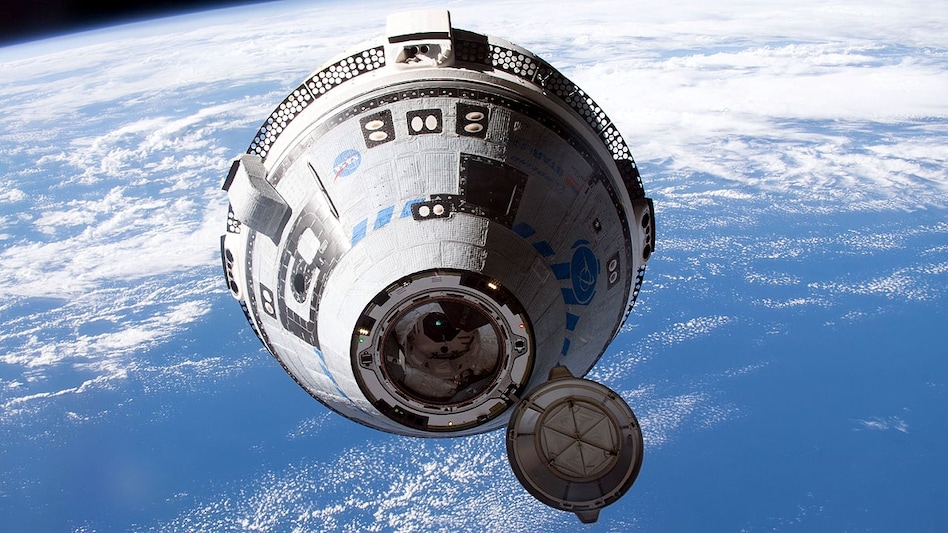
NASA has developed a plan to reuse Boeing's Starliner spacecraft for crewed missions. The next Starliner flight is scheduled no earlier than December 2026 and will be uncrewed. If this test flight is successful, Starliner will be able to transport astronauts to the International Space Station (ISS) in 2028.
NASA astronaut Woody Hobberg will lead this mission. This plan was formulated following the June 2024 flight, during which NASA astronauts Sunita Williams and Butch Wilmore traveled to the ISS aboard Starliner. They were initially expected to return in about a week, but a helium leak and engine malfunctions occurred during the flight. As a result, NASA changed its decision regarding the return of both astronauts from the spacecraft.
Both astronauts were subsequently brought back to Earth aboard SpaceX's Crew Dragon, which extended their mission to over nine months. Consequently, NASA is making several modifications to Starliner to prepare it for new crewed flights.
First, NASA will send Starliner into space in a test mode without astronauts. This test will take place no earlier than December 2026. The goal is to verify the correct operation of Starliner after the necessary changes have been made. NASA Administrator Jared Isaacman stated that modifying the design of some engines will be required before sending astronauts. These engines are critical for maneuvering Starliner and maintaining its position in space. Preparation for a crewed flight will only begin after the successful completion of the test flight in 2026.
A new launch vehicle will be used to put Starliner into orbit. Previously, Starliner was launched using the Atlas rocket, which is soon to be retired. Now, NASA, Boeing, and United Launch Alliance are jointly preparing the Vulcan Centaur rocket for crewed missions. Thorough safety checks and other necessary parameters of the rocket are being conducted. According to NASA, the modernization of Starliner and the preparation of Vulcan Centaur for crewed tasks will require additional costs of approximately $359 million.
If the uncrewed Starliner test flight in 2026 is successful, the next crewed mission will take place no earlier than mid-2028. This flight will be led by NASA astronaut Woody Hobberg. Hobberg highly praised the work of Sunita Williams and Butch Wilmore, calling them American heroes for their professionalism throughout the mission.
Starliner delivered Sunita Williams and Butch Wilmore to the ISS in June 2024. This was the first joint crewed test flight by NASA and Boeing. It was planned that they would return in about a week. However, a helium leak occurred in Starliner before reaching the ISS, and some engines stopped functioning. After an investigation, NASA concluded that the safe return of both astronauts aboard Starliner was impossible. Ultimately, Starliner returned to Earth without a crew, while Williams and Wilmore remained on the ISS, from where they later returned aboard Crew Dragon. This circumstance caused their mission to stretch for more than nine months.
Currently, SpaceX's Crew Dragon is used to transport and return American astronauts to the ISS. NASA has signed a contract worth about $946 million with SpaceX for three additional crewed missions. Nevertheless, NASA aims not to depend on a single crewed spacecraft. Since the ISS is planned to be decommissioned in the early 2030s, astronaut activity on the station must continue until then. This is why NASA is working on modifying Starliner. Furthermore, the success of the 2026 test flight and all changes made to Starliner are necessary conditions for further steps.