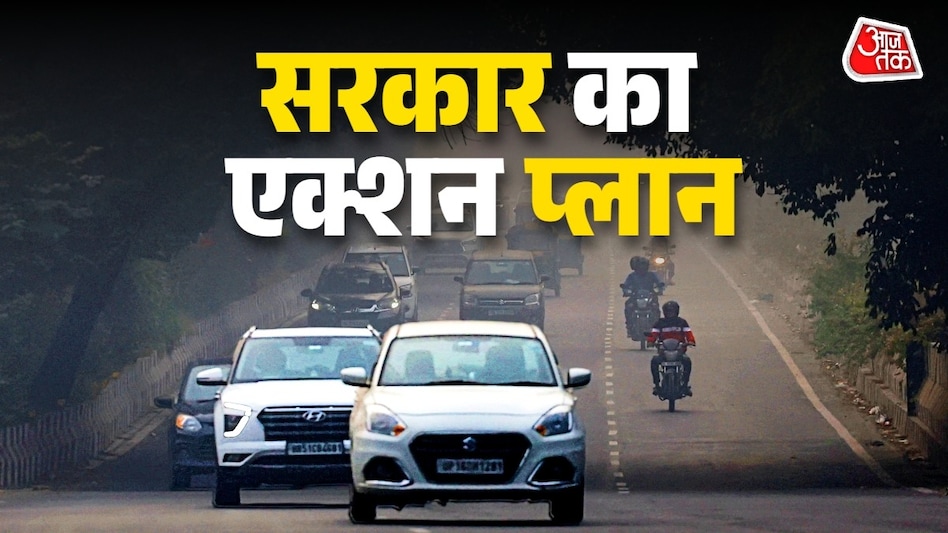
Although winter has not yet arrived, the problem of air pollution in the capital is beginning to manifest, causing concern due to smog and toxic air. The government has developed a plan of measures that will affect the streets, gas stations, parking lots, and construction sites of Delhi.
Starting November 1st, entry into the capital will be prohibited for vehicles registered outside of Delhi that do not meet BS-VI emission standards. Additionally, an increase in parking fees, suspension of construction work, intensified checks at gas stations, and the transition of 50% of employees in government and private institutions to remote work are planned.
These decisions were announced by Delhi's Environment Minister, Manjinder Singh Sirsa, following a meeting on the pollution issue in Delhi-NCR. The meeting was chaired by the Union Environment Minister, Bhupendra Yadav, and also attended by the Chief Minister of Delhi, Reha Gupta, and PWD Minister Pravesh Verma.
It was announced that from November 1st, vehicles registered outside Delhi that do not comply with BS-VI standards will not be allowed to enter the capital. Although this information will be provided in advance, the duration of this ban has not yet been determined. Furthermore, a separate concession is provided for BS-IV class vehicles using compressed natural gas (CNG).
To reduce the use of private transport, in addition to combating pollution, the cost of parking in designated spots will double from November 1st to February 28th. However, electric vehicles will be exempt from this increase. Tariffs for parking spaces managed by the Delhi Metro Rail Corporation (DMRC) will also increase.
The working hours of government institutions will be adjusted. Delhi Municipal Corporation offices will operate from 8:30 AM to 5:00 PM, and Delhi government institutions from 10:00 AM to 6:30 PM. Moreover, the number of employees working directly in government and private offices will be reduced by 50%, while the rest can work from home.
To encourage the use of public transport, in addition to fighting pollution, 150 new electric buses will be added to Delhi's existing fleet of 5088 electric buses. The government's goal is also to improve connectivity between different areas through bus and metro stations so that people use public transport more often instead of private cars and avoid inconvenience.
The rule 'No Emission Certificate, No Fuel' will be strictly enforced in Delhi. Checks will be conducted at 500 gas stations in Delhi equipped with automatic number plate recognition cameras. An awareness campaign regarding this rule will begin in October, and an upgrade of pollution testing centers is scheduled for November. The government will also inspect cameras and conduct technical examinations of about 250,000 vehicles at three automated testing stations.
To reduce dust pollution during the winter period, a ban on demolition and open construction work will be implemented from November 1st to December 10th. Following this, from December 10th to January 20th, a complete ban on construction work, including interior work, is planned. The government's monitoring system has registered 723 construction sites, 600 of which have web cameras installed. The goal is to have all registered sites under video surveillance by the end of October. An AI-based system is used to detect violations. Additionally, registration through the MCD Malba App is required to obtain building plan approvals.