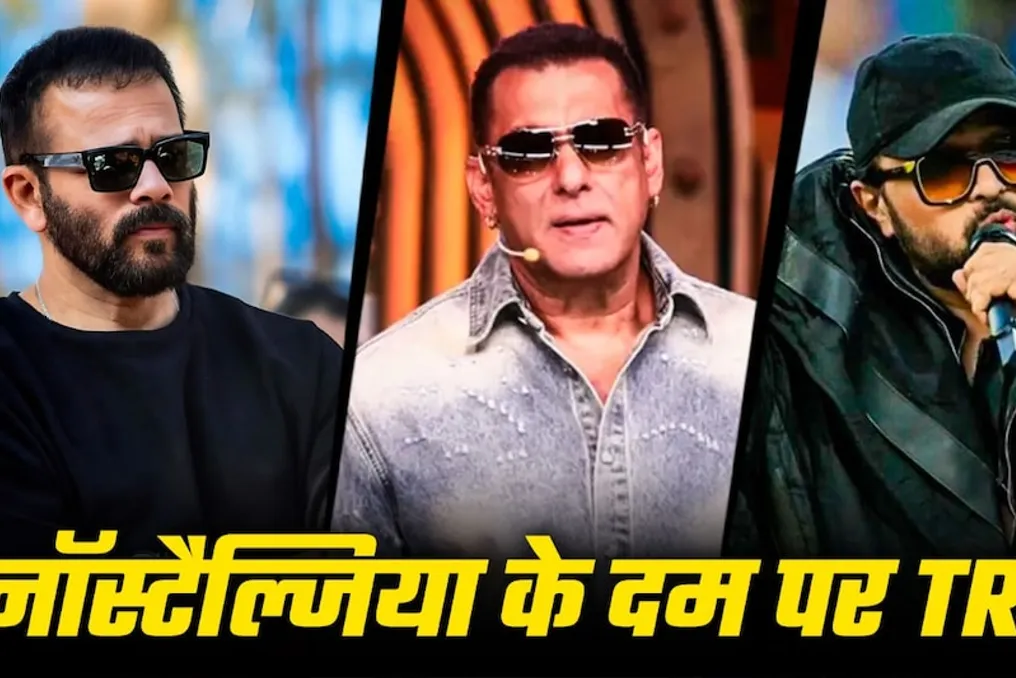
In the entertainment industry, much like how everyone admires bright stars, there is a trend of using popular actors and celebrities in reality shows to boost ratings. A recent example of this trend is the announcement of the 17th season of the singing competition Indian Idol, which promises to be a season featuring legends.
The creators have made a big bet by inviting stars who previously participated in the contest, making this season arguably the biggest in Indian Idol's history. The show's slogan is: 'One victory is not enough; you must win again and again.'
This special announcement about the return of legends has caused huge excitement among fans. Himesh Reshammiya will take a place on the jury. Information about other jury members and contestants has not yet been disclosed. Users believe that the 17th season will be the best and most legendary, capable of breaking all rating records. The question of how successful the creators' strategy will be—attracting experienced singers instead of new talent—remains open.
However, before discussing Indian Idol, it is worth looking at other shows that have already used the tactic of bringing back former participants.
An example is the show 'Khatron Ke Khiladi 15,' where former stars were invited. In addition to new contestants, hits from past seasons appeared, including Rubina Dilak, Karan Vahi, Ritvik Dhandjani, Vishal Aditya Singh, Jasmine Bhasingh, and Avikua Gor. The concept of 'old batch and new batch' definitely created interest in the show, attracting both loyal audiences and the fan base of new contestants.
But 'Khatron Ke Khiladi' is not the only example. This tactic has also been used repeatedly in 'Big Boss.' In Salman Khan's show, participants were repeated for ratings: they appeared as contestants, rivals, or just to lift the mood for a week. Among them were Rashmi Desai, Devlina Bhattacharjee, Rahi Sawant, Hina Khan, Gauhar Khan, Siddharth Shukla, and Abdu Rojik.
Let's consider why reusing legends is so beneficial for reality shows.
Firstly, it is a factor of nostalgia. Currently, the trend of nostalgia is observed everywhere, from cinema to television. This term evokes a whole spectrum of emotions in viewers—it combines excitement with a feeling of nostalgia. The return of iconic stars from old hits to the stage touches the hearts of fans. Creators actively use this emotional component, turning nostalgia into an attractive product for the public.
Secondly, it is the fandom of legends. When new, unestablished contestants appear in a show, their fanbase develops over time, and the show does not gain immediate benefit. In contrast, the appearance of old stars instantly attracts their entire fanbase, which connects with the show. This provides the show with an immediate boost and strong promotional support thanks to the names of the legends.
Thirdly, guaranteed high ratings. The presence of experienced performers guarantees explosive growth in ratings. Viewers are always interested in what happened to their favorite stars over the years and what their current persona is. Therefore, the initial rating of the show is usually very high. Old stars ensure exceptional viewership and rating results for the show.
All shows that used the model of bringing back old participants have proven successful. Now, it remains to see how profitable this experiment will be for Indian Idol 17.