Decision-making in agriculture requires the use of actionable weather data
Read more
Food For Mzansi
foodformzansi.co.za

Decision-making in agriculture requires the use of actionable weather data

Today there is an unprecedented amount of data available on weather and agriculture. However, the question remains whether this data helps farmers make more informed decisions.

Janet Lowles, Marketing Manager at InteliGro, believes that the benefit of data only manifests when it is transformed into practical insights applicable at critical moments—whether it is planting, choosing a variety, combating diseases, plant nutrition, or managing specific weather events.

Lowles, who spoke at the launch event for Pessl Instruments' project to install one hundred thousand weather stations in Africa, believes that farmers and companies have not yet unlocked the full potential of meteorological data. She emphasized that the data itself does not reduce risks; rather, improving the decision-making process does. Since a farmer cannot control the weather, climate, resource or commodity prices, they can only control how decisions are made regarding these factors.

In Lowles' opinion, to respond long-term to extreme climatic conditions and smaller changes within them, all available tools must be used. She notes that in the data industry, there is an increasing need to provide information in the form of reliable analytics. This includes turning data access into a practical tool for the farm that provides actionable recommendations, such as a clear indication of whether to spray the plant and why.

Furthermore, she insists on the need for closer cooperation between various resource providers and industry organizations. When industry bodies, universities, and farmers work more cohesively and reliably, this information becomes accessible to everyone.

Dr. Ilse Trautmann, a data-driven farming expert and member of the advisory board for the Pessl Instruments weather station project, asserts that a more resilient agricultural sector begins with an informed approach to decision-making. She highlighted the growing importance of the ability to timely convert necessary information into a decision, especially under conditions of climate uncertainty, drought, and El Niño, which limit maneuverability. Trautmann added that data alone is not enough—people are needed to help in its understanding and application.

The message from Lowles and Trautmann is particularly relevant to dryland and legume farming, where one decision can determine the difference between profit and loss. Agronomist Reinhard Vessels, Technical Marketing Specialist at InteliGro, presented the results of wheat trials by Intelekt Solutions near Murrisburg as an example of how local research can improve farm decision-making.

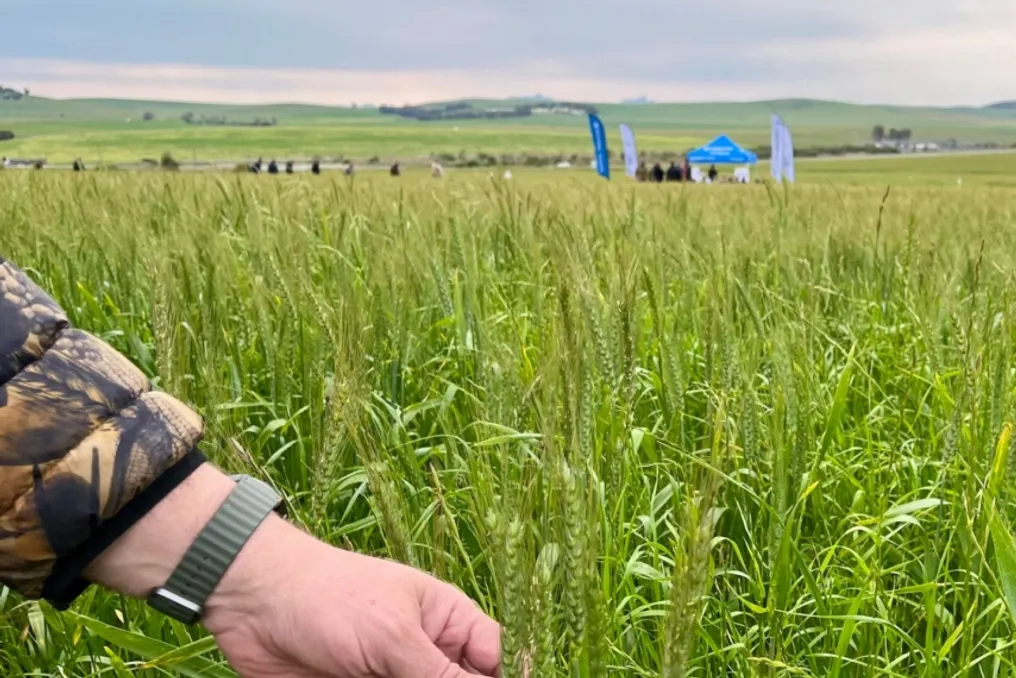
The trials in Murrisburg began nine years ago and are part of long-term scientific field tests in the Western Cape. The current configuration compares five wheat varieties, five fungicide programs, and an untreated control across 130 plots. Vessels noted that past experience provides data and lessons that can be used in the future, and the value of historical data lies in helping to consider prospects beyond the current season.

Another example was presented at the Swartland exhibition, where soil scientist Jan van Zyl, Technical Marketing Specialist at InteliGro for plant nutrition, explained how soil conditions and local research influence management decisions. His discussion of chemical stratification in minimum tillage systems highlighted the importance of soil samples and a deep understanding of soil profiles. He reported that in some Swartland soils, calcium, potassium, and phosphate can accumulate in the top 2.5 cm, which, according to studies, occurs in about 30% of Swartland soils.

Dr. Karen Truter, Technical Marketing Specialist at InteliGro for plant nutrition, demonstrated the differences that can be observed on a single farm within a day of information. She emphasized that targeted farm trials help farmers determine what works in their specific conditions. The goal is not necessarily to achieve the highest agronomic yield, but to find the best economic return. Truter concluded that this requires a different way of thinking: the question is not only how much crop the crop can yield, but also how much it costs to achieve that yield and what ultimately remains with the farmer.
Similar stories

Farmers in Uttar Pradesh are switching to organic farming in rural areas to reduce costs and increase profits
Read more
www.aajtak.in

Farmers in Uttar Pradesh are switching to organic farming in rural areas to reduce costs and increase profits

Amid rising costs for chemical fertilizers and pesticides in Uttar Pradesh, organic farming has become a new source of hope for farmers. Those who previously worried about increased agricultural expenses are now beginning to transition to organic farming methods.

Farmers are improving crop quality by using manure compost, vermicompost, and natural insecticides. Previously, a significant portion of funds was spent on purchasing fertilizers and chemicals, but after switching to organic farming, farmers' costs have decreased, and the price of their harvest has increased.

Organic farming is a practice where organic fertilizers rich in nutrients (such as manure compost, green manure, bacterial cultures, organic fertilizers, etc.), biopesticides, and bioagents are used instead of chemical fertilizers, pesticides, and herbicides.

This approach not only supports long-term soil fertility but also prevents environmental pollution. Furthermore, the reduction in agricultural costs and the improvement in product quality bring significant benefits. The growing demand for organic produce has given farmers the opportunity to receive higher prices in the market.

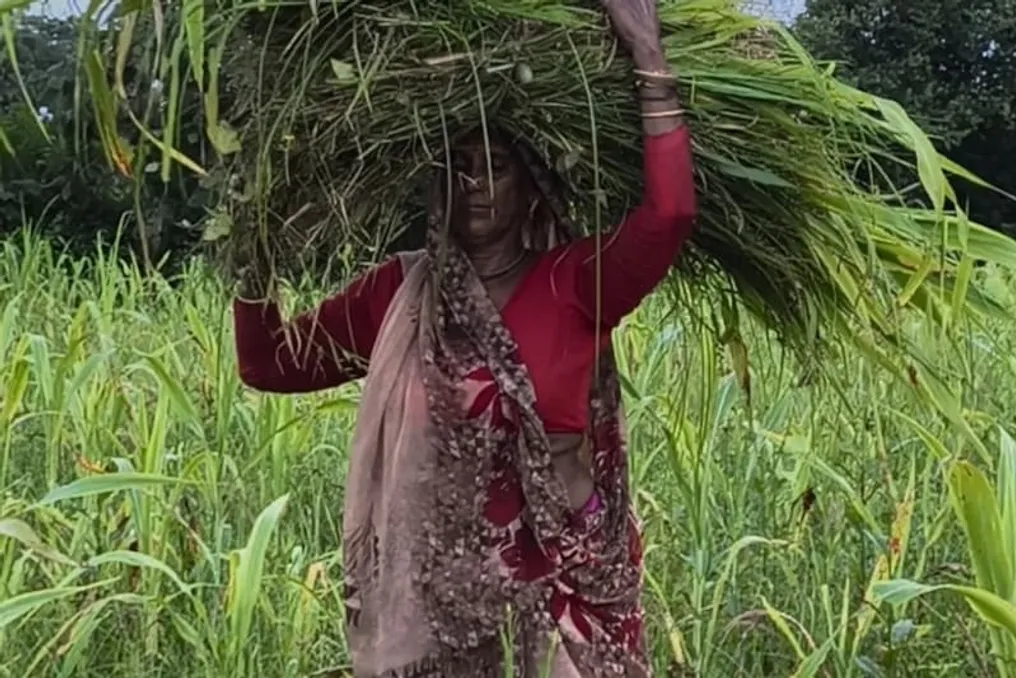
Natturam, a resident of the village of Baihar who practices organic farming, underwent a three-day training course at the State Agricultural School in Chirgaon, Jhansi. A retired teacher, he started practicing organic farming in 2022. As he began to see benefits, he started cultivating crops during both the Rabi (early rains) and Kharif (monsoon) seasons.

Currently, he manages not only a crop area of 18 bighas but also engages in horticulture. According to available information, his annual income ranges from 4 to 5 lakhs. Natturam is now actively spreading awareness about organic farming among others.

Like Natturam, Kotari Singh Patel, a farmer from the village of Barkhat in Manikpur district, also practices organic farming. He started this process in 2023. He shared that he began organic farming after experiencing issues with sugar and blood pressure and started consuming organically grown produce. He noted that his health has improved.

Kotari Singh Patel mentioned that when he became interested in this method, he started growing rice, arhar beans, and sorghum. He believes that organic farming is 'zero-balance agriculture' because it requires labor rather than money. He clarified that he produces grain for his family and sells the surplus in the market, emphasizing that organic farming has benefited him more than chemical farming.

Another prominent farmer in the district, known as a progressive farmer, is Yogesh Jain. He practices natural and organic farming near Bedipulia in Karwi district. Yogesh has been engaged in organic farming for many years. He recounted that the land in his cultivation area was depleted due to chemical farming. To restore the land, he first engaged in animal husbandry and then created composite fertilizer from manure and cow urine, applying it to the fields via a pump. According to him, this increased soil fertility, and he began producing Rabi and Kharif crops.

Regarding natural and organic farming, Deputy Director of Agriculture Jit Lal Gupta stated that the Government of India and the state government are jointly implementing the National Mission on Natural Farming program. The government has set a target to create 25 clusters by 2026-27, within which 3125 farmers are planned to be trained in organic farming. As part of this initiative, the department conducts seminars to motivate farmers to switch to organic methods. Additionally, farmers are provided with a grant of two thousand rupees for maintaining organic farms. It was noted that while organic farming may yield lower harvests initially, the production potential increases as soil fertility improves through the use of local fertilizers.

Minister and Land Bank CEO Discuss Agricultural Debt Issues and Financing Reform
Read more
foodformzansi.co.za

Minister and Land Bank CEO Discuss Agricultural Debt Issues and Financing Reform

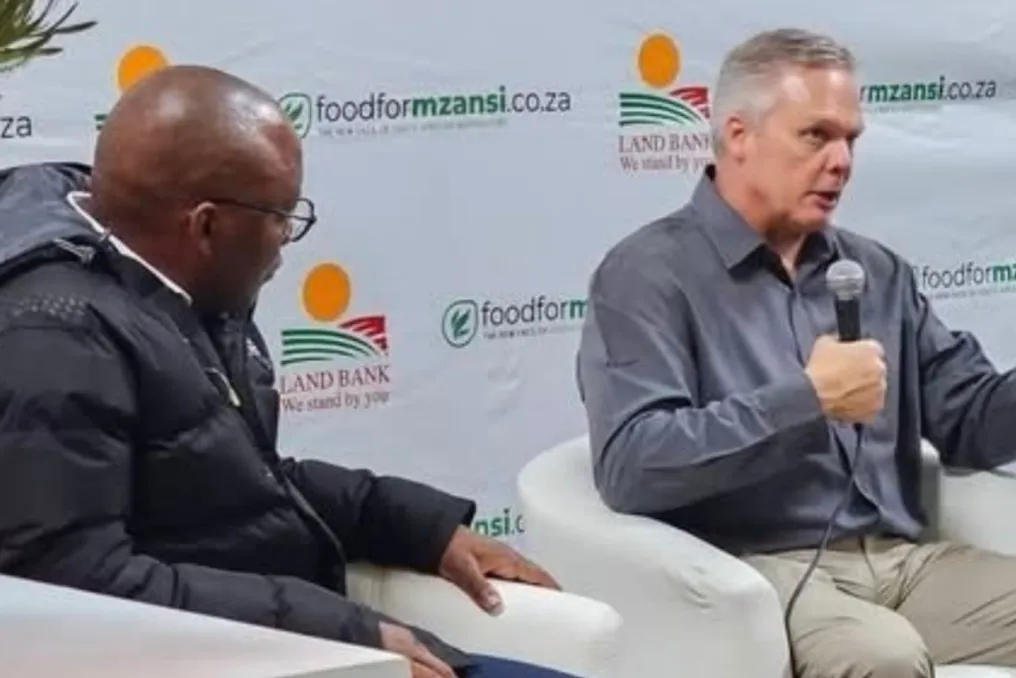
During the closing session of the Nampo Cape 2026 conference, Agriculture Minister Willie Aucamp and the current CEO of Land Bank, Jabu Mfanbo, held a fireside chat. The event was organized by Food For Mzansi and Land Bank in Bredasdorp.

Aucamp and Mfanbo engaged in a direct and constructive dialogue regarding farmers' debt issues, structural financial difficulties, biosecurity crises, and the urgent need to reform the agricultural financing system in South Africa.

While touring the country between the harvest of winter crops and the planting of summer crops, Aucamp noted that attending regional congresses allowed him to gain valuable insight into the specific and general challenges faced by South African producers. He stated that over the past two months, he attended numerous agricultural congresses where he spoke with farmers across the country and understood the various difficulties they encounter, noting that individualizing problems by region was a revelation for him.

Despite operational hurdles, Aucamp emphasized that he observes significant optimism within farming communities, citing recent successes in animal health management as evidence of progress. He mentioned that he has not heard complaints about foot-and-mouth disease for a long time because people can receive vaccines and solutions, and the overall mood is decidedly positive.

Highlighting the need for individualized debt assistance, Aucamp appealed to Land Bank management to help farmers who are financially sound but have been affected by unforeseen biosecurity outbreaks. He requested that they restructure and modify loan terms for these diligent payers, stating his desire to hold an official discussion on the matter.

This request came against the backdrop of a broader assessment of the lender's past performance, during which Aucamp did not hesitate to criticize previous lending practices that undermined the bank's reputation and reduced market confidence. He suggested that Land Bank had previously issued loans without proper vetting, negatively impacting the bank, much like any investment. This led short-term financial institutions to withdraw their funding due to a loss of trust in Land Bank.

Nevertheless, Aucamp made it clear that he fully supports the current management and the institution's transformation strategy. He stated that life is defined not by mistakes, but by how they are corrected, and expressed his willingness to provide full support for the changes at Land Bank.

Fostering a spirit of cooperation, Aucamp also stressed the mixed financing scheme as a vital tool for stimulating growth, insisting on the importance of transferring state-leased land and issuing title deeds in close partnership with the Department of Land Reform and Rural Development.

In response to the minister, Mfanbo confirmed that the demand for sustained financial support remains high across the country, especially among producers recovering from livestock losses. He also highlighted the progress made in stabilizing operations and restoring market confidence, despite past instances of the bank defaulting on obligations.

Mfanbo reported that they have made significant strides since the default in terms of re-entering the market to support the sector. He acknowledged that they previously struggled with distributing funds under the mixed financing scheme, but this issue has been resolved through grassroots work.

However, Mfanbo noted that providing widespread debt relief is constrained by how the bank itself secures funding. He explained that the old Land Bank received stable government support, which allowed the bank to offer cheap financing and conduct restructuring. Now, since they borrow money from other financial institutions to lend to farmers, they cannot grant a payment deferral to a farmer if they themselves do not receive one.

Popular