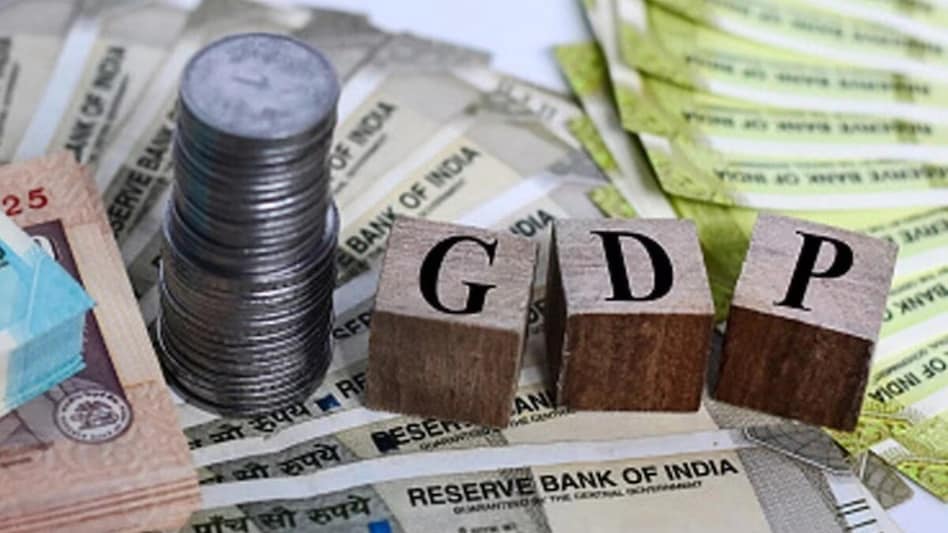
Foreign investors have withdrawn 3.84 lakh crore rupees from the Indian market in the last 24 months
Read more
Aaj Tak
www.aajtak.in

Foreign investors have withdrawn 3.84 lakh crore rupees from the Indian market in the last 24 months

Despite India's rapid economic growth, this growth is not reflected in the sentiment of foreign investors. Even with strong GDP growth in the country, Foreign Institutional Investors (FIIs) are not investing in the Indian stock market in the same volumes. Over the last two years, about $40 billion has been withdrawn from Indian stocks (equivalent to 3.84 lakh crore rupees).

According to a report by the brokerage firm Bernstein Research dated September 21, 2026, some old factors that attracted foreign investment to India have lost their former significance. This means that rapid economic growth alone is no longer sufficient to attract the attention of foreign investors.

The stance of FIIs, which represent large foreign funds and institutional investors, has changed significantly. According to Bernstein, the net outflow of FII funds over the last 24 months amounted to about $56.3 billion, while inflows during the same period reached $38.6 billion. Thus, more money has left the Indian stock market than has entered over the past two years.

Looking at the picture over the last 10 years, the net volume of FII investments in the Indian stock market was only about $4 billion. In comparison, Domestic Institutional Investors invested about $300 billion. This demonstrates the growing role of local investors in the Indian market as the contribution of foreign participants weakens.

Once, India's economic growth and foreign investor sentiment went hand in hand: as India's GDP accelerated, foreign investments also grew. However, according to Bernstein, this link was quite strong until around 2007, after which it began to weaken. In recent years, the situation is such that despite the stable dynamics of the Indian economy, FII funds continue to be withdrawn from the country. This indicates that foreign investors make investment decisions based not only on India's economic growth.

The difference in interest rates between India and the US also plays an important role in the decisions of foreign investors. Between 2012 and 2018, there was a close correlation between this rate differential and FII investments. However, this relationship has weakened over the last 4-5 years. Now, the movement of the rupee against the dollar is becoming more critical for foreign investors. Bernstein notes that in the recent period, the correlation between FII inflows and the movement of the rupee was about 72.9 percent.

Simply put, if a foreign investor invests money in India, and the price of the Indian stock rises, but at the same time the rupee depreciates against the dollar, their return may decrease upon converting the profit back into dollars. Consequently, the success of an investor in the Indian market depends not only on stock price growth but also on the movement of the rupee and dollar exchange rates.

Foreign investor concerns are not limited to currency rates; market valuation is also a serious issue. Valuation refers to how expensive or cheap a stock or the entire market is assessed relative to its earnings. Bernstein reports that after 2020, India's valuation consistently remained higher than that of other emerging markets. From December 2023 to September 2026, India's average relative valuation was 162 percent. During this same period, the net FII outflow amounted to about $44 billion, coinciding with the period when India appeared more expensive than other emerging markets, and investors continued to withdraw their funds.

Bernstein predicts that over the next 12 months, FII inflows may remain stable or show slight growth. That is, no immediate large-scale injection of funds into Indian stocks by foreign investors is expected. According to the report, some foreign investment may return if crude oil prices stabilize, corporate profits improve, and other economic indicators improve. Nevertheless, to ensure a sustainable return of foreign investment in the long term, rapid market or GDP growth alone will not be enough.

Bernstein emphasized that to ensure a strong inflow of foreign capital in the long term, globally competitive companies in specific sectors where India can play a more significant role are necessary. These areas include semiconductors, batteries and energy storage, space, defense, and deep technology. Simply put, although the Indian economy is growing, foreign investors now need to consider not only GDP growth but also rupee stability, market valuation, corporate profitability, and future business opportunities.
Similar stories

S&P Global raises India's economic growth forecast to 7% for 2026-27
Read more
www.aajtak.in

S&P Global raises India's economic growth forecast to 7% for 2026-27

The confidence of major global agencies in the pace of India's economic growth continues to rise. The rating agency Standard & Poor's Global (S&P Global) has raised its forecast for India's growth, despite the complex global situation, high oil prices, and geopolitical tensions.

The agency increased the forecast for India's real GDP for the fiscal year 2026-27 from 6.6% to 7%. This increase came after economic indicators in the June quarter were better than expected. According to S&P, strong industrial activity, domestic consumption, goods exports, and government investments helped the economy, with consumption growth in India proving particularly resilient.

Investment activity in India also remains the strongest among leading economies in the Asia-Pacific region, allowing India to be considered one of the main growth drivers in the region.

Nevertheless, S&P warns of some future challenges. The agency forecasts a slight slowdown in growth rates in the second half of the current fiscal year. The additional momentum given to the economy through GST rationalization and income tax reduction is gradually weakening. Furthermore, weather will play an important role; up to September 9, the total rainfall in the country was about 15% below normal, which could significantly affect agriculture and rural consumer demand.

S&P forecasts that average consumer inflation in India in the current fiscal year will be around 5.1%. Consequently, attention will be paid to inflation and food prices. The agency expects the Reserve Bank of India (RBI) may raise its policy rate by 25 basis points during the current fiscal year. Thus, despite strong growth, there is pressure from the need to tighten policy due to rising inflation.

The most serious external challenges for India are the cost of crude oil and the dynamics of the rupee. If oil prices remain high amid Middle East conflicts, this could affect import bills, inflation, and the Indian rupee exchange rate. India imports over 80% of its required fuel. According to S&P, by mid-September, the Indian rupee had weakened by more than 5% against the US dollar. Despite this external pressure, the resilience of domestic consumption and investment remains, making the domestic economy India's main strength.

The rating agency adjusted the forecast for India's real GDP for 2026 by 0.4 percentage points, while the forecast for 2027 remained unchanged. According to S&P estimates, the next three fiscal years may look like this: 2025 – 7.8%; 2026 – 7.0%; 2027 – 7.2%; 2028 – 7.0%; 2029 – 6.8%.

India surpasses China and Japan in GDP growth rates according to S&P forecasts. China is projected to grow at 5.0% in 2025, 4.3% in 2026, 4.3% in 2027, 4.4% in 2028, and 4.2% in 2029. Forecasts for Japan are 1.2% in 2025, 0.8% in 2026, 0.9% in 2027, 0.9% in 2028, and 0.7% in 2029. South Korea is projected to show figures of 1.1%, 3.5%, 2.7%, 2.4%, and 1.9%. Although Taiwan's forecast for 2026 is 10.9%, higher than India's, this is attributed to strong activity in technology and artificial intelligence.

S&P is not the only one positive about India's growth. On September 18, Moody's Ratings also raised India's GDP forecast for the fiscal year 2026-27 from 6% to 7%. The agency attributed this to strong private consumption, investment, public infrastructure spending, and the strengthening of the services sector. Thus, there has recently been an improvement in growth forecasts for India from global rating agencies.

India's strong growth means that the foundation of demand and investment in the domestic economy currently remains solid. However, another side of the coin is important for investors: the inflation forecast of 5.1%, a possible 25 basis point rate hike, expensive oil prices, pressure on the rupee, and the risk of growth slowdown in the second half of the year cannot be ignored. In the coming months, key indicators for India's growth rate will be agricultural production, food inflation, crude oil prices, and the next RBI decision.

US Trade Tariff Against Countries Buying Russian Energy Carriers Reaches 100%
Read more
www.aajtak.in

US Trade Tariff Against Countries Buying Russian Energy Carriers Reaches 100%

The situation in trade relations between India and the US has undergone significant changes over the past eighteen months. In February 2025, the American tariff was set at 10%. However, the US parliament has now approved a bill that allows President Donald Trump to impose a tariff of up to 100% on countries purchasing oil and gas from Russia. There is a risk that India could fall under this restriction.

In February 2025, Trump stated that the US would determine its tariffs based on the tariffs imposed by other countries on American goods. During this period, India and the US began working on a limited trade agreement, aiming to increase mutual trade turnover to $500 billion by 2030.

In April 2025, the US announced the introduction of a 26% tariff on Indian goods. Nevertheless, this tariff was subsequently suspended for 90 days, during which time a 10% tariff applied to Indian products.

In July 2025, the US raised the tariff on Indian goods to 25%, and in August, increased it by another 25%, bringing the total tariff level to 50%. The reason for US dissatisfaction was India's purchase of oil from Russia. India protested, stating that it has the right to make decisions based on its national interests and energy needs for its population of 1.4 billion people.

In February 2026, tensions between the two countries eased somewhat. The US decided to lower the tariff on Indian goods to 18%. This was linked to reaching an agreement on reducing purchases of Russian oil and eliminating some trade barriers. The parties also published the framework for the trade agreement.

However, this relief was short-lived. After the expiration of a 150-day period in July, the US reintroduced a 10% tariff on India, citing that goods from India are produced through forced labor.

In September, the US House of Representatives approved a bill aimed at increasing pressure on Russia and Iran. This law grants Trump the authority to impose a tariff of up to 100% on countries that buy oil and gas from Russia. The goal of this step is to put pressure on Russia's revenue from energy sales. For India, this is a serious issue since the country imports oil from Russia. India warned the US that such actions could negatively affect bilateral relations. The mechanism for implementing this provision and its impact on trade between India and the US remains an open question.

Popular