Five Budget-Friendly Entertainment Activities for Children During School Holidays in Johannesburg
Read more
IOL
iol.co.za

Five Budget-Friendly Entertainment Activities for Children During School Holidays in Johannesburg

The start of school holidays often turns keeping children entertained for almost two weeks into an expensive endeavor. Since public schools in Gauteng are closed from September 24th to October 5th, parents are looking for ways to keep children occupied without spending hundreds of rand on every outing.

Fortunately, Johannesburg offers numerous options suitable for families that can provide a pleasant day without significant financial outlay. Below are five activities worth considering during the school break.

Visiting the Johannesburg Zoo can turn a holiday trip into both an educational and entertaining event. The zoo regularly organizes educational programs, tours, and special events for children, giving young visitors a chance to learn more about animals and nature conservation.

During the current school holidays, the Johannesburg Zoo is running a program for children aged seven to thirteen from September 28th to October 2nd. Activities include animal feeding and habitat enrichment, as well as crafts and games. The stated cost for the program is 153 rand. Parents are advised to confirm the cost and availability when booking, as the event information does not specify whether the 153 rand covers the entire program or just a single session.

For children who constantly ask 'why?', a visit to the Sci-Bono Research Centre in Newtown can be a good way to spend several hours. Johannesburg describes Sci-Bono as South Africa's largest science centre, offering interactive exhibits that make mathematics and science more accessible to young guests. The centre also hosts programs such as robotics training, school holiday events, and practical science experiments.

The centre's appeal is relatively low: entry for children aged three to eighteen costs 40 rand, while children under three enter free. Adults pay 60 rand. Thus, a parent with a child can spend the day exploring the centre, saving significantly compared to many of the city's major family attractions.

If your child enjoys stories, the interactive performance 'Imagine Africa: Our Stories Come Alive' features the works of renowned South African storyteller Dr. Gcina Mhlophe on stage. This performance takes place at the People's Theatre in Braamfontein and includes stories such as 'Golden Windows' and 'How the Lion Got His Roar and Horns,' complete with music, costumes, props, and audience participation.

The show runs until October 4th, with public performances during the school holidays at 10:30 AM and 2:30 PM. Tickets cost 180 rand per person, but members of the People's Theatre Kids Club can purchase tickets for 145 rand.

For a shorter and more affordable outing, The Glen Shopping Centre is organizing a 'Kids Club Craft Corner' during the final period of the holidays. This activity allows children to express their creativity through practical crafting, making it a suitable option for parents looking for an activity without needing to spend the whole day away from home.

The Craft Corner operates from October 1st to 4th, starting at 11 AM, at the Pick n Pay Court. Ticket prices range from 50 to 100 rand via Webtickets.

If your little ones know all the words to songs like 'Let It Go,' 'Hakuna Matata,' or 'You've Got a Friend in Me,' there is a high probability they will enjoy the musical Disney's Dare to Dream JR. This musical revue combines over 20 Disney songs, covering both classics and new favorites from films such as 'Frozen,' 'Encanto,' 'Moana,' 'Coco,' and 'The Lion King.'

The production takes place at the National Children's Theatre in Parktown from September 30th to October 11th, 2026, making it a particularly convenient option for the October part of the school holidays. The show is suitable for all ages and lasts about 60 minutes. Tickets are currently priced approximately between 120 and 180 rand, depending on the source and ticket category.

For children who prefer climbing, swinging, and moving around rather than sitting through a performance, Acrobranch Melrose is running a special offer for the school holidays until October 5th. This adventure activity gets children outdoors, allowing them to overcome aerial obstacles and experience zip-line style challenges.

A 20% discount is currently available on adventures at Acrobranch during the school holidays when using the promo code AcroJozi20.

Keeping the fun going during the holidays doesn't necessarily mean visiting expensive events daily. Thanks to the variety of options—from a craft session for 50 rand to an evening of African stories or a morning visit to the zoo—Johannesburg offers many activities catering to different interests and budgets. The main thing is to check dates, age requirements, and ticket purchasing conditions in advance, especially for events with limited capacity or promotional pricing.

Similar stories

According to Vastu, four items should be removed from the kitchen counter to improve financial well-being
Read more
www.aajtak.in

According to Vastu, four items should be removed from the kitchen counter to improve financial well-being

In the study of Vastu Shastra, the kitchen is considered the most important place in the house because it is the center of family health and prosperity. The kitchen counter is the central element of the kitchen where food is prepared. According to Vastu principles, every item placed on this surface emits either positive or negative energy.

People often unknowingly leave items on the kitchen counter that cause Vastu defects. This not only leads to financial difficulties but also negatively affects the health of family members, causing quarrels in the home. Below are four things that, according to Vastu Shastra, are highly undesirable to keep on the kitchen counter.

Vastu Tips for the Kitchen

Wet rags or mops

Vastu Shastra considers it unfavorable to leave a wet rag or mop on the kitchen counter. The kitchen counter is a sacred place where the goddess Annapurna resides and food is cooked. Leaving a dirty wet rag or towel on it is regarded as disrespect to food and fire. Such an action promotes the spread of negative energy, depletes wealth, and has a detrimental effect on the health of household members.

Dirty or unwashed dishes

Many people are accustomed to leaving dirty dishes on the kitchen counter after cooking or eating, especially at night. According to Vastu Shastra, leaving dirty dishes on the counter overnight intensifies the adverse influence of Rahu and Ketu. This attracts negative energy, leading to increased unnecessary expenses, business losses, and disruption of domestic peace.

Medicines or first aid kits

Sometimes, for convenience, frequently used medicines or first aid kits are placed on the kitchen counter. Vastu states that keeping medications on the kitchen counter prevents the elimination of health problems. It is believed that the kitchen should provide us with energy and health, but the presence of medicines there signals that illness is constantly present in the home, causing family members to fall ill frequently.

Broken dishes or glass items

Never leave broken dishes, cracked dishes, or broken glass on the kitchen counter. Broken dishes are considered an omen of poverty and misfortune. Keeping such items on the counter stops the inflow of money into the house and gradually depletes savings. Furthermore, preparing or storing food in damaged dishes causes mental stress and hinders task completion.

What to do to achieve favorable results?

To achieve favorable results, it is necessary to always wipe and clean the kitchen counter after cooking and before going to bed. Dirty dishes should not be left on the counter but immediately placed in the sink, washed, and put away in their place. Medicines should be stored in a cabinet or drawer, away from the kitchen. It is also considered very auspicious to light a lamp with pure ghee in the Ishan Kona (northeast direction) of the kitchen.

Mountain-Style Kafuli Recipe: Preparing a Dish from Arbi Leaves
Read more
www.aajtak.in

Mountain-Style Kafuli Recipe: Preparing a Dish from Arbi Leaves

Although arbi leaves are often used to make fried fritters, in the state of Uttarakhand these leaves are prepared as a vegetable dish known as Kafuli, which is characterized by its simplicity. We present a recipe for mountain-style Kafuli made from arbi leaves.

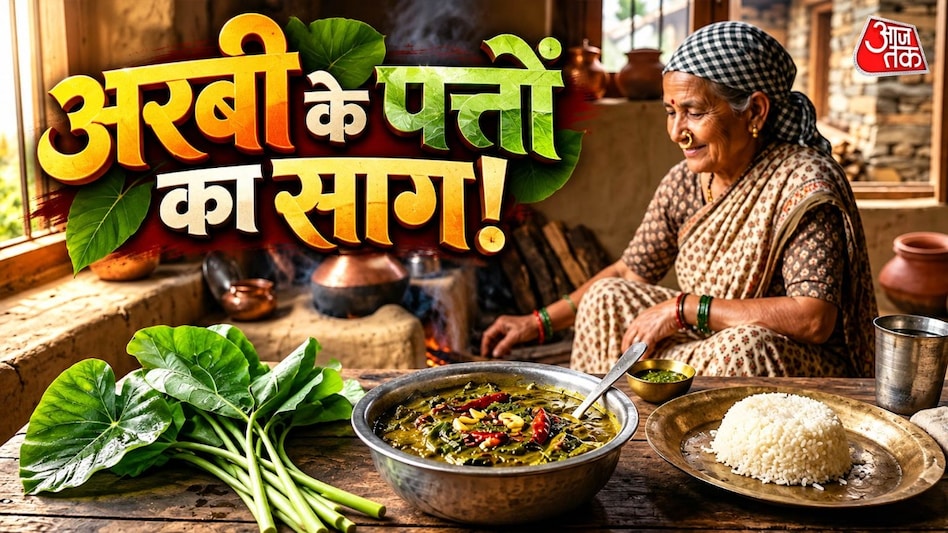
In the Uttarakhand region, people highly value not only the mountains but also the local cuisine; traditional green dishes often surpass the taste of vegetables available in restaurants. Although Kafuli is mainly prepared in Uttarakhand from spinach and fenugreek, there is also a popular version made from arbi leaves. In the mountains, arbi leaves are called 'gaderi ke pat', and their green salad is traditionally eaten with rice.

If you enjoy fresh and new vegetables, you can prepare Kafuli from arbi leaves for lunch, serving it with rice. This dish requires few ingredients and is very easy to prepare. The advantage of this method is that it does not cause the burning sensation characteristic of arbi leaves, allowing you to enjoy this salad without discomfort.

To begin, thoroughly wash the arbi leaves, removing stems and thick veins, and then chop them finely. Optionally, you can add a little spinach. Next, heat water in a pot and boil the chopped leaves until cooked. It is important to cook the arbi leaves well to reduce their natural irritant properties.

After the leaves cool down, place them in a blender and lightly crush them, without turning them into a very fine puree. In a separate bowl, take rice flour and dissolve it in a small amount of water to obtain a liquid mixture. Next, heat mustard seeds in vegetable oil in a pan, add finely chopped garlic and green pepper, frying them until they have a light aroma. After this, mix in turmeric and coriander powder, remembering to add a little water so that the spices do not burn. Then add the crushed arbi leaves to the pan and mix thoroughly.

Next, grind the rice soaked in water in a mortar to a coarse consistency, and add this mixture to the Kafuli, mixing well. Adding water as needed, the Kafuli simmers over medium heat for some time. When the dish thickens and is fully cooked, add salt to taste. After about 8–10 minutes of cooking, turn off the stove.

Kafuli is served hot with plain rice, but it can also be eaten with flatbreads. Besides arbi leaves, Kafuli can be made from spinach, fenugreek, or pumpkin leaves.

Russian Producers Offer Natural Sweets as the Perfect Complement to Traditional Desserts
Read more
www.khaleejtimes.com

Russian Producers Offer Natural Sweets as the Perfect Complement to Traditional Desserts

A pleasant time spent with a cup of aromatic tea and favorite sweets can be even better if those sweets are natural and do not contain artificial additives or preservatives. Traditional Russian desserts, created by nature, are capable of delighting the taste buds and fitting perfectly into tea traditions.

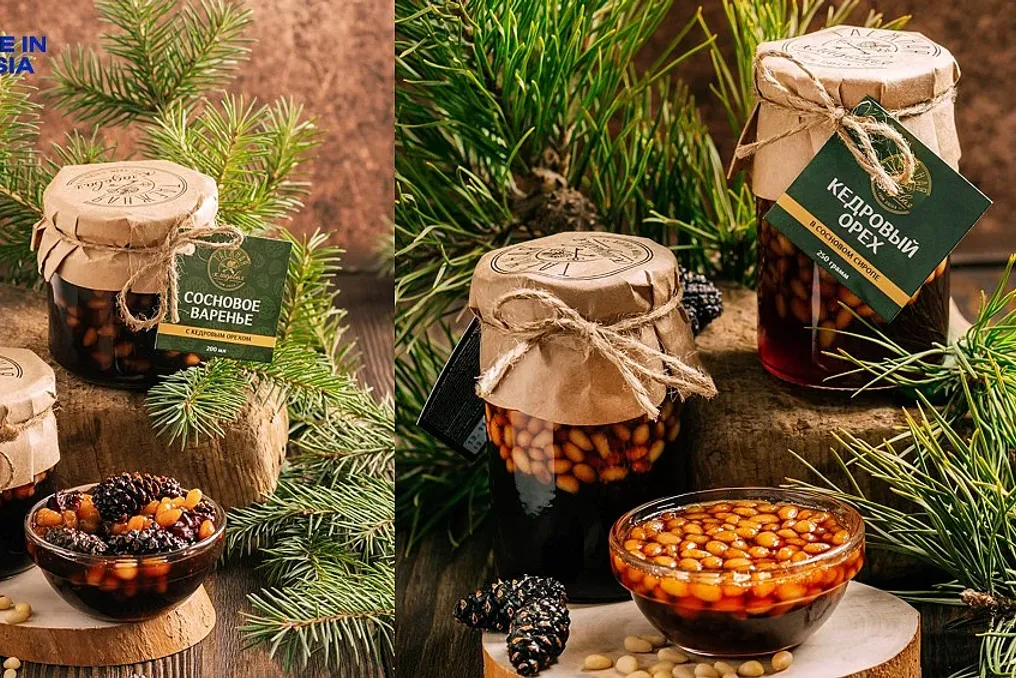
The brand Taiga Storeroom, based in Siberia, is known for its delicious, high-quality products made using old family recipes. The brand's products are certified under the 'Made in Russia' program, confirming their compliance with strict standards of quality and authenticity.

Interesting jams made from Siberian pine cones and berries are characterized by bright aroma and taste, and are also very healthy. They are produced using a unique recipe that preserves natural properties. Pine cones are rich in essential oils, and cedar nuts are valued for their nutritional value.

The assortment includes a pine cone jam with cedar nuts, which can be purchased at Yas Mall, Republic Gastro Pub, and Jabel Beach Ali Resorts. The Siberian jam has gained popularity worldwide: it has been liked by consumers in China, Estonia, Slovakia, and Kazakhstan. Even a Michelin-starred restaurant in Denmark purchases Taiga Storeroom products. The list of buyers is constantly growing, and negotiations are underway with Uzbekistan, Serbia, and Vietnam. Additionally, the product is in demand in the UAE, where it has been exported since June 2026.

The company Family and Farm offers honey cream—a product with an unusual texture and surprisingly delicate taste. This company's products also have the 'Made in Russia' certificate, guaranteeing that the honey meets high standards for export products. Family and Farm's pride lies in its own apiaries, where bees collect honey from ecologically clean wild herbs.

Honey cream is excellent spread on bread and serves as an exquisite addition to cheeses and pastries. The variety of flavors will satisfy any preference—from classic honey to options with natural berry syrup, which gives desserts a special freshness. Since 2022, Family and Farm's products have been supplied to China, confirming the high demand for natural Russian sweets in the international market.

The farm operates on the principles of organic production without compromise: the soil is fertilized only with natural fertilizers produced on the farm itself. The original honey cream recipe does not contain preservatives, dyes, or thickeners—only natural honey and syrups from real berries.

Tea is not just a drink; it is a symbol of hospitality and a ritual that unites generations. Karak, with its spicy aroma of cardamom and saffron, is rightly considered the main symbol of tea drinking. However, in recent years, new trends are gaining popularity—matcha and hojicha, especially among young people. And with such tea, whether traditional karak or modern matcha, one always wants something special: a sweet that enhances the taste of the drink, rather than overpowering it.

Natural sweets from Russia—pine cone jam and berry honey cream—are created precisely for this purpose. Their natural sweetness and unique flavor notes combine perfectly with the spicy aroma of cardamom and saffron in karak, add soft berry freshness to matcha, and a warm caramel tint to hojicha. A spoonful of such jam or honey on a plate next to a cup of karak is not just a dessert, but a new gastronomic experience that reveals a familiar drink from an unexpected side.

Lukumat with fig syrup, chebab with honey, khamir with cheese—these tastes are familiar to everyone. But what if you added something new to them? Russian natural sweets open up new dimensions to familiar desserts. Siberian berry and pine cone jam, as well as berry honey cream, pair wonderfully with lukumat, chebab, and khamir: their natural texture, density, and lack of preservatives make these desserts even richer and healthier. It is the choice of those who value quality and care about health without giving up their favorite tastes. And for lovers of experimentation, pine cone jam with cedar nuts will be a real discovery—its tart, resinous taste with nutty notes will add a completely new dimension to familiar desserts.

The products of both companies are certified under the 'Made in Russia' program—a mark of authenticity valuable to buyers around the world. But what exactly stands behind this badge? It is not just a formality, but the result of voluntary certification confirming that the product meets strict standards of quality and reliability. For buyers in the UAE, where the market is saturated with various offerings, 'Made in Russia' becomes a kind of guide. It guarantees that you are purchasing an authentic Russian product, created in accordance with all norms and requirements, and not a counterfeit or a product of dubious origin. Such a mark helps make an informed choice in favor of a reliable product, instead of relying solely on the appearance of the packaging. For those who value naturalness and monitor their health, the 'Made in Russia' certificate is an additional confirmation of product safety. This is especially important in the food category, where composition, origin of ingredients, and absence of artificial additives come to the forefront. Jam from wild Siberian berries and pine cones, and honey with natural berry additions—these are precisely the cases where the quality mark confirms what you can already taste: you are getting an authentic local product, created with respect for tradition and nature.

Popular