A.R. Rakhman, a composer who began his career in 1989 by setting up a home studio and independently handling composition, production, and engineering, achieved success with the soundtrack to his first film in 1992. Decades later, he continues to refine the sound of film music.
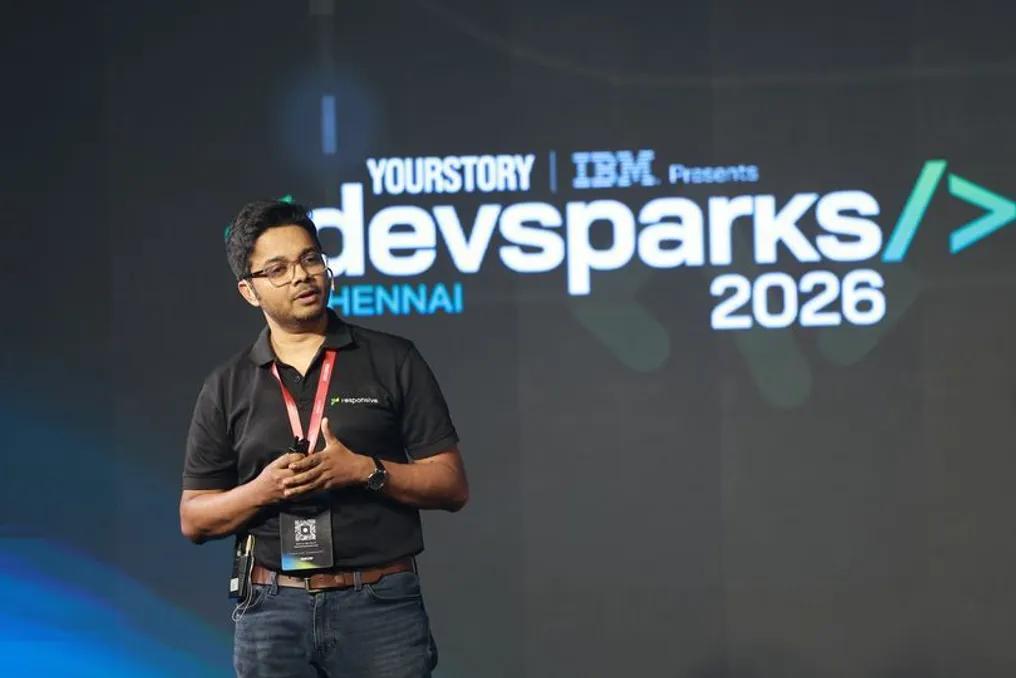
Kunal Shrestha, Vice President of Product at Responsive, used this composer's story in his presentation at DevSparks Chennai 2026. He applied this story to illustrate a situation where developers observe artificial intelligence making software creation cheaper and faster, which in turn facilitates its replication. His talk, titled 'The New Level Playing Field for Developers: Beyond Features,' focused on finding differentiators when features themselves cease to be protected.
Shrestha noted that the number of questions on the Stack Overflow forum has decreased to a negligible fraction of its former level. He explained this by stating that developers joining the market after 2021 have started using AI tools instead of turning to forums.
He stated: 'If you don't redefine, you will be replaced.' Shrestha emphasized that pressure is exerted in both directions: development companies risk losing customers to internal alternatives created with AI, and internal engineering teams must prove the reliability of their own AI systems over time. He referenced a recent McKinsey study indicating that 32% of organizations abandoned purchasing a software product because it could be built internally using agent coding tools.
Responsive, a company that helps enterprises respond to RFPs, security checks, and vendor questionnaires, released its first AI-powered feature in 2024. Shrestha clarified that the company does not develop or fine-tune its own models; the initial priority was addressing what he called the 'trust gap' between customers and AI-generated results.
'What started with 10% of our customer base using AI in our products is now 70%,' Shrestha reported. He added that Responsive serves 2000 clients globally, including over a quarter of Fortune 500 companies. Many of these companies possess the engineering talent to build comparable tools themselves but have not done so yet.
After trust was established, the company moved to automation, launching agents to speed up customer request processing, and then to implementing intelligent capabilities when speed ceased to be a sufficient differentiator.
Shrestha identified three areas where, in his view, companies can still create a defensible competitive advantage: trust, intelligence, and distribution.
Regarding trust, he believes that AI systems require more than just a confidence score attached to their outputs. Users must be able to trace any answer back to its source, and every step the AI system takes to make a decision must be logged for both internal support and ultimately for users who wish to understand the system's reasoning.
Concerning intelligence, Shrestha pointed to agentic RAG—a method where an AI system extracts information from the company's own data rather than relying solely on the data it was initially trained on. This method is combined with customer history memory so that systems do not start interactions from scratch with every query.
He also described the possibility of learning from patterns gathered from multiple clients, such as using anonymized onboarding data to accelerate the adaptation process for new clients without revealing any single client's data.
On the topic of distribution, Shrestha advised companies not to expect users to come to their application. AI tools should be integrated directly into the platforms customers use daily, either through direct integrations or via the Model Context Protocol—a standard allowing AI systems to connect to external tools and data sources.
He stressed: 'Don't get stuck on your application.' Adding that the appropriate interface depends on the task, he concluded that a true omnichannel experience allows a user to start work in one interface and switch to another without losing context.
Shrestha compared Responsive's approach to software development two years ago, when a product manager wrote specifications, a designer created mockups, and an engineer implemented them in three separate handoff stages. He contrasted this with the newer approach the company uses for simpler projects. In this new approach, as he explained, one person, often a developer, inputs a prompt via an AI coding tool connected to the company's design system, and then reviews and publishes the result. Shrestha noted that 'for simple projects only one person can do this from start to finish,' but complex initiatives still 'require input from people across numerous functions.'
In conclusion, Shrestha returned to the theme of curiosity, advising developers that staying relevant means constantly questioning whether the problem being solved is the right one, not just how well it is solved.