
The meaning of 'Vibe' in Gen Z language and its widespread usage
Read more
Aaj Tak
www.aajtak.in

The meaning of 'Vibe' in Gen Z language and its widespread usage

Gen Z and the new words they adopt are constantly subjects of discussion. This discussion is not just because the words are novel, but also because their meanings are often varied and ambiguous. With every new word heard, the question arises what its true meaning is?

Currently, on social media, Gen Z can be heard using the word 'vibe' in reference to a place, music, attire, food, or even a person. Phrases like 'This place has a whole vibe,' 'Today's vibe is different,' or 'Her vibe is good' have become part of common conversation. However, it is necessary to understand what 'vibe' actually is and why Gen Z has started explaining everything with this single word?

In reality, 'vibe' is derived from the English word 'Vibe,' which is used to denote a special feeling derived from a person, environment, atmosphere, or experience. It cannot be limited to a single emotion. For example, feeling peaceful and comfortable in a cafe could be its 'vibe,' while feeling excitement and energy at a music concert could be a different 'vibe.'

'Vibe' in Gen Z's language is not limited to describing an atmosphere; it also expresses a person's connection to an object or idea. A person might say, 'This song is my vibe.' This doesn't just mean they like the song, but it also means the song matches their mood, preference, or the feeling of that moment.

Social media has further promoted the use of this word. Displaying a specific type of mood through photos, reels, music, and fashion on Instagram and other platforms has become an integral part of content. In such a scenario, 'vibe' becomes a concise and simple word that allows expressing the entire mood or experience at once.

The use of 'vibe' in Gen Z conversations is also used to understand people. Someone might say that a person's 'vibe' is calm, entertaining, or positive. Thus, this word conveys a person's behavior, energy, and the feeling associated with them all at once.

An interesting aspect is that the meaning of 'vibe' can be different for each individual. The same place might feel calm and beautiful to one person, while another might feel bored there. Therefore, 'vibe' largely depends on personal experience. This is why 'vibe' has become so popular in Gen Z's digital language. This word, which communicates mood, preference, experience, and connection in few words, makes conversation smooth and informal. Now, simply saying 'good' to like something is not enough; it is also necessary to say, 'This is my vibe.'

персональный опыт.
Similar stories

Reasons Why Generation Z Calls Different Life Stages an 'Era'
Read more
www.aajtak.in

Reasons Why Generation Z Calls Different Life Stages an 'Era'

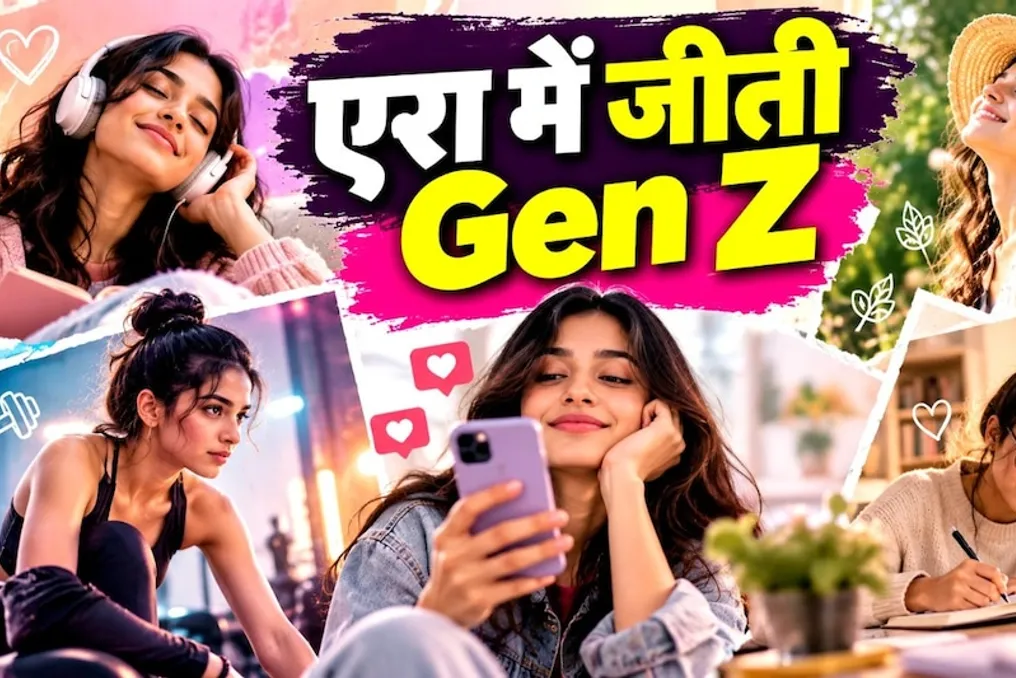
Social media has changed not only how people communicate and follow trends but also their approach to self-perception and self-expression. Today, people have started assigning special names to specific aspects of their lives, moods, or lifestyles.

In the digital language of Generation Z, the term 'era' is part of this trend. Some are in a 'soft girl era,' others in a 'healing era,' a 'fitness era,' or a 'self-love era.' Thus, any new stage of life can become a new 'era.'

What does 'era' mean?

Simply put, 'era' is used to denote a specific period or phase in a person's life. Whatever currently holds the most significance in your life can be called your 'era.' For example, if a person focuses on their health and physical shape, they might jokingly or casually call themselves someone in a 'fitness era.' Similarly, after a breakup, a person focused on themselves might call their life a 'healing era.'

Why has the 'soft girl era' become popular?

'Soft girl era' is a prime example of this phenomenon. It is not just a trend related to clothing or makeup. It includes elements such as softness, self-care, comfort, and prioritizing one's own happiness. An academic article published in 2025 examined the 'soft girl era' as a lifestyle trend emphasizing comfort, healing, and joy.

A distinct visual image has formed on social media, including pastel tones, soft makeup, journaling, self-care, and a calm lifestyle. Although the 'soft girl' trend did not start solely in this form, over time its meaning has expanded from fashion to lifestyle and personal choice.

Why name every stage?

For Generation Z, 'era' is not just a fashionable word but a form of self-expression. It allows describing a long period or mood with a single short word. A phrase like 'I am currently in my healing era' often seems simpler and more suitable for social media than telling the whole story. According to a report presented at the Meta and Instagram trend walk in 2024, interest among Indian Gen Z in personal growth and self-improvement was noticeable. Specifically, 43% of Indian Gen Z expressed hope for creating a 'self-improvement era.'

Thus, 'era' has ceased to be just an internet trend. It has transformed into a method of naming, recognizing, and expressing one's story across various life stages on social media. Sometimes it is related to fashion and lifestyle, and sometimes to personal growth and self-care. However, the question remains: why does Generation Z enjoy calling every new stage of their life a new 'era'?

Differences in Slang Between Gen Z and Gen Alpha: From 'Rizz' to 'Aura'
Read more
www.aajtak.in

Differences in Slang Between Gen Z and Gen Alpha: From 'Rizz' to 'Aura'

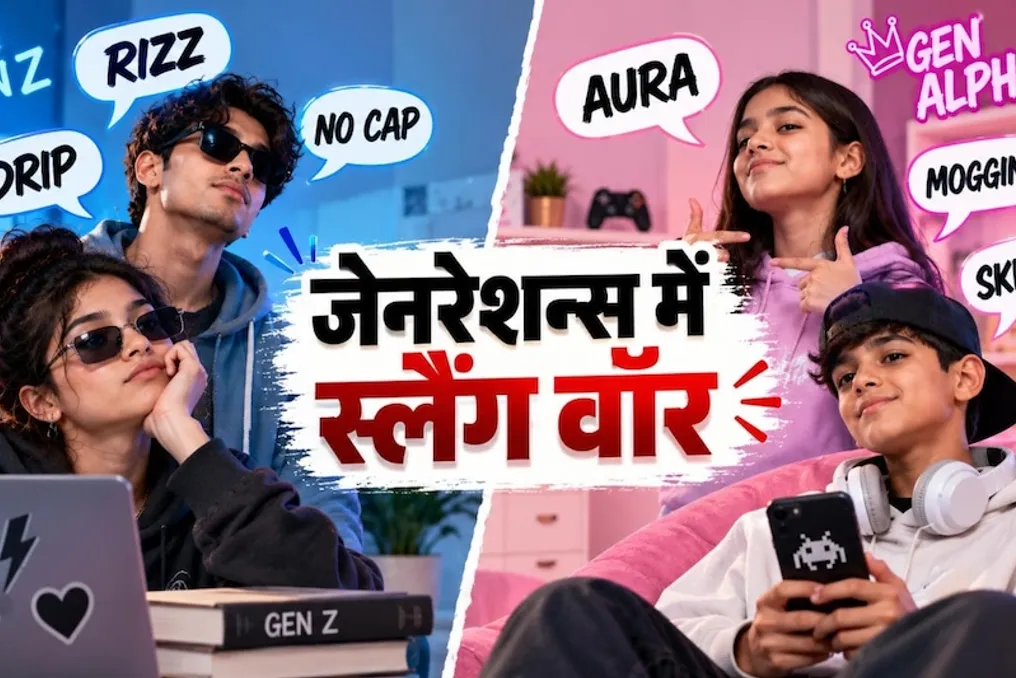
Each generation possesses its own unique communication style, and especially in the era of the internet and social media, youth language is undergoing rapid changes. Words popular among Gen Z, such as 'rizz', 'drip', and 'no cap', are gradually being replaced by new and different terms in Gen Alpha communication. This shift in slang demonstrates how the internet and social media continuously transform our spoken language.

Comparing 'Rizz' and 'Aura'

The term refers to the ability to charm or attract attention. Gen Z uses 'rizz' to describe a person's ability to easily influence others, for example: 'Look at his 'rizz', he can easily influence anyone!'. Meanwhile, Gen Alpha applies 'aura' to indicate a person's presence and influence, saying: 'He just has a different 'aura', everyone watches him wherever he goes!'

Thus, while Gen Z uses 'rizz' to characterize charisma and the ability to attract people, Gen Alpha uses 'aura' to describe a person's aura and influence.

Comparing 'Drip' and 'Sigma'

These words relate to appearance—stylish, confident, or impressive. Gen Z evaluates appearance through 'drip', noting: 'Did you see his clothes? What amazing 'drip' he has!'. In turn, Gen Alpha often uses 'sigma' to describe someone who is considered self-sufficient, unconventional, or imposing, as in the example: 'He looks like a true 'sigma', his manner of behavior is special!'

For Gen Z, 'drip' serves as a way to praise excellent fashion style or sense of fashion, whereas in Gen Alpha's lexicon, 'sigma' is applied to those perceived as confident, different from others, or influential.

Comparing 'No Cap' and 'Skibidi'

These expressions are used to affirm the truth or describe something in an unusual or funny way. Gen Z uses 'no cap' to emphasize the truthfulness of what is said, for example: 'No 'no cap', I ate the best food of my life!'. Gen Alpha, on the other hand, applies 'skibidi' to something strange or amusing, as in the phrase: 'His manner of behavior is just 'skibidi', nothing is clear!'

'No cap' in Gen Z internet language is used to emphasize the truthfulness of a statement. And 'skibidi' is a term related to Gen Alpha internet culture, often used in the context of something bizarre, funny, or absurd.

Who are Gen Z and Gen Alpha?

Generation Gen Z generally includes people born approximately between 1997 and 2012. The next generation, known as Gen Alpha, covers children born roughly from the early 2010s to 2024. Both generations grew up in the age of the internet and digital technologies, but their childhood and experience interacting with social media differ, which is reflected in their language and slang.

Popular