How to Grow 5 Beautiful Houseplants from One Leaf, Bypassing Seeds and Stems
Read more
Aaj Tak
www.aajtak.in

How to Grow 5 Beautiful Houseplants from One Leaf, Bypassing Seeds and Stems

Many people enjoy gardening and decorating their homes, but buying new plants from nurseries can often put a strain on the budget. If financial costs become an issue, this information may be useful. There are plants that can be grown not from seeds or cut stems, but by using just one leaf.

This method is called Leaf Propagation. It allows you to increase the number of plants at home without significant expense. However, it is important to understand that not every plant can be propagated from a leaf, and attention must be paid to the correct humidity level, soil type, and lighting.

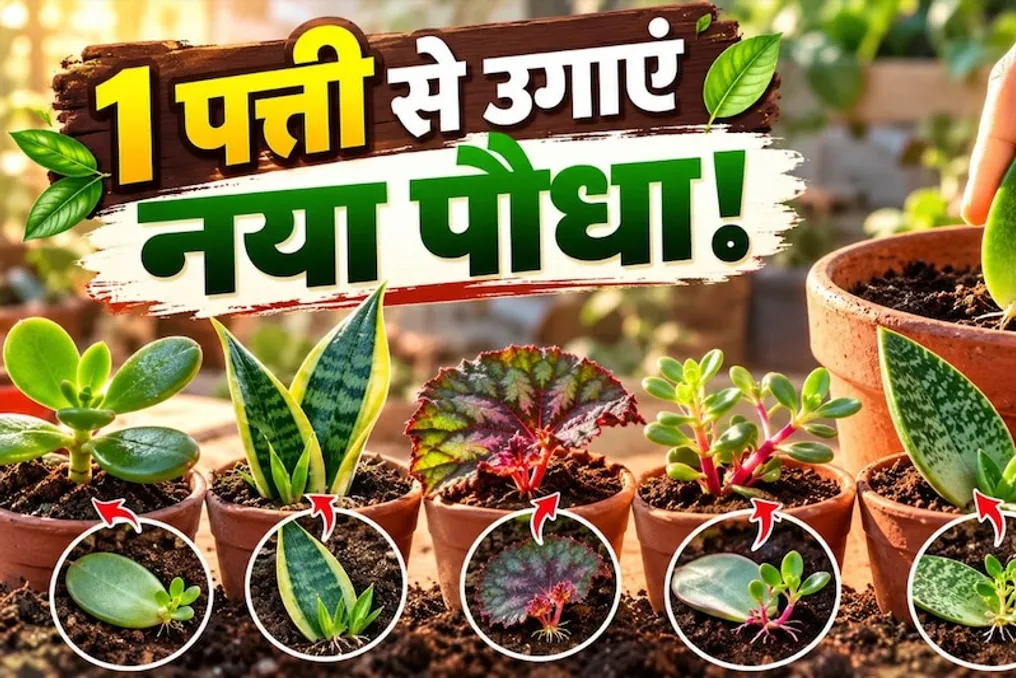
1. Jade Plant: The Jade Plant does not require a large amount of water because the water accumulates in its thick leaves, making it relatively easy to propagate from a leaf. To start the process, take a healthy branch, let it dry out for about 1-2 days, and then place it on slightly moist soil. Roots may appear in 2-4 weeks. Once the roots are well developed, the plant can be transplanted into a pot.

2. Snake Plant: Snake Plants are often used indoors, and they can be propagated using leaf fragments. A healthy leaf needs to be cut into pieces approximately 3x3 inches. These fragments can either be placed in water or planted in a mixture of coco coir and perlite. Roots will begin to form within a few weeks, after which the plant should be moved to a soil pot.

3. Begonia: If you like flowering plants, the Begonia will be a good choice. It can also be propagated from a leaf. Take a healthy stem and cut it in half. Place it on moist soil or coco coir, ensuring that water does not stagnate. With proper humidity, roots can develop within 2-4 weeks. When roots start growing and new leaves appear, the plant can be transplanted into a separate pot.

4. Portulaca: Portulaca, known for its colorful flowers, is a low-maintenance plant that can be prepared using a leaf. Take a healthy stem and plant it in well-draining soil. It is important that the leaf is moist when planted, and it should not be buried deeply. Roots may appear in about 7-14 days. After this, allow the plant time to establish; it can fully develop within 3-4 weeks.

5. Gasteria: Gasteria is a very beautiful ornamental plant that can be placed both on a balcony and indoors, and it does not require excessive care. For leaf propagation, first take a healthy leaf and let it dry out for 1-2 days. Then, place it on a light soil mix, such as coco coir and perlite, avoiding burying the leaf completely in the ground. Roots may appear in 3-6 weeks. When the roots reach a size of 2-3 inches and new leaves start appearing, the plant can be transplanted into a pot.

The most important thing when creating a plant from a leaf is patience and controlling the moisture level. The plant should be placed in soil that does not retain water. Overwatering can lead to leaf rot, and excessive sunlight can negatively affect growth.

Similar stories

According to Vastu, there are five types of plants that can bring negative consequences into the home
Read more
www.aajtak.in

According to Vastu, there are five types of plants that can bring negative consequences into the home

People often use various plants to decorate their homes and give them a green appearance. However, in Vastu Shastra, not all plants are considered favorable for living spaces. There are beliefs suggesting that placing certain types of plants inside the house or in inappropriate locations can cause negative effects. Vastu pays particular attention to caution when dealing with thorny, dry, and some specific plants.

There are concepts linking certain plants to well-being, financial status, and progress within the home. The following discusses types of plants that should be avoided in a residence, as well as advice on what to consider if such plants are already present in the home.

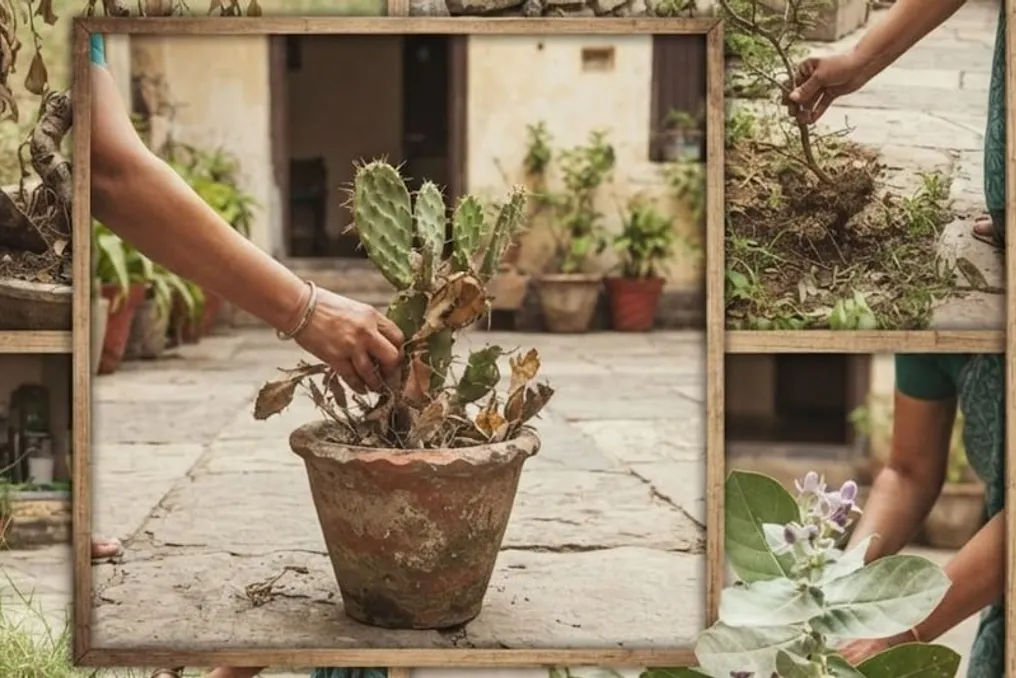
According to Vastu principles, keeping cacti, नागफानी cacti, or any other thorny plants inside the house is not considered auspicious. According to folklore, they may contribute to increased tension and disagreements among family members. If such plants are used for decoration, it is advised to place them outside, rather than in the bedroom or living room. It is important to remember proper care and protection of the plants, especially if there are small children or pets in the house.

The ash tree holds great religious significance, but some Vastu beliefs warn against placing it indoors. It is believed that having an ash tree in the house can lead to increased financial difficulties. If an ash plant sprouts on a wall or in a corner of the house, it should not be ignored. From a practical standpoint, the roots of trees growing in walls can damage the structure, so it is better to use a safe and appropriate method for its removal.

Regular care is necessary after planting. Within Vastu, dry and dead plants are not considered auspicious. Such plants are associated with stagnation and negativity. Therefore, if a plant located on a balcony, by a window, or in any corner of the house has completely dried up and has no chance of recovery, it should be removed. Only healthy and lush plants should serve as decorative elements of the home.

The Mehendi plant is known for its aroma and beautiful leaves. Nevertheless, some Vastu beliefs advise against placing it indoors. In the original text, Mehendi is associated with negative energy. Although these beliefs lack scientific confirmation, if a person adheres to Vastu rules, they might choose to place the plant in an open area instead of inside the house.

Bonsai is currently very popular in interior design. Due to its small size, it is easy to place on a table, balcony, or in the living room. However, according to Vastu beliefs, keeping bonsai is associated with obstacles to progress. In Vastu, its small and limited size is seen as a symbol of stalled development. On the other hand, there are also positive views on bonsai, and many people keep it purely as a decorative plant.

It is important to pay attention not only to the choice of plant but also to its placement and care. According to Vastu, it is preferable to have green and healthy plants in the house. Plants should be placed in areas where they receive sufficient light and air, appropriate to their type. Before planting plants indoors, one must check whether their roots might damage the walls, floor, or pipes. Dry leaves and fallen parts must be cleaned regularly. In Vastu, some plants, such as Tulsi, Snake Plant, Bamboo, and White Aparajita, are considered auspicious because in various beliefs, they are associated with positivity, prosperity, or good luck. Separate Vastu rules also exist for these plants regarding direction.

How to grow Moringa from seeds or cuttings in a pot; harvest pods after 5 months
Read more
www.aajtak.in

How to grow Moringa from seeds or cuttings in a pot; harvest pods after 5 months

You have probably tried dishes made from Moringa pods, or Sahajan, but you might not have known that Moringa is considered a true treasure trove of health. Not only its fruits are used in food, but also its leaves and flowers. This is why people prepare various dishes using Sahajan, including flatbreads and chhile made from leaves, as well as delicious tikki, vegetable dishes, and marinades.

If you like Sahajan, you do not need to buy pods or leaves at the market every time. If you have a little space on a balcony, roof, or yard, you can grow a Moringa plant in a pot. Furthermore, this does not require much effort or being an expert in gardening. Next, we will tell you how easily to grow a Moringa plant at home.

When planting a Moringa plant, you should not choose a small pot. It is better to take a large pot with good depth so that the plant's roots can develop freely. The pot should be filled with a mixture of soil and well-rotted manure. Manure mulch provides initial nutrition to the plant.

A Moringa plant can be prepared from seeds or from a branch cutting. If you have Moringa seeds, plant them in the soil to a depth of about 2–3 inches and lightly cover them with soil. If you prefer to use cuttings, take a healthy Moringa branch and plant it in the prepared soil in the pot. After that, it is important to maintain soil moisture.

Moringa should be placed in a place where it receives enough sunlight. A balcony, roof, or part of the house that gets good daylight will work for this. Water by observing the soil moisture, and do not keep the plant constantly in water. For good growth, manure can also be added about once a month. This helps retain nutrients in the soil.

If insects appear on the Moringa plant, you should not immediately apply strong chemical sprays. You can spray the plant with neem oil, which is an excellent option. Before using anything on the plant, be sure to read the correct dosage and instructions.

With proper care, Moringa plants may produce flowers in about 90 days. After that, pods may start appearing in about 5–6 months. That is, a plant planted today can yield fresh Sahajan pods for your kitchen after several months of care. Thus, by using a small space at home, you can grow a Sahajan plant. However, the time of pod appearance may depend on the season, the variety of the plant, the soil, and the care.

Popular