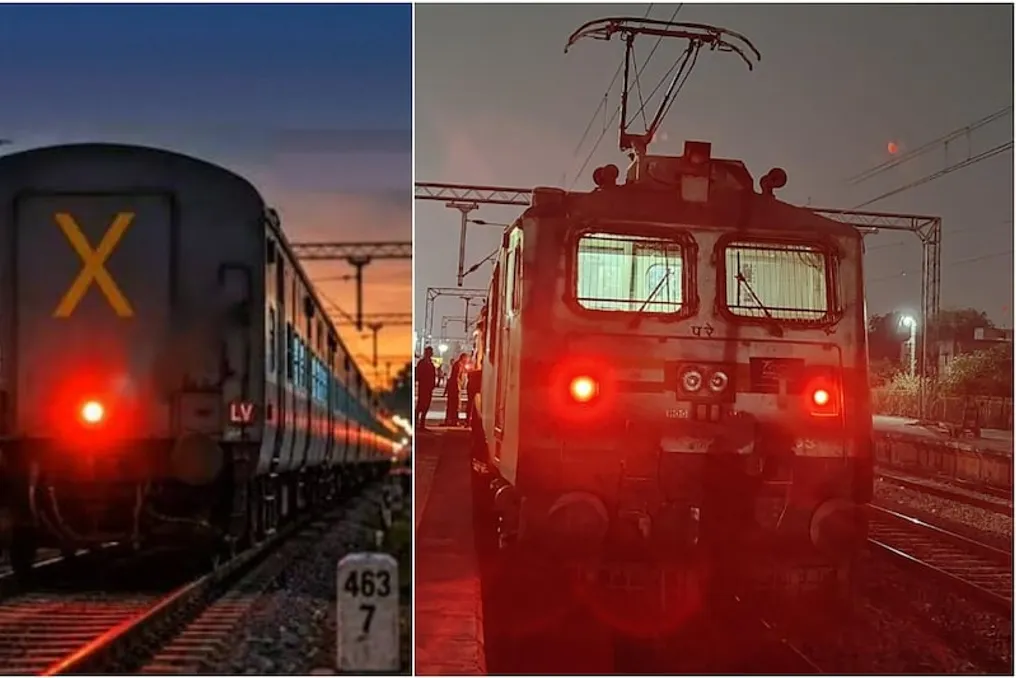
Railway Council issues directive to strengthen safety measures using red lights on freight trains
Read more
Aaj Tak
www.aajtak.in

Railway Council issues directive to strengthen safety measures using red lights on freight trains

When looking at a train from the front, people usually pay attention to its locomotive, wagons, and passengers, but they often overlook a small red light located at the very end of the consist. Although for most this is just part of the train, in the railway sector this lamp performs an extremely important function.

This illumination serves not only for external identification but also helps railway employees determine whether the consist is complete or if any wagon has detached along the way. In this regard, the Railway Council has decided to tighten this safety system, especially concerning freight consists.

The red light installed at the very last part of the train is called a Tail Lamp. Its main task is to signal that the last section of the train has passed and the entire consist is moving safely. Simply put, if a red tail lamp is visible behind a freight train, railway employees understand that the entire consist has passed them. If, for any reason, a wagon or boxcar detaches along the way and the tail lamp is not visible, this situation can be noticed immediately. Thus, this small red light is of great importance for train safety.

The Railway Council has instructed all zonal railways to ensure the presence of tail lamps on freight trains. This requirement applies to both freight consists accompanied by a train manager or a working train manager, and those that travel without them. It also includes freight trains that operate without a Brake Van. A brake van is a special wagon located at the very end of the train where the train manager or engineer performs their duties. This wagon is also called a mini train control center. Under such conditions, the role of the tail lamp becomes even more significant for identifying the last section of the train.

The Railway Council has not only decreed the provision of tail lamps but has also defined responsibility for their use. Before the start of a shift, the locomotive engineer and assistant locomotive engineer will take the tail lamp from the lobby. After completing the train's operation, they are obliged to return the tail lamp to the same lobby. This ensures a clear understanding of who took the lamp and who returned it after fulfilling their duties. All zonal railways are mandated to ensure compliance with this procedure.

This decision was made following a safety review meeting held on September 2nd. At this meeting, the availability and correct use of tail lamps on freight trains were discussed. Following this, the Railway Council issued a formal directive on implementing this system. Thus, the railway aims to guarantee the availability of necessary safety measures for identifying the last section of freight trains and to establish responsibility for their application.

The tail lamp is especially important at night or in dense fog. During the day, the last wagon of the train is easily noticeable, but at night or in heavy fog, the red illumination helps to see it from a distance. This signals to the locomotive engineer approaching from behind that there is a train ahead on the track. If necessary, they can timely reduce speed or stop the train.
Similar stories

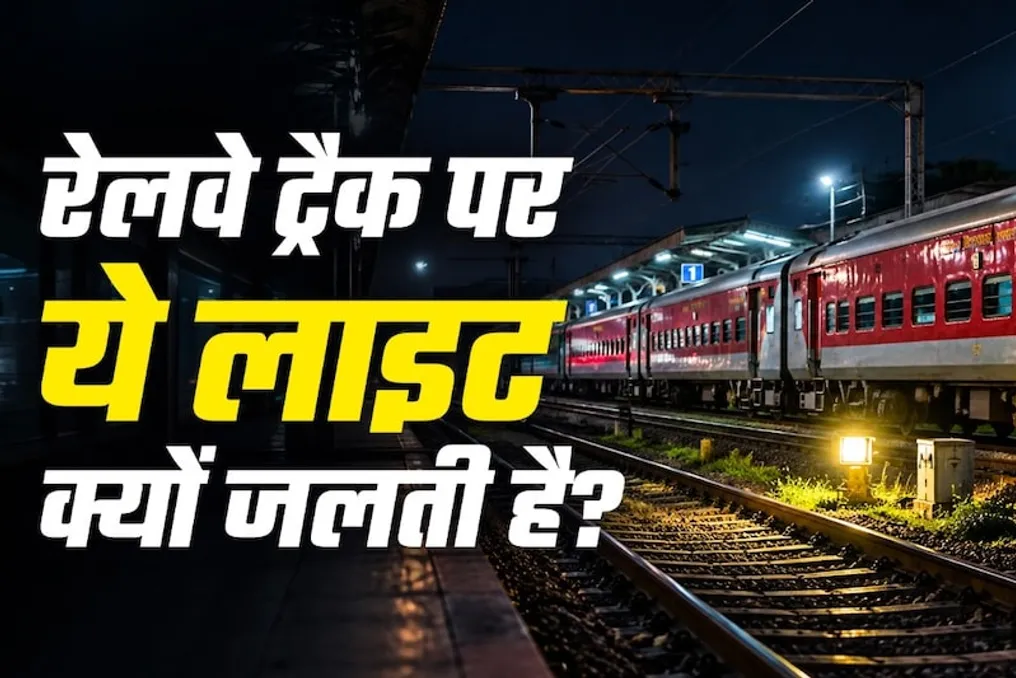
The purpose of small lights near railway tracks at night: explaining the operation of the signaling system
Read more
www.aajtak.in

The purpose of small lights near railway tracks at night: explaining the operation of the signaling system

At night, many small light sources can often be seen on railway stations near the platforms. Some of these lights are visible right by the tracks or in areas where rails connect or diverge. Although these lights may seem insignificant, they play a very important role in the operation of the railway. Indeed, train movement involves not only moving forward and backward; numerous tracks intersect at stations and marshalling yards. This is where wagons are separated, consists are joined, and trains are moved from one track to another. Therefore, it is extremely important for locomotive drivers and railway personnel to know the condition of the tracks and the safe boundaries, and various types of indicators and lighting help with this.

What is a fouling mark? A fouling mark is a special marking on a railway track that can be understood as an indication of a safe zone. A specific boundary is established at places where two tracks connect or cross. If a train, locomotive, or wagon is left outside this zone, it can restrict space for a train moving on another line. For example, if two tracks converge, and one train is parked too close to the junction point, part of it might end up on another train's path, creating a risk of collision. Thus, the fouling mark indicates where a train can stop and what boundary must not be crossed.

Why is lighting installed at night? During the day, fouling marks and other track-related signs are easily distinguishable. However, the situation changes at night. Marshalling yards have many dark areas, and during maneuvers, locomotives move very slowly. In such conditions, an indicator visible in the dark becomes very useful for personnel. The light allows for easy identification of the location or equipment at night. Point indicators and other signaling/shunting indicators are also used in railways to convey the status of a track or point under various circumstances using their light.

Trains are directed from one line to another using installed points. It is thanks to these that a train can be switched from one line to another. Suppose a train arrives on the main line and needs to be sent to a second line of the station. When the point position is changed, the train's route switches to another track. The point indicator helps railway personnel and the locomotive driver understand the position of the point. At night, this signal can be clearly visible thanks to the light notification.

These lights and indicators are especially necessary during shunting operations. Shunting means moving locomotives or wagons within a marshalling yard or station. During such operations, trains do not move at normal speed; wagons can be coupled or separated by moving the locomotive back and forth. Under these conditions, railway personnel must constantly monitor information about tracks, points, and safe boundaries. This is why these small lights in station marshalling yards can seem much more significant at night than during the day.

Are there such lights only at stations? Similar lights are installed not only within a station. In the railway, various types of signals, indicators, and track equipment can be placed at stations, marshalling yards, and other railway zones. Their correct operation depends on the type of installed equipment and the railway signaling system. This small lamp burning near the tracks at night seems ordinary at first glance. However, for the safe movement of trains in the railway, such small signs are of enormous importance. This is especially true in places where many tracks connect, the direction of train movement changes, or wagons are being maneuvered. Therefore, the next time you see such a small light by the tracks at night at a station, you should not ignore it, considering it just a light bulb. It may be a small but critically important element of the complex railway signaling and operation system.

Popular