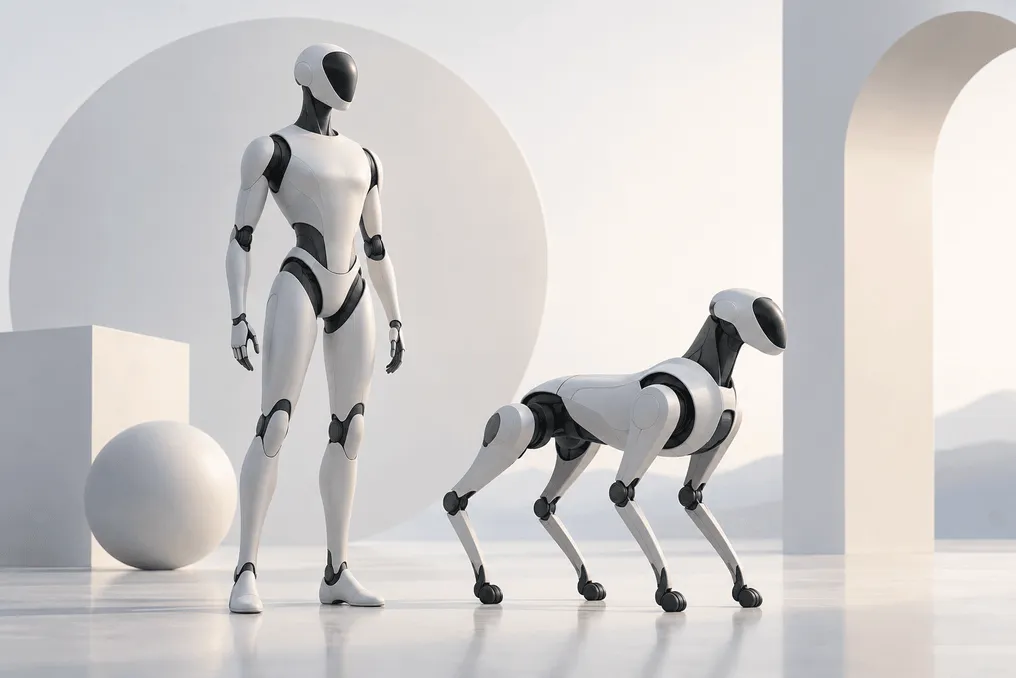
LimX Dynamics, in collaboration with Kyland Technology, has introduced a humanoid robot equipped with a fully domestic electronic architecture. The presentation took place on September 28, 2026, in the city of Ichan.
The core of this system is Kyland's industrial operating system Intewell, the deterministic AUTBUS bus, and the MaVIEW software, all integrated into the LimX platform for the entire robot. A representative from Caijing noted that this is the first instance of implementing a domestic electronic architecture in a humanoid robot system where end-to-end communication with the industrial level operates in real time.
According to Caijing and Securities Times e Company, this electronic architecture functions as the robot's 'nervous system,' combining the operating system, network, instrumental software, and domestic AI computing power. This system is designed so that control cycles and AI outputs utilize a deterministic base while maintaining isolation.
Advantages stated compared to Linux/ROS stacks plus CAN/EtherCAT include microsecond-level motion control, millisecond-level vision and control synchronization, as well as integrated industrial protocols and onboard safety boundaries.
The concept aligns with physical AI narratives, which suggest that model outputs are considered incomplete until they translate into deterministic physical actions. LimX Dynamics is responsible for the original design and manufacturing of the body hardware, as well as the brain-cerebellum fusion techniques and its COSA brain system as a high-performance host for validation.
Kyland provided the lower-level domestic electronic architecture after years of work on Intewell and AUTBUS, including the standard industrial wideband two-wire bus based on IEC TSN, which it spearheaded, as well as the MaVIEW software for physical AI actuators, previously recognized among industry peers.
Testers from the National Center for Industrial Information Security Research reported that they tested scenarios involving joint failure, network attacks, and malware injection; the robot with the domestic architecture demonstrated safe operation where traditional stacks lost control or shut down.
In the same week, Kyland and its partners, including Tsinghua University, AgiBot, LimX Dynamics, and Moore Threads, launched an alliance for the domestic electronic architecture of embodied robots. This alliance develops the work of a consortium initiated in April 2026 with the Shenzhen Robotics Association, Beijing Humanoid Robot Innovation Center, and UBTECH. It is important to note that this news concerns the integration of a domestic OS/bus/tool stack into the LimX humanoid, not a funding round, and includes product architecture testing and security.