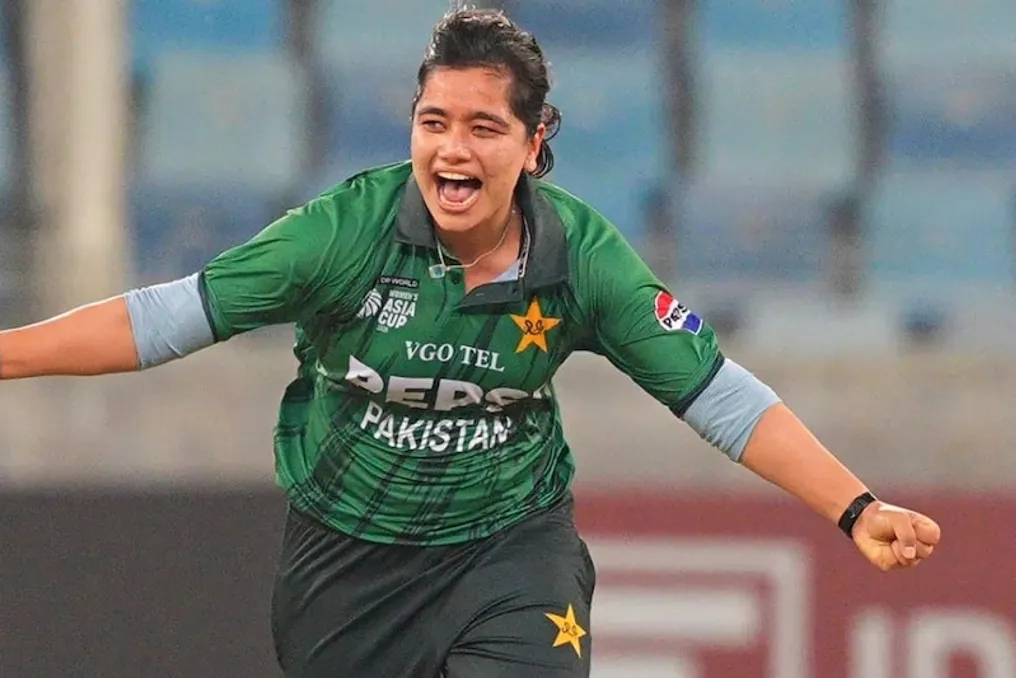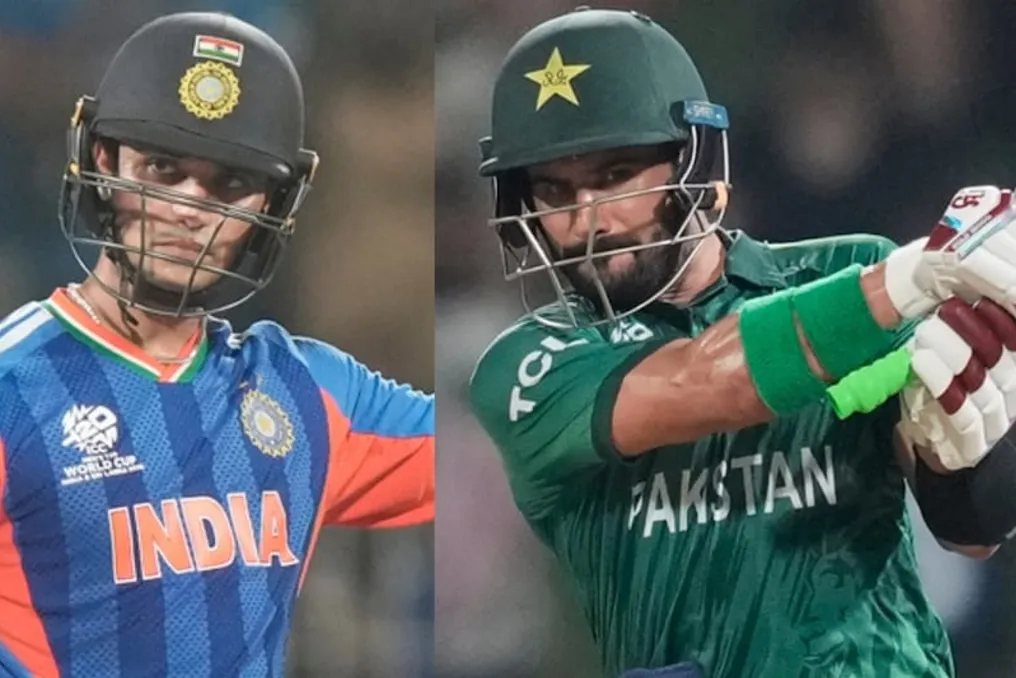
Asian Games 2026 Final: India and Pakistan clash possible, depends on match results
Read more
Aaj Tak
www.aajtak.in

Asian Games 2026 Final: India and Pakistan clash possible, depends on match results

The picture of a potential final in the men's cricket tournament of the Asian Games 2026 between India and Pakistan is forming. Both teams advanced to the semi-finals without playing their quarter-final matches due to rain. If they win their next games, they will meet in the final.

However, the situation is not so straightforward, as Bangladesh stands in Pakistan's path and is capable of changing the entire course of the tournament.

India and Pakistan initially gained direct access to the quarter-finals due to a higher ranking. But on Monday, September 27, rain interrupted both matches. Specifically, the match between Pakistan and Hong Kong did not start, and the meeting between India and Afghanistan also did not take place due to rain and a wet field.

According to the competition rules, in such cases, the team with the better ranking advances to the next round. It was based on this rule that Pakistan secured a spot in the semi-finals against Hong Kong, and India against Afghanistan, without playing.

The match between India and Afghanistan generated great interest among fans, as the participation of 15-year-old Vaibhav Suryavanshi was expected. After a brilliant performance in IPL 2026, which had high expectations, attention was focused on his performances at the Asian Games. However, constant rain and poor field conditions at the Korogi Sports Park in India dashed these hopes. The match did not even start with a toss, and ultimately India received a ticket to the semi-finals. India ranks first in the ICC T20 rankings, while Afghanistan is ranked tenth.

Now the Indian team will play the semi-final match on October 1 (Thursday) at the same stadium, and their opponent will be Sri Lanka. The quarter-final between Sri Lanka and Nepal was also cancelled due to rain. On the other hand, Pakistan's path is almost determined. Its semi-final match will be against the winner of the quarter-final match between Bangladesh and Malaysia. This is where the interesting equation of the India-Pakistan final arises.

If India wins its semi-final and Pakistan also advances, these arch-rivals will meet in the Asian Games final. Nevertheless, Bangladesh could become a serious obstacle in Pakistan's path. If Bangladesh wins the quarter-final against Malaysia, it will face Pakistan in the semi-finals. In that case, Pakistan will have to overcome the challenge from Bangladesh to reach the final.

Thus, the India-Pakistan final is not yet decided. Both teams need to pass through the semi-final barrier, and Pakistan potentially faces a tough confrontation with Bangladesh. Now the match between Bangladesh and Malaysia will determine the overall picture of this tournament.

Below is the schedule of the remaining Asian Games 2026 matches:

  • September 29 — Bangladesh vs Malaysia, starting at 10:00 AM
  • October 1 — First Semi-final (Pakistan vs TBA), starting at 5:30 AM
  • October 1 — Second Semi-final (India vs Sri Lanka), starting at 10:00 AM
  • October 3 — Bronze Medal Match, starting at 5:30 AM
  • October 3 — Final (Gold Medal Match), starting at 10:00 AM
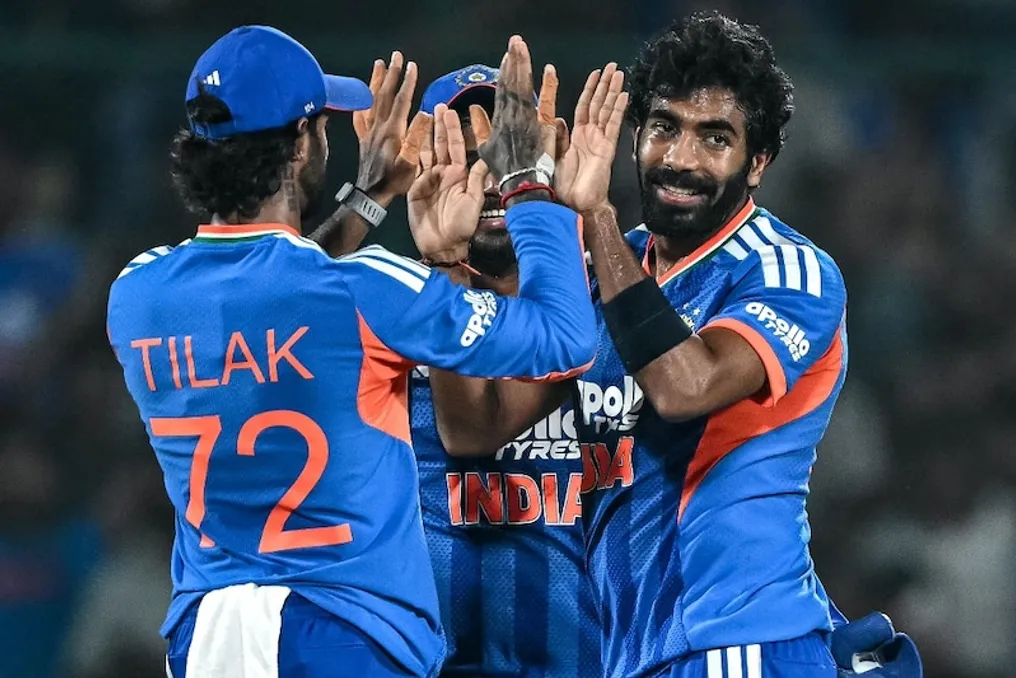
Similar stories

Asian Games 2026 Quarterfinal Schedule: India to Play Afghanistan, Pakistan to Meet Hong Kong
Read more
www.aajtak.in

Asian Games 2026 Quarterfinal Schedule: India to Play Afghanistan, Pakistan to Meet Hong Kong

The quarterfinals of the men's cricket tournament at the Asian Games 2026 in Nagoya have been fully determined. After the match in Group A was cancelled due to rain on September 26 (Saturday), Nepal and Afghanistan advanced to the next round, while the host country Japan was eliminated from the tournament.

Malaysia and Hong Kong advanced to the next stage from Group B. In the last match of Group A, Nepal and Japan faced each other. This match took place at Korogi Sports Park in Nishin city. Nepal, having lost the toss, started with bat, scoring a strong total of 149/4 in 15 overs. Sandeep Jora and Lokesh Bam helped the team reach a good position, but then it started raining. Due to the continuous rain, Japan's innings did not begin, and the match ended without a winner.

This result brought direct benefits to Nepal and Afghanistan. Earlier, Nepal achieved a major surprise in Group A by defeating Afghanistan. For Japan, this match was the last chance to remain in the tournament, but the rain dashed its hopes.

In Group B, the match between Malaysia and Oman was also cancelled due to rain, and no balls were bowled. As a result of this match, Malaysia and Hong Kong qualified for the quarterfinals, and Oman's campaign ended.

Following the completion of the preliminary round matches, the full quarterfinal schedule was announced. India will face Afghanistan on September 28 (Monday) at 10:00 AM. On the same day, at 5:30 AM Indian time, Pakistan and Hong Kong will meet. The third quarterfinal match will feature Sri Lanka against Nepal, and in the fourth quarterfinal, Malaysia will play against Bangladesh. Both of these matches will take place on September 29 (Tuesday).

Indian Kabaddi Teams Reach Asian Games Final, Aiming for 12th Gold
Read more
www.aajtak.in

Indian Kabaddi Teams Reach Asian Games Final, Aiming for 12th Gold

India's history of dominance in kabaddi is unfolding again at the Asian Games. Although this story is familiar, every competition brings new excitement. In Nagoya, instead of changing the picture, history is repeating itself: both the men's and women's Indian teams have reached the final, and after 11 gold medals, the call is to win the twelfth.

On Friday, the Indian women's team advanced to the final by defeating Nepal with a score of 48-24, followed by the men's team securing a convincing victory over Thailand with a score of 66-28, thus earning their spot in the final match. Both teams are current champions and remain undefeated in Nagoya, setting the stage for the next chapter of India's golden era in kabaddi.

In the semi-final, the Indian women's squad took control of the game in the first half, winning against Nepal 31-17. It was then clear what the match's direction would be. The Indian team strengthened its lead in the first half, scoring four 'out's and four bonus points. Although Nepal had a chance to come back in the second half, their efforts could not counter the Indian defense and attack. In the second half, Nepal managed only to add seven points, and India advanced to the final, winning the match 48-24.

Women's kabaddi was included in the Asian Games for the first time in 2010, and since then, India has won gold in every tournament. Before Nagoya, the Indian women had three gold and one silver medal. Now they have the chance to win another consecutive title.

Following the women's victory, the men's team also reached the final in a similar fashion. The Indian athletes maintained control over the game against Thailand from the start. In the first half, India led 37-18. The situation did not change in the second half either; the Indian team did not give Thailand a chance to comeback and ultimately won by a huge margin of 66-28.

India's aggressiveness can be seen in the bonus points: the Indian team earned 15 bonus points, while Thailand managed only five. The 38-point difference on the scoreboard clearly indicates the dominance of the Indian team.

Men's kabaddi was introduced to the Asian Games in 1990, and India has won eight gold medals. Before Nagoya, the Indian men's division had 8 gold and one bronze medal, totaling nine awards. The most notable aspect of this statistic is that besides India, only Iran has been the world champion in men's kabaddi at the Asian Games. Iran won gold in 2018, and in that edition, India unexpectedly settled for a bronze medal.

The situation in 2018 was the only significant exception in the long golden era of Indian kabaddi. After that, India recaptured the title, and now its focus is on the next gold in Nagoya.

Before Nagoya, the men's and women's teams in Indian kabaddi had a total of 11 gold medals—8 for men and 3 for women. Now both teams are in the final. This means India has two chances to increase its gold medal count in one Asian Games. If both teams win their finals, the number of golds in the men's division will increase to 9, and in the women's to 4. In total, the number of Indian kabaddi gold medals will reach 13.

Nevertheless, the challenge remains in the final. In both divisions, India will face the winner of the match between Iran and Taiwan.

In the history of the Asian Games, among India's eight gold medals in men's kabaddi, only one belongs to Iran. In the women's division, India has taken first place in every tournament held. This is why India's success in kabaddi is not limited to one team or one generation. Both Indian teams in Nagoya stand on the threshold of continuing this legacy. Winning the semi-final has certainly simplified the task, but the true crown awaits in the final.

The brilliance of 11 gold medals is already present. Now in Nagoya, the question is not just about a medal, but about adding a new chapter to this golden legacy. With the men's and women's teams in the final, the next scene of India's 'kingly title' in the kabaddi arena is ready.

Pakistan Women's Team Defeats Thailand in Asian Games 2026 Quarterfinal
Read more
www.aajtak.in

Pakistan Women's Team Defeats Thailand in Asian Games 2026 Quarterfinal

In the Asian Games 2026, the women's teams of Pakistan and Thailand met in the quarterfinals. On September 17 (Thursday) at the Coreogi Sports Park stadium in Nishin, the Pakistani team defeated Thailand with a score of 3 points.

Due to the wet field, the game was extended to 11-11 overs. The Pakistani team needed to score 92 points to win, which they achieved in 10.4 overs, leaving 2 balls. Despite facing difficulties due to consecutive player losses, the Pakistani team managed to cross the finish line.

Now, in the semi-finals, Pakistan will play against the winner of the third quarterfinal, which will take place on September 18 between Sri Lanka and Malaysia.

In the attack for Pakistan, the most productive players were opening batsman Shawal Zulfiqar, who scored 25 points, including three fours and one six. Captain Fatima Sana made a significant contribution, earning 21 points from 13 balls with the help of three fours and one six. Gul Firoza (16 points) and Tuba Hasan (13 points) also played useful innings.

On the Thai side, Onnicha Kamchomphu scored the most points, taking three wickets. Additionally, Sunida Chaturongratthana secured two wickets, while Phannita Maiya and Suliporn Laomi each took one wicket.

Thailand, having lost the toss and starting first, scored 91 points, losing four wickets in 11 overs. Nannapat Koncharoenkai, batting and bowling, stood out with a performance of 49 points from 38 balls, including seven fours. Phannita Maiya added 15 points, and captain Narumpol Chaiwai contributed 10 points.

In response, Pakistani captain Fatima Sana took 2 wickets, and Nashra Sandu took one wicket.

Team Lineups

The Pakistan squad included: Shawal Zulfiqar, Gul Firoza (bowler), Aisha Jafar, Fatima Sana (captain), Eman Fatima, Alia Riaz, Tuba Hasan, Nashra Sandu, Umm e Haani, Tasmia Rubab, and Iman Nasir.

The Thailand squad consisted of: Nattakan Chamtham, Phannita Maiya, Nannapat Koncharoenkai (bowler), Nannapat Chaihan, Narumpol Chaiwai (captain), Afisara Suwanchonarati, Chanida Sutiruang, Suliporn Laomi, Sunida Chaturongratthana, Onnicha Kamchomphu, and Tipacha Puttawong.

Popular