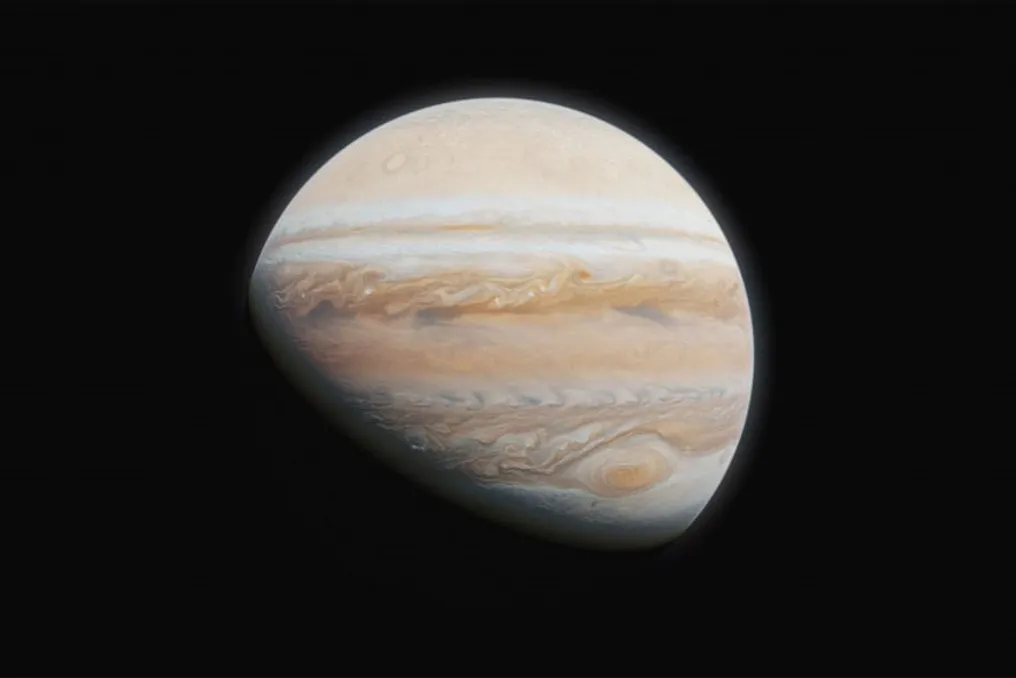
Juice probe uses Earth's gravity to adjust course and save fuel on the way to Jupiter
Read more
Olhar Digital
olhardigital.com.br

Juice probe uses Earth's gravity to adjust course and save fuel on the way to Jupiter

The Juice probe, belonging to the European Space Agency (ESA), executed a gravitational assist maneuver on Monday, the 28th, utilizing Earth's gravitational pull to alter its trajectory toward Jupiter.

This operation allowed for the modification of the spacecraft's path by approximately 20 degrees and an increase in speed of about 3.5 km/s, all without needing to consume large amounts of fuel.

The procedure brought Juice to a distance of only 8,640 kilometers from the Earth's surface during its pass over the Indian Ocean. This approach was meticulously planned to ensure the probe reached the exact point and maximized the gravitational interaction with the planet.

Four weeks before the flyby, operators made only a small trajectory adjustment to correctly position the spacecraft. According to Angela Dietz, Juice operations manager, the maneuver required ultra-realistic real-time navigation but consumed only a small portion of the propellant reserved for the procedure.

More information

In addition to the primary goal of altering the trajectory, the close pass by Earth provided an extra opportunity to test and calibrate Juice's scientific equipment in a well-known environment.

This was the third event of this type during the mission. The first occurred in 2024, during the gravitational assist involving the Moon and Earth, and the second happened during observations made by the mission in 2025.

Claire Vallat, a scientist on the Juice project and leader of the initiative, explained that Juice's journey to Jupiter offers few opportunities to validate and calibrate instruments under well-understood environmental conditions.

The intention is to use this pass to verify instrument functionality in space, determine the best way to operate them, and create tools to analyze the collected data. This process will be crucial when the spacecraft begins much more complex observations in the Jovian system.

Despite the high precision required for the Earth flyby, ESA considers the operation relatively simple compared to the challenges Juice will face near Jupiter's moons.

After reaching the planet, the probe will make 35 flybys of its main icy moons: Ganymede, Europa, and Callisto. These encounters will serve both for scientific research purposes and to gradually modify the spacecraft's trajectory.

The mission's purpose is to investigate Jupiter and its large moons, which are important targets for studying potentially habitable environments in the Solar System. Ganymede will receive special attention, as after the sequence of flybys, Juice is expected to enter orbit around the moon, a phase scheduled for the 2030s.

However, before that, Juice needs to return to Earth's vicinity in January 2029. This will be the last scheduled terrestrial gravitational assist before the spacecraft proceeds to its rendezvous with Jupiter in 2031.
Similar stories

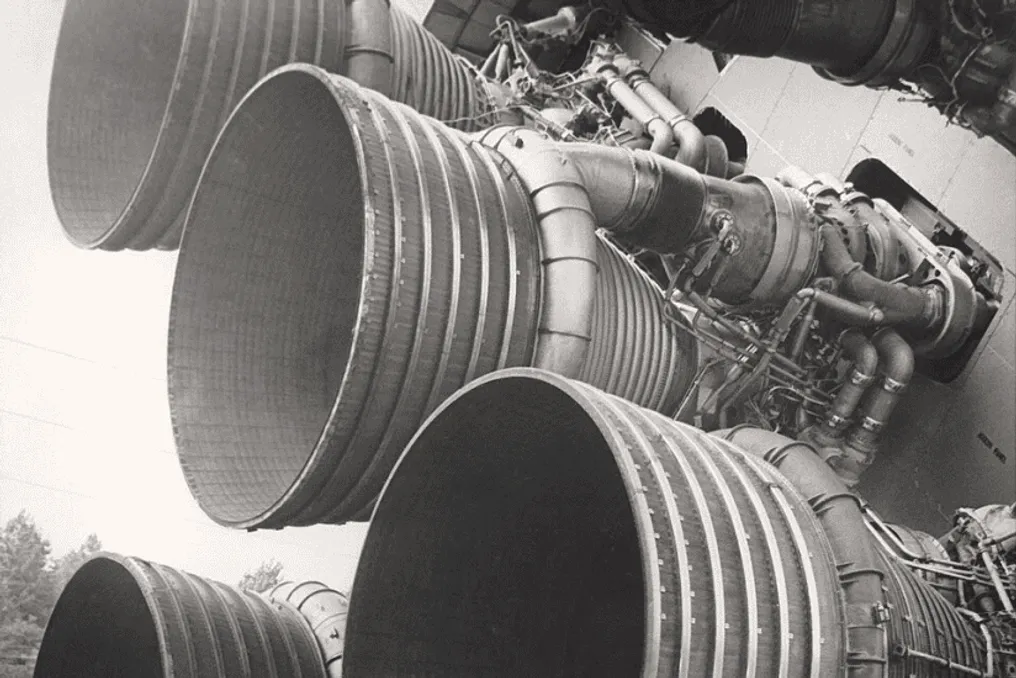
To advance in space travel, it is necessary to develop propulsion systems with greater thrust
Read more
olhardigital.com.br

To advance in space travel, it is necessary to develop propulsion systems with greater thrust

As discussed in a previous series on space exploration, humanity is close to returning to the lunar surface, possibly establishing a lunar base in the coming years. However, reaching Mars could still take decades, given that a crewed mission to the Red Planet presents high risks with current technologies.

To reach more distant destinations, generating superior thrust is essential. In the context of space travel, this thrust comes from engines capable of taking humanity into deep space.

Although technologies already exist to send probes to distant planets or even beyond the Solar System, such as the Voyagers, which reached interstellar space after almost fifty years, transporting humans to deep space is a distinct challenge. Manned missions require more than just reaching the destination; they need to supply food, water, equipment, and all vital resources for the duration of the journey.

The farther the destination, the longer the travel time, and consequently, the greater the need for resources. Therefore, for long manned journeys to become viable, they must be completed more quickly, demanding the development of new propulsion methods.

Conventional rockets still rely on engines with technology from seven decades ago. They work by burning fuel to expel hot gases at high speed. According to Newton's third law, the ejection force generates a reaction force that propels the rocket forward. This principle, although simple, was crucial for escaping Earth's gravity, orbiting Earth, reaching the Moon, and exploring the Solar System.

However, these engines are extremely fuel-intensive. While effective for takeoff, their range is limited on long routes. The need to carry more fuel implies larger rockets, which in turn require even more fuel, creating a recursive cycle that points to the urgency of revolutionary propulsion.

An existing alternative is ion propulsion, which also follows Newton's third law but with greater propellant efficiency. While chemical engines release large volumes of fast gas, ion engines accelerate electrically charged particles to much higher speeds. This results in a low-power engine, but one that can operate for months or years with very little propellant, similar to the efficiency of a Honda Biz.

This technology is used in probes like Dawn and DART, as well as satellites like Starlink for orbital corrections. However, the low power of the thrust requires a long acceleration time, which represents the main obstacle for manned missions.

To accelerate faster towards Mars or other locations, an engine is needed that combines the power of an Opala with the autonomy of a Honda Biz. Thermonuclear propulsion emerges as a possible solution. It uses a nuclear reactor to heat a liquid propellant, such as hydrogen. The heated propellant is expelled, generating a thrust two to three times greater than that of a conventional chemical rocket. Although it does not offer the full power of the Opala nor the autonomy of the Biz, it could reduce the trip to Mars from eight and a half months to only three to four months, and it is a technology under testing.

Another option is electronuclear propulsion, where the reactor does not directly heat the propellant but instead generates electricity to power an ion propulsion system. This would provide a more efficient energy source than current solar panels, enabling more robust engines.

Magnetoplasma propulsion is another promising technology. Similar to ion engines, the propellant is ionized and accelerated by electromagnetic fields, but in this case, the ionized gas is superheated to about one million degrees Celsius. This process accelerates the gas to tens of kilometers per second, generating a thrust twenty to thirty times greater than current chemical thrusters.

Magnetoplasma engines can have their thrust adjusted dynamically, allowing for greater power during launch or greater autonomy on long journeys. However, due to high electrical energy consumption, they would only be viable with a nuclear reactor, and the high temperatures represent a significant engineering challenge. Despite this, they are considered a strong possibility for deep space.

It is not yet known when humanity will expand its frontiers to Mars or more distant worlds, nor what technology will be used at that time. However, it is certain that, to progress, greater thrust is needed, and it is human aspirations for knowledge of the Universe that drive the search for more advanced solutions.

New propulsion technologies are crucial, but they are not the only barrier to reaching deep space, as there are other challenges to overcome.

Popular