Pope Leo XIV believes concerns about artificial intelligence should be taken seriously
Read more
Noticias ao Minuto
noticiasaominuto.com

Pope Leo XIV believes concerns about artificial intelligence should be taken seriously

Pope Leo XIV told journalists on a plane while returning from a four-day visit to France that although he is not panicking and sleeps well, he is convinced that the concerns raised by many AI experts must be taken seriously.

During his apostolic journey to France, the Pope repeatedly warned about the need to protect humanity from the influence of AI. In his speech in Paris on Friday, he stated that it is crucial to develop ethical judgment so as not to lose our humanity amidst the 'heaven of machines' that is invading and shaping our daily lives.

Discussions about the risks associated with this technology have intensified in recent months, fueled by various incidents and apocalyptic warnings from industry specialists. On the plane, the Pope emphasized that these anxieties are not 'fake news,' contrary to claims by some who allegedly spread them for financial gain or other advantages.

He noted that this is an issue that, in his opinion, should be discussed jointly, adding that simply saying 'oh, that won't happen' and ignoring the problem is probably not the most responsible approach.

In the encyclical 'Magnifica Humanitas' (Great Humanity), published in May, the head of the Catholic Church made a firm call to 'disarm' AI to 'prevent its domination over humanity.' In recent months, the Holy See has also intensified its initiatives for international governance of AI based on human dignity, particularly in the fields of nuclear technology, culture, and artistic creation.

Similar stories

How to deep clean your home without special equipment: 8 effective methods
Read more
www.aajtak.in

How to deep clean your home without special equipment: 8 effective methods

Although most people regularly clean their homes, there is a significant difference between daily wiping and a true deep clean. Even after routine cleaning, dust and grease accumulate in hard-to-reach places such as door corners, window grilles, under sofas, around switches, and in small kitchen areas. This is why a home may not look as bright as it should, despite being generally clean. Because of this, many turn to professional cleaning companies through online applications, which use machines and expensive products to clean hidden areas, leading to significant costs.

However, by using simple items and following the correct methodology, you can achieve results comparable to a deep clean without resorting to mechanical devices. The key to success lies in changing your approach to cleaning.

Preparation for cleaning and general rules

Before starting the process, you need to gather the necessary tools: microfiber cloths, an old toothbrush, a spray bottle, a bucket, a broom or a dry cloth instead of a vacuum cleaner, and a mild cleaning agent if necessary. It is much easier to clean in stages, room by room, rather than trying to clean the entire house at once. It is important to remember that you cannot use the same cleaning product on all surfaces; cleaning methods for wood, glass, steel, and painted items differ.

Eight steps for perfect cleanliness

The first and simplest rule of deep cleaning is to start from top to bottom. You must first remove dust from fans, light fixtures, high cabinets, and the upper parts of doors. After that, you should clean tables, shelves, and other items. If you start with the floor and then wipe dust from above, all the dirt will settle back onto the surfaces.

To get rid of dust on fan blades, you cannot simply brush it away with a dry cloth, as it will scatter throughout the room. Instead, you need to gently clean the blades with a slightly damp microfiber cloth. Then, use a long broom or cloth to remove dust from room corners, above windows, and behind furniture. An old toothbrush is excellent for hard-to-reach spots.

Do not forget about window grilles, as they constantly collect dust, hair, and dirt. First, loosen the grime with a dry brush or an old toothbrush, and then thoroughly wipe the grilles with a slightly damp cloth. For dirt stuck in corners, you can use a cotton swab or an old brush.

When cleaning the kitchen, it is important not to limit yourself to shining the stove and countertop; you must clean cabinet handles, door edges, spice racks, and the area around the gas stove where grease accumulates. First, remove the dust with a dry cloth, and then use mild cleaning agents and microfiber suitable for specific items. When applying any liquids, it is best to apply them to the cloth first, rather than spraying directly onto wooden or other delicate surfaces.

Sofas and mattresses also require deep cleaning, as invisible dust can accumulate in them. If you do not have a special machine, you should fluff them well and then wipe them with a dry microfiber cloth or a clean brush. If the cover is removable, it should be washed according to the label instructions. Before applying any liquid agent to the upholstery, always perform a test on a small, inconspicuous area to avoid color damage.

Switches and doorknobs are often left untouched during cleaning. These areas do not require much water to clean. Before cleaning a switch, ensure electrical safety. Use a slightly damp cloth to clean adjacent surfaces, and then immediately wipe everything dry.

In deep cleaning the bathroom, the main difficulty lies with ingrained dirt and soap scum. After applying the cleaning agent, allow it time to work, and then scrub with a brush. Pay special attention to tile grout, areas around faucets, the shower area, and the bottom of the doors. Under no circumstances should you mix different aggressive chemicals, especially bleach and acidic cleaners.

The final stage is cleaning the floor. This stage is performed only after completing all the above tasks. First, remove dry dust and hair, and then mop the floor with a cleaning agent appropriate for its material. Pay special attention to corners, areas under furniture, and joints with walls, where dirt may hide despite daily wiping.

In conclusion, achieving a professional level of cleanliness does not require specialized equipment. Following the correct sequence, paying attention to hidden areas, and using appropriate methods for each surface allows you to achieve very good results. The most important thing is to avoid rushing and using the same product or method for the entire room.


Construction Restrictions Imposed in Delhi to Combat Pollution: Impact on Workers
Read more
www.aajtak.in

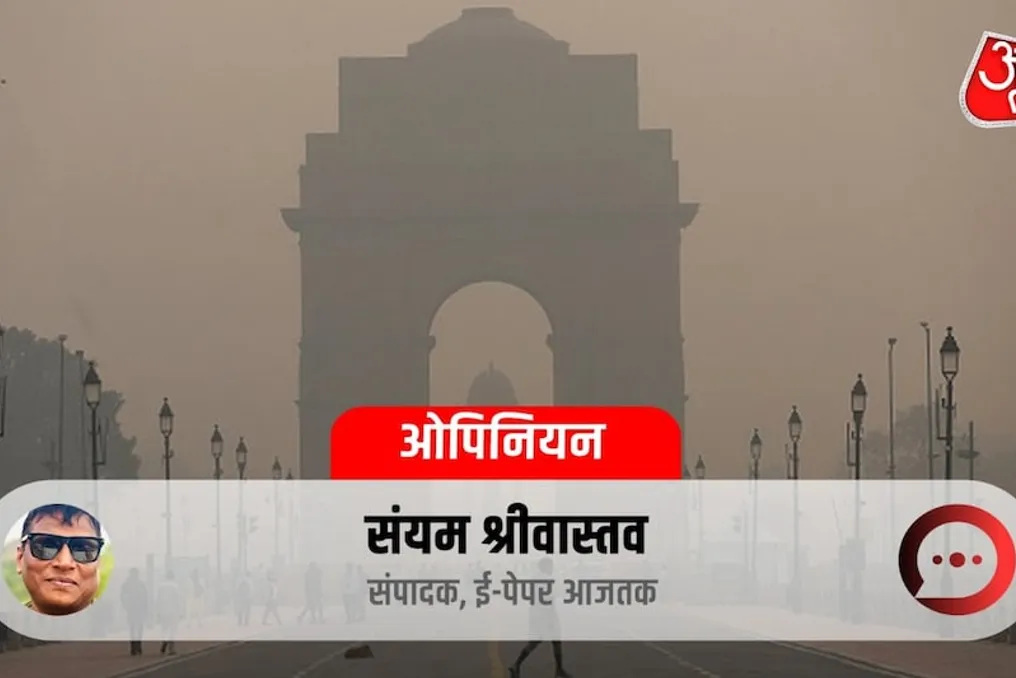
Construction Restrictions Imposed in Delhi to Combat Pollution: Impact on Workers

The government has taken timely measures to prevent Delhi from turning into a gas chamber during the winter period. Every year, when October-November arrives, the air in Delhi-NCR becomes toxic, prompting authorities to introduce various restrictions. This time, the Delhi government decided to prepare in advance by banning demolition work and open civil construction projects from November 1st to January 31st. Furthermore, construction and demolition activities will be completely suspended from December 10th to January 20th.

Strict decisions are necessary to combat pollution. The air quality in Delhi is not a problem of one specific administration or one season. Every winter, the deterioration of air quality negatively affects the health and standard of living of millions of people. Therefore, it is welcome when the government prepares in advance, strengthens supervision, and takes action against pollution sources.

However, this strategy has another side that must be considered with equal seriousness. The ban on construction activity directly affects thousands and millions of workers whose income depends precisely on this work. A large number of workers in Delhi-NCR come from states such as Bihar, Uttar Pradesh, Jharkhand, and Rajasthan, and they work in the construction sector. Many of them earn daily wages to support their families. For them, a four-month or one-and-a-half-month construction ban means not just a project halt, but a threat to their very existence.

This raises the question: is halting construction the most effective way to fight pollution? In reality, construction itself is not synonymous with pollution. There are detailed rules and Standard Operating Procedures (SOPs) for controlling dust during construction. Measures such as spraying water when cutting roads and conducting work, covering soil and building materials, using fully enclosed vehicles, prohibiting the stockpiling of construction waste on roads, and monitoring dust-generating zones have been established.

So, what is the problem? The problem is largely related to compliance and control. If water is regularly sprayed at the construction site, materials are covered, waste is not left exposed, trucks drive covered, and dirt on the road is immediately cleaned up, then dust spread can be controlled to a large extent. The Central Air Quality Commission (CAQM) also recognized in February of this year that dust generated during construction and demolition constantly contributes to pollution, and deficiencies in compliance were found during inspections.

Thus, the government knows about the problem and has rules to treat it. The difficulty lies in ensuring the enforcement of these measures. Interestingly, the problem of rule compliance is not limited only to private developers. Government agencies also often fail to adhere to the same precautions during road construction and repair as expected from private contractors. Roads are dug up, earth and waste remain on the sides, water is not sprayed for many days, and building materials lie exposed. Under such conditions, it is natural to ask: how to solve the pollution problem simply by banning private construction if government projects themselves do not comply with dust control rules?

The Delhi government also mentioned the use of the Dust portal and AI-based cameras for monitoring. These technologies are used to monitor construction sites larger than 500 square meters, which is a good initiative. However, the technology will only be effective if the information obtained from it is immediately used to take action. If a camera records a violation, but officials take several days to act, the technology remains merely a showpiece.

The main challenge for the government is this: it must move beyond the 'stop work' policy in pollution control. Why not allow work to continue on construction sites where rules are being followed? And why shouldn't large fines, work suspension orders, and accountability for officials be established for those who violate the rules? This would create a clear distinction between those who comply with norms and those who violate them.

Yes, temporary stoppage may be justified in areas with extremely high pollution risk or where dust control is impossible. But in general circumstances, stopping construction should be a last resort, not the first. This is especially relevant for Delhi-NCR, where residential, road, metro, hospital, and other public projects are continuously underway.

Furthermore, the government should consider alternative measures for construction workers. If a complete construction ban is imposed for a certain period, employment assistance can be organized for affected workers, skills training can be provided, or they can be connected to other public works. The cost of reducing pollution should not be borne by a person whose income is already limited.

A long-term ban on construction activity affects not only workers' earnings but also the pace of urban development. In rapidly growing metropolises like Delhi-NCR, construction of roads, flyovers, metros, housing, etc., plays a key role in development.

Popular