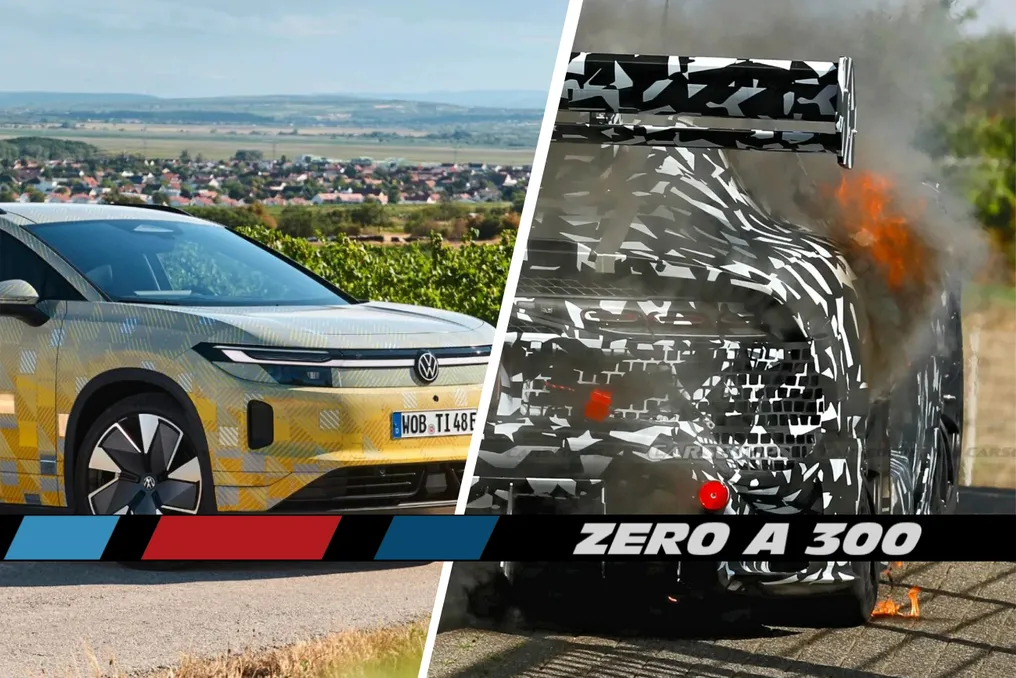
VW ID. Tiguan is presented while Mercedes-AMG GT Black Series prototype catches fire at Nürburgring
Read more
FlatOut
flatout.com.br

VW ID. Tiguan is presented while Mercedes-AMG GT Black Series prototype catches fire at Nürburgring

The automotive industry has presented several new developments, including the redesign of the Volkswagen ID.4 to the ID. Tiguan name, and the launch of new models such as the BYD Dolphin Mini and the Hyundai i20 N Line. Simultaneously, a Mercedes-AMG GT Black Series prototype suffered a serious incident during testing.

Volkswagen ID.4 gets new name: ID.Tiguan

Volkswagen appears to be seeking to integrate its electric line with conventional vehicles, following industry trends. After the ID. Polo and the ID. Cross, the ID.4 will be restyled and renamed to ID. Tiguan, replacing both the ID.4 and ID.5 models. The company justifies this change by wanting to clearly guide the consumer regarding the powertrain, leveraging the global recognition of the Tiguan name, which is one of the best-selling models in the Volkswagen group.

Although it maintains the silhouette of the ID. 4, the visual changes will focus on the front and rear, especially the headlights and taillights, which will adopt a more straight and futuristic shape. Internally, a significant change is expected, with the replacement of touch-sensitive controls with physical buttons for functions such as air conditioning, windows, and parts of the multimedia system.

This naming change also highlights the difference between the Brazilian and European markets. In Brazil, the ID.4 should start being sold in dealerships for the 2027 line, after three years of being offered only via subscription. Scheduled for October, the VW ID.4 will have a cost of R$ 299,990 (equal to the Tiguan R-Line), equipped with an electric powertrain of 286 hp and 55.6 kgfm of torque, offering an autonomy of 389 km according to Inmetro.

New BYD Dolphin Mini reveals interior without instrument cluster

The new generation of the BYD Dolphin Mini is being gradually revealed, initially through leaks in official documents from China's Ministry of Industry and Information Technology, followed by appearances in promotional photo sessions. Now, BYD itself has released body sketches and interior images.

Externally, the Dolphin Mini will be larger and more sophisticated, approaching the style of other brand models. With the increase in dimensions, which would place it in a size similar to the VW T-Cross, the engine will be boosted from 75 hp to 129 hp. However, the most notable aspect of the interior photos is BYD's decision to eliminate the traditional instrument panel, centralizing all driver information on the multimedia screen.

This approach follows the path of models like those from Tesla, although it is a point of criticism for some users. Although central panels are not new—remembering the 1990 Renault Twingo or the Toyota Etios—in the Dolphin Mini, the multimedia center will also have its rotary function removed, becoming fixed. Furthermore, contrary to the recent trend of returning to physical controls, the car will feature even fewer buttons and selectors, prioritizing voice commands and the screen itself.

Hyundai i20 will have N Line version in 2027

The Hyundai i20, the brand's latest model in Brazil, will receive an N Line version next year. According to sources, this sporty variant will maintain the 1.0 TGDi flex engine, delivering 115 hp and 17.5 kgfm of torque, always coupled with a six-speed automatic transmission.

As is common with these special editions, the i20 N Line will occupy the top of the lineup, presenting a robust package of equipment and a sporty look inspired by the Creta N Line. This includes a honeycomb pattern grille, darkened wheels, and black paint on the roof and mirror caps. The standard equipment list will follow the Ultimate variant, featuring 17-inch wheels, projector LED headlights, a 12.3-inch color digital dashboard, synthetic leather seats and steering wheel, automatic digital air conditioning, keyless entry, push-button start, adaptive cruise control, wireless charging, and a rearview camera.

Hyundai's most comprehensive set of driver aids includes autonomous braking, lane keeping assist, fatigue detection, blind spot alerts, rear cross traffic alerts, adaptive high beams, tire pressure monitoring, electronic traction and stability controls, six airbags, and an auto-hold parking brake.

Mercedes-AMG GT Black Series prototype catches fire at Nürburgring

An unreleased Mercedes-AMG GT Black Series prototype gained negative attention after catching fire during tests conducted at the Nürburgring Nordschleife. The vehicle, covered in heavy camouflage, was filmed driving, with flames appearing near the right rear wheel.

Subsequent images showed the fire intensifying rapidly, forcing the driver to stop and urgently abandon the car. People nearby intervened promptly, using extinguishers to control the flames. Fortunately, the driver escaped unharmed, and there were no other injuries. As of yet, the cause of the fire has not been determined, despite the right taillight stopping functioning at some point, which does not confirm an electrical origin for the fire.

The new Mercedes-AMG GT Black Series is expected to be the most extreme version of the grand tourer. There are strong indications that it will use the new AMG flat-plane V8 engine, designed to exceed the 646 hp of the CLE 646 Spezialanfertigung, given that its predecessor, the AMG GT Black Series, had 730 hp.
Similar stories

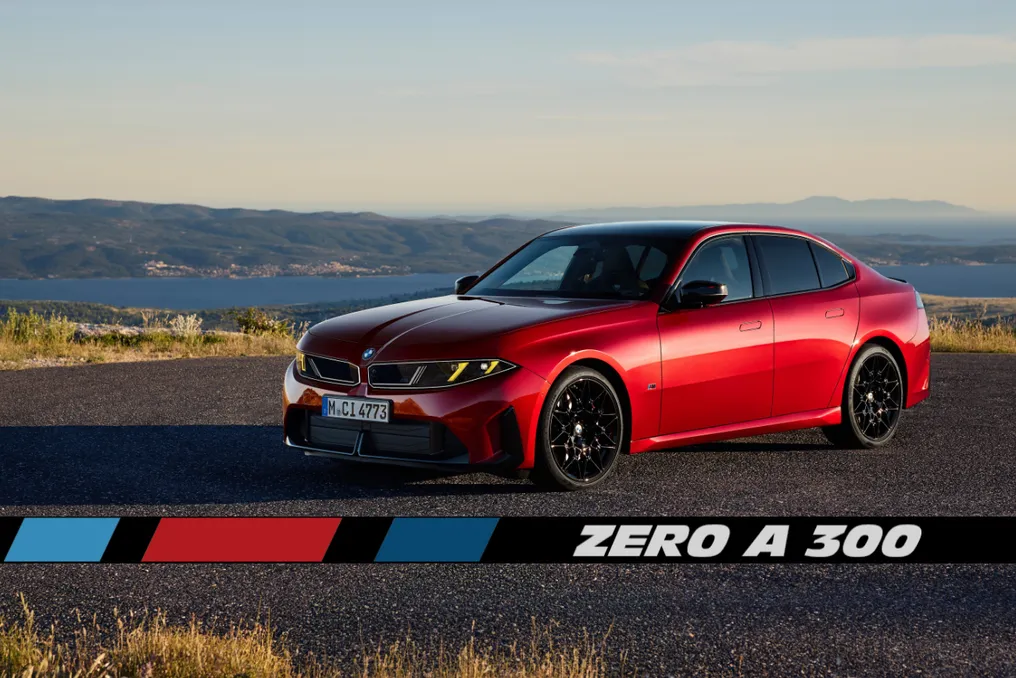
Automotive News: Combustion BMW 3 Series, Fiat Argo X, Electric Range Rover Sport, and Porsche Multimedia
Read more
flatout.com.br

Automotive News: Combustion BMW 3 Series, Fiat Argo X, Electric Range Rover Sport, and Porsche Multimedia

The automotive market has received several new developments, including the launch of the new combustion engine BMW 3 Series, initial glimpses of the Fiat Argo X, the electric version of the Range Rover Sport, and a multimedia update for classic Porsche models.

New Combustion BMW 3 Series

After just over six months since the electric variant, BMW introduced the new combustion engine 3 Series, identified by the code G50. Although both are named 3 Series and share strong visual similarities, they utilize distinct platforms. The visual identity follows the Neue Klasse style adopted by the manufacturer, with standardized headlights and taillights.

The combustion 3 Series features a more elongated hood, indicating its basis on the CLAR II platform, an evolution of the previous generation's architecture. BMW highlighted improvements such as widened front and rear tracks and a revised steering system, making it more precise and communicative. In contrast, the electric i3 model is built on the NAx architecture, the same one used in the iX3 SUV.

The vehicle's design occupies a peculiar position; although new BMWs rarely receive unanimous acclaim at launch, the trend suggests that enthusiasts will become accustomed to them over time. However, the new 3 Series carries the weight of the Neue Klasse name, referencing the iconic 1960s BMW 2002 without direct visual references, which might displease purists.

On the other hand, the G50 aligns with the brand's modern trend, presenting cleaner lines and more balanced proportions, eliminating excessive creases and folds and the prominent grille that was the target of criticism. While it cannot be classified as ugly, current criticism points to an excessively generic character.

Dynamics remain a strength of BMW. In the 3 Series G50, the highlight is the new M350 xDrive, which tops the combustion line in the absence of a new M3. This engine uses a classic 3.0-liter turbocharged inline six, complemented by a 48-volt mild-hybrid system integrated into the eight-speed automatic transmission. Power reaches 443 hp, allowing the sedan to accelerate from 0 to 100 km/h in 4.1 seconds.

A notable feature for enthusiasts is the system called 'Drift Moment.' BMW adapted a functionality typical of pure M models, allowing the xDrive system to disconnect the front axle, directing 100% of the power to the rear wheels for lateral maneuvers in corners.

For daily use, the 320 version maintains the 2.0-liter four-cylinder turbo engine, also with mild-hybrid assistance, generating 208 hp and coupled to the eight-speed transmission. The brand also confirmed the existence of an entry-level 318 version with 154 hp for Europe and anticipates plug-in hybrid versions for next year.

To accommodate these powertrains, the chassis tuning was specifically developed for the gasoline platform, incorporating a dedicated front suspension geometry, a recalibrated multi-link rear setup, and stiffer bushings compared to the electric model.

Internally, the differences between the electric and gasoline versions are minimized, and the cabin embraces the minimalism of the Neue Klasse language. The interior is dominated by an imposing 17.9-inch curved central display, focused on the driver, along with a new panoramic head-up display. The operating system is BMW OS X, based on Android, promising continuous updates and signaling BMW's commitment to reducing physical buttons on the dashboard.

In terms of dimensions, the G50 underwent a typical generational transition elongation to reinforce its road presence. The sedan now measures 4.76 meters long (5.2 cm longer than the previous one), is 1.85 m wide, and increased the wheelbase by almost 1 cm, reaching 2.88 meters.

Production was also segregated: while the electric i3 will be manufactured at the historic Munich headquarters, the entire combustion line of the new 3 Series will come from the Dingolfing assembly lines.

Considering the positive and negative aspects, BMW managed to find an intelligent way to preserve the mechanical essence that established the 3 Series, without neglecting what many consider the future of the industry. It remains to await the launch of the new M3.

Fiat Begins Revealing the Argo X

So far, everything known about the Fiat Argo X, which may be the brand's most relevant launch in the coming months, came from journalistic investigations and unofficial photos. However, the Italian-Minas manufacturer has finally released the first teasers with details of the vehicle.

The details are limited, consisting only of the emblem with a square typography and a close-up image of what appears to be the headlight. An initial surprise is that Fiat apparently will maintain the pixelated headlight of the European Grande Panda, the model that will serve as the basis for the Argo X. This is not a common aesthetic solution and certainly won't please everyone, but it is undeniable that Fiat will preserve the tradition of incorporating playful and creative design elements, as happened with the New Uno last decade (although this also did not have universal acceptance).

It is crucial to note that the Argo X should present significant structural changes compared to the model sold in the international market, given that its apparent function is to gradually replace the current Argo in the brand's entry-level lineup. This reflects Fiat's pattern of adapting its 'national versions,' simplifying engines and suspension systems for the Brazilian market, aiming for greater price competitiveness.

It is certain that two different mechanical units will be used, depending on the version. The most basic configurations should employ the well-known 1.0 naturally aspirated Firefly three-cylinder, six-valve engine, which delivers 75 hp and 10.7 kgfm, coupled with a five-speed manual transmission. More expensive versions may adopt the T200 Hybrid powertrain, equipped with a mild-hybrid system, producing 116 hp and 20.4 kgfm, always with a CVT gearbox simulating seven speeds. This engine is the same one used in the newly launched Jeep Avenger.

The Argo X is expected to arrive at dealerships soon, with projections pointing to the last quarter of 2026, although optimists bet on October.

Someone Decided to Make the Prelude

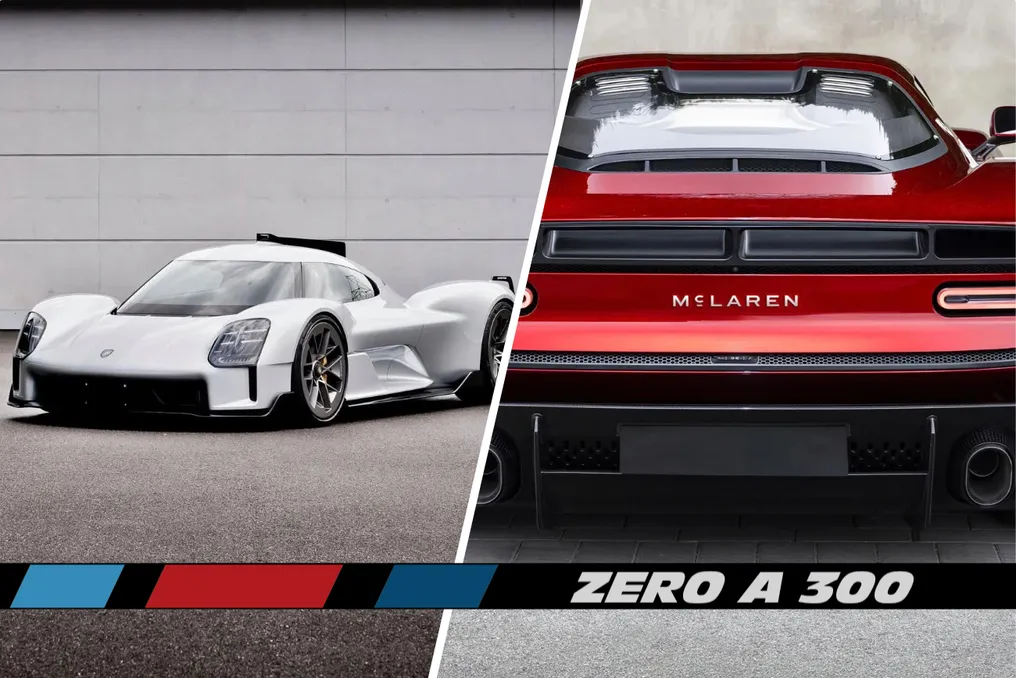
Porsche may launch new supercar with flat-8 engine; McLaren renews logo inspired by the past
Read more
flatout.com.br

Porsche may launch new supercar with flat-8 engine; McLaren renews logo inspired by the past

Porsche is reportedly developing a new supercar equipped with an eight-cylinder boxer engine, a configuration the brand has not used since the legendary 917 prototype. This development comes after more than a decade without a dedicated flagship model, with the last one being the 918 Spyder, produced 11 years ago.

The German publication Handelsblatt reported that Porsche CEO Michael Leiters will present details of this new vehicle during the Capital Markets Day, scheduled for October 7. The project, internally nicknamed Porsche S1, is part of the company's strategy to focus on combustion models for its most exclusive editions, catering to its audience's preference for gasoline-powered vehicles.

Although the project may incorporate elements of the Porsche 911, it is expected to be an exclusive vehicle. The recent sale of Porsche's stake in Bugatti injected about one billion euros in cash into Stuttgart, but the company still has priority expenses.

McLaren alters its logo with historical references

McLaren has made a change to its typography design, drawing inspiration from the origins of Bruce McLaren. The new lettering used on the cars is derived from the facade of the gas station owned by Bruce's family in Auckland, New Zealand. This location was the starting point for the first modifications made by Bruce McLaren to his 1929 Austin Seven, culminating in his first victory at Muriwai Beach.

This new font, named 'McLaren Sans', was previously displayed on the McL 6GT supercar during Monterey Car Week in California. Recently, McLaren changed the inscription on the rear of the vehicle, replacing 'McL 6GT' with just 'McL'. The manufacturer clarified that other iconic symbols remain in use, such as the Speedy kiwi bird, originating from the first shield designed by Bruce, and the Speedmark, the inverted 'C' emblem.

McLaren also emphasized the importance of its traditional colors—orange, chosen by the founder to make the cars stand out on the track, as well as blue, red, beige, and black. This change reflects a new phase for the brand, marked by contrasts: while the McL 6GT features a naturally aspirated V8 with a manual gearbox, the company is preparing an SUV to compete with models like the Lamborghini Urus and Ferrari Purosangue, aiming for broader appeal.

Rare MCA Centenaire supercar to be auctioned

The MCA Centenaire, a remarkably rare supercar, will be offered at auction by Broad Arrow Auctions. Conceived in the late 1980s by Italian Fulvio-Maria Ballabio, a former Formula 2 and CART driver, the vehicle featured the work of specialists such as Carlo Chito, an engineer with experience at Ferrari and Autodelta, and Pierluigi Corbari, former sporting director of Alfa Romeo.

Its innovation lay in the carbon fiber monocoque, often cited as the first street car to employ such construction. The engine was a 5.2-liter V12, taken from the Lamborghini Countach 5000QV, which generated 455 hp transmitted to the rear wheels by a six-speed ZF manual gearbox. Only five examples were produced between 1990 and 1992, and the car in question is the first.

Additionally, the MCA Centenaire was the first supercar manufactured in Monaco, and its name honors the centenary of the principality's Automobile Club. The car will participate in the 2026 edition of the Zoute Concours Auction, which will take place in Belgium on October 9, with an estimated valuation between 900,000 and 1.2 million euros.

In another piece of news, Dodge has asked owners of 345 units of the Demon 170 to suspend the use of the cars. The manufacturer identified a specific batch of defective crankshaft dampers in these units, representing over 10% of the total production of 3,300. According to Matt McAlear, Dodge CEO, the problem can start with abnormal noises and, if ignored, lead to a 'catastrophic engine failure.'

Dodge is arranging for the component replacement and will cover transportation costs for the repair. Interestingly, this action is being treated as a Customer Service Notice rather than a formal recall.

Popular