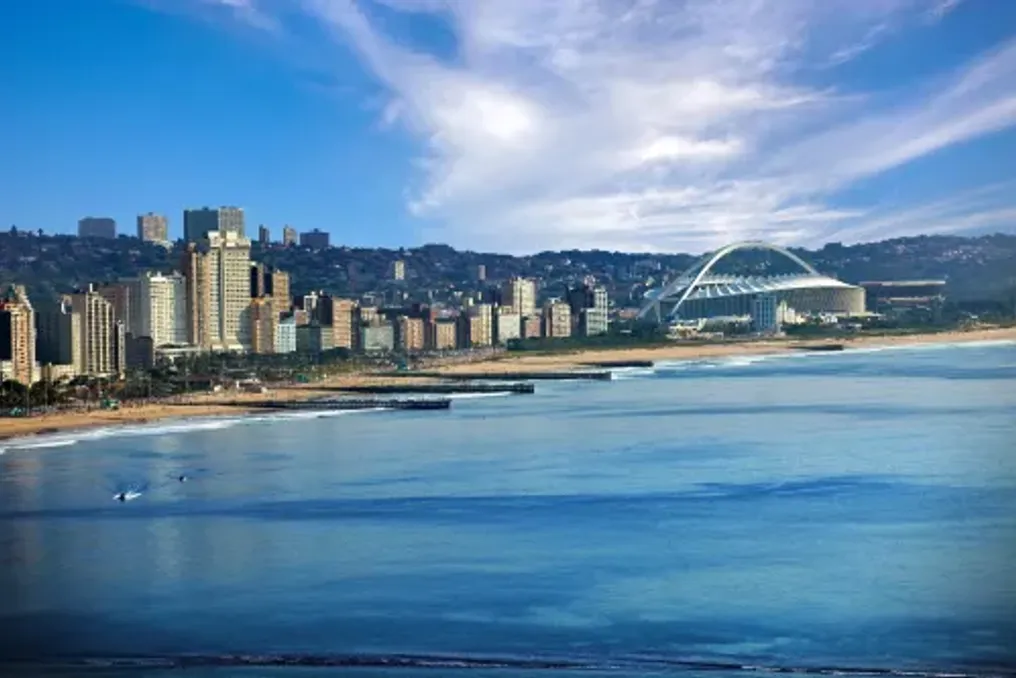
Tourism is a vital part of the economy of KwaZulu-Natal and Durban, but to maintain visitor interest, clean beaches, reliable municipal services, and more than just election promises are needed.
The summer tourist season is approaching in KwaZulu-Natal, when visitors can enjoy the warm Indian Ocean crashing against the country's picturesque beaches. Deep inland lies the uKhahlamba-Drakensberg mountain range, which contains the highest point in the Mpumalanga province, reaching approximately 3450 meters. Between the coast and the mountains stretches a landscape rich in culture, reserves, and year-round activities.
Municipal elections will soon take place on November 4th, which will determine the leadership of the cities and towns of KwaZulu-Natal. These decisions will directly affect the services upon which one of the province's economic foundations—tourism—depends. Although tourism is already included in KwaZulu-Natal's plans and often features in election promises, the question remains whether municipalities can maintain beach cleanliness, the attractiveness of public spaces, and tourist interest in longer stays.
The example of Cape Town demonstrates both successes and challenges in developing a strong tourism economy. According to the Cape Town Tourism report on the economic value of tourism in 2025, visitors spent R24.5 billion in the city, of which R19 billion came from international guests. Tourism provided over 106,000 jobs. However, domestic tourist spending decreased from R8 billion to R5.5 billion as South Africans visited less and spent less.
Cape Town Tourism responded with a campaign focused on domestic travelers, promoting experiences suitable for different budgets. This offers a more useful lesson for KwaZulu-Natal than Cape Town's general presentation to international investors: it is necessary to define the target audience and then provide them with a reason to come and a reason to stay.
Professor Elmarie Slabbert, Director of Tourism Research within the Faculty of Economics, Environment and Society (TREES) at the North-West University (NWU), sees an opportunity for KwaZulu-Natal to attract more domestic tourists from other provinces. She notes that the province already attracts many residents from within KwaZulu-Natal, but they tend to spend less time and money there. International tourists, although fewer in number, usually stay longer and spend more.
Slabbert warns: 'However, care must be taken not to focus too heavily on the international market, thereby losing ground in the local market.' Attracting guests from other parts of South Africa will require targeted marketing, special tour packages, and careful pricing. It will also be necessary to promote a wider range of experiences that the province offers. 'KwaZulu-Natal offers more than sand and sea,' asserts Slabbert, pointing to its history, nature, safaris, gastronomy, and marine tourism.
She suggests developing a year-round calendar that shows tourists what they can experience in each season. This could encourage longer stays and attract travelers beyond familiar beach destinations. 'Their goal should be to build destination confidence, increase length of stay and local spending, and improve geographical distribution,' she concludes.
At the provincial level and in its largest city, Durban, there is a marketing strategy to attract travelers during both peak and quieter periods, as well as to increase their length of stay. There is potential to develop this initiative: Mayor Ethekwini Cyril Shaba reported preliminary data of nearly 1.2 million visitors during the 2025/26 holiday season, compared to 998,000 the previous year.
However, promoting the destination is only half the battle. Professor Piet van der Merwe, also from TREES, emphasizes that cleaning up Durban is crucial. He expresses concerns about safety and water quality on the beaches. The aging sanitation infrastructure and sewage discharges threaten the appeal of the coastline, which was long one of the city's main attractions.
This does not mean that all Durban beaches are unsafe. In a municipal update from September 23rd, most monitored beaches were open for swimming, while Reunion Beach remained closed. However, the issue of basic infrastructure is too complex to ignore: the national Green Drop assessment gave Ethekwini's wastewater systems a score of 31% for 2023/24. In August, a municipal official estimated that upgrading the sewage treatment facilities would cost R4.6 billion.
The elections highlight these issues. The Inkatha Freedom Party's manifesto included the goal of promoting local tourism and heritage. The Democratic Alliance promised to prioritize Durban's water supply network and sewage treatment systems. These are relevant promises. The question for any party vying for municipal power is how it will fund improvements, implement them, and demonstrate to residents and the tourism business that conditions have improved.
KwaZulu-Natal has 12 fully accredited Blue Flag beaches for the 2025/26 season and tourism offerings that go far beyond them. Its potential is undeniable. Realizing this potential will require clean and reliable services alongside smart marketing.