
Huawei releases open-source training code for openPangu-2.0 (Pretrain, SFT, and RL) on the Ascend platform
Read more
Pandaily
pandaily.com

Huawei releases open-source training code for openPangu-2.0 (Pretrain, SFT, and RL) on the Ascend platform

Huawei has released the source code for the pretraining, Supervised Fine-Tuning (SFT), and Reinforcement Learning (RL) processes for the openPangu-2.0 model. This release occurred on September 28, 2026, according to information from TMT Post and coverage related to the training stack optimized for Ascend.

The official branding is used as Huawei / openPangu. Previously, the weights for openPangu-2.0-Pro and openPangu-2.0-Flash were released on the Hugging Face platform; however, the current release pertains specifically to the training code path that underpins these MoE models trained on Ascend, rather than releasing new parameters.

The model cards on Hugging Face describe openPangu as Huawei's brand of open artificial intelligence models designed for training and inference on Ascend. The openPangu-2.0-Pro model features approximately 505 billion total parameters with about 18 billion active per token, a 512K context window, and a training budget of around 34 trillion tokens. The openPangu-2.0-Flash model has about 92 billion total parameters, approximately 6 billion active, the same 512K context size, and a comparable budget of ~34 trillion tokens.

Additional details following the training of both models mention combined fast/slow SFT, multi-specialized RL, and Online Distillation (OPD). Architectural features common to Pro and Flash include multi-head latent attention, DSA-plus-SWA layered mix (approximately 1:2), an mHC residual topology with four branches, three-head multi-token prediction, and training using the Muon optimizer.

The September 28th release provides the pretraining, SFT, and RL components as Ascend-specific tools, allowing developers to reproduce and extend this stack instead of merely loading weights for inference. It is important to distinguish between open weights, inference code, and this training code set: the weights were already publicly available; the news is that Huawei is opening up the openPangu-2.0 training pipeline on the Ascend side for the pretrain/SFT/RL components.

For teams working on Ascend, the concrete outcome is an OSS training stack corresponding to the confirmed Pro family models (505B / ~18B active, 512K) and Flash (92B / ~6B active, 512K).
Similar stories

Huawei Unveils Ascend 960 SuperPoD with Near-Packaged Optics at Connect 2026 Conference
Read more
pandaily.com

Huawei Unveils Ascend 960 SuperPoD with Near-Packaged Optics at Connect 2026 Conference

At the Huawei Connect 2026 event, held in Shanghai on September 17th, Chairman David Wang introduced the Ascend 960 SuperPoD as the next-generation supernode for artificial intelligence. The development focus is placed on interconnect scalability rather than single-chip performance.

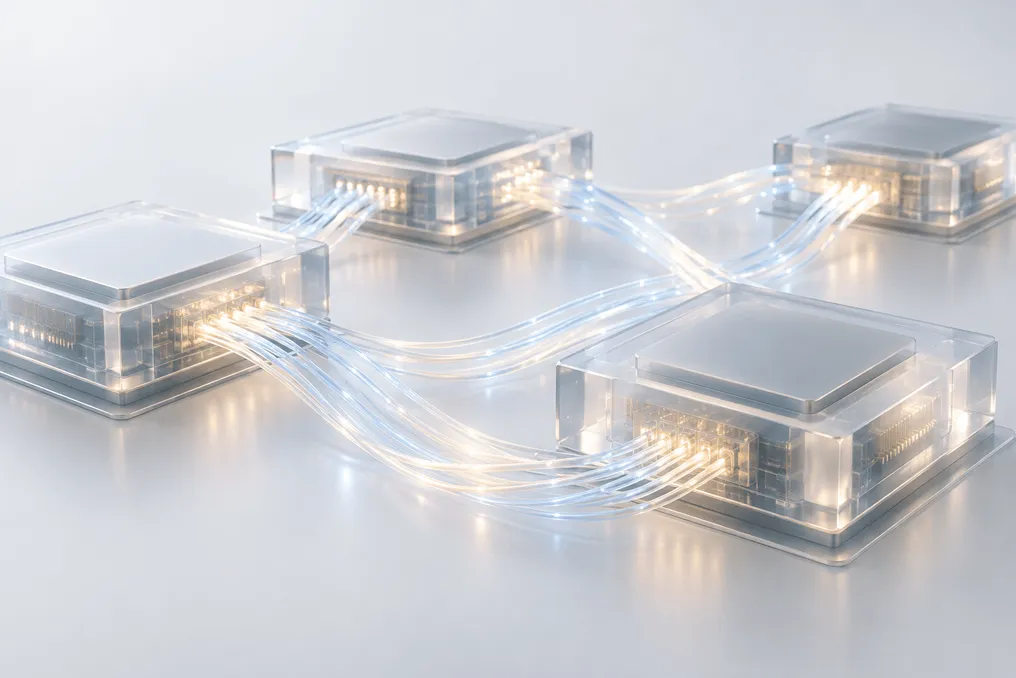
According to the system description, the Ascend 960 SuperPoD is the first model to utilize Near-Packaged Optics (NPO). This technology integrates Huawei's Lingqu UnifiedBus factory with the Hi-ONE optical engine, enabling optical connections to be placed closer to the chip package.

According to First Finance and related reports, one Ascend 960 SuperPoD can connect approximately 4096 cards with a round-trip latency approaching 2 microseconds. Huawei asserts that these metrics allow for large-scale training and inference of models up to 10 trillion parameters.

Furthermore, broader delivery information was disclosed: Ascend SuperPoD systems have already been shipped to over 1000 customers from more than 370 companies, indicating the architecture's transition from demonstration stands to commercial use.

The chip roadmap has been adjusted. Huawei announced that the Ascend 960DT is planned for release in the first quarter of 2027, and the Ascend 960PR in the third quarter. The liquid Atlas 960 SuperPoD is also scheduled for release in the third quarter of 2027, three quarters earlier than the initial public forecast, which pointed to the end of 2027 for the Ascend 960. Wang also stated that Huawei has developed 11 UnifiedBus-based chips for large systems and confirmed the long-term goal of creating a million-card SuperCluster.

The main emphasis is on system engineering: this includes NPO optics, UnifiedBus, cooling systems, and cluster software, which allow multiple Ascend cards to function as a single machine. Reuters reports confirm the dual 2027 launch dates and the figures of over 1000 supernodes and more than 370 customers, but did not name the buyers. This news differs from Huawei's 'Intelligent World 2035' report published recently, as it presents specific information about the SuperPoD interconnect and the revised Atlas 960 schedule for operators who are already evaluating Ascend clusters.

Popular