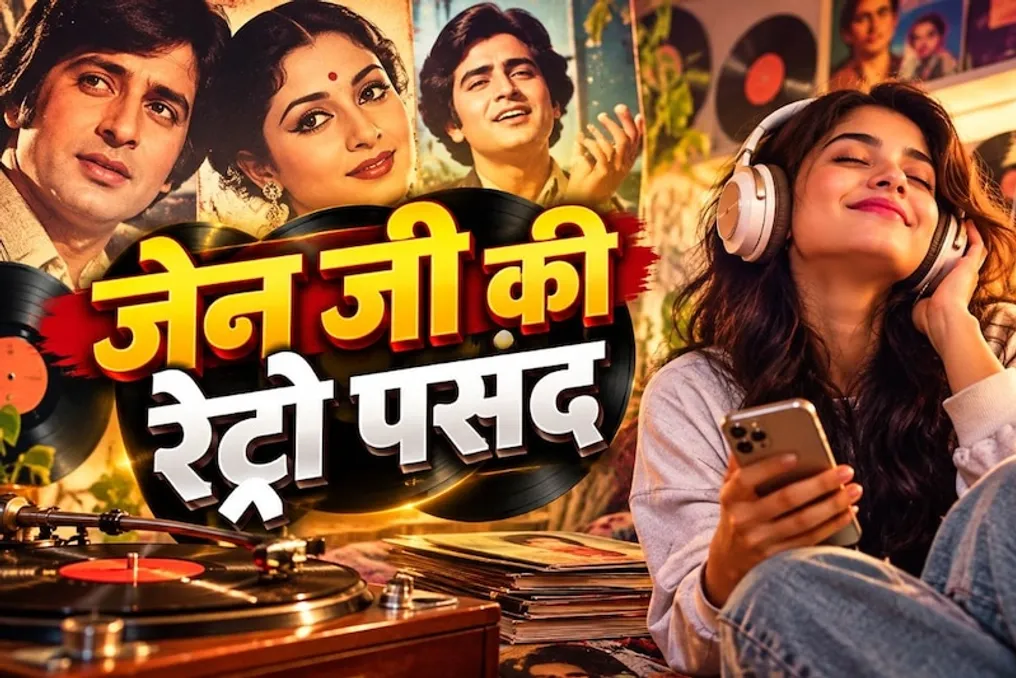
Gen Z is showing interest in retro music from old Bollywood
Read more
Aaj Tak
www.aajtak.in

Gen Z is showing interest in retro music from old Bollywood

Music holds different meanings for each generation. Ways of listening to songs change over time, new artists emerge, and new trends are formed. Despite this, old Bollywood songs remain part of people's playlists. There is a particular interest in music released many years ago among Generation Z.

The question is why these songs from old films appeal to the new generation.

Today, to listen to an old song, it is not necessary to be part of that era. Thanks to social media, Gen Z can get acquainted with songs by hearing just a few seconds of a clip in a reel, meme, or video montage. After that, they can listen to the entire composition on YouTube or streaming platforms.

Thus, social media has become a new platform for finding old songs. Even in 2026, songs from the 80s, 90s, and early 2000s continue to be used in reels and shorts.

For Gen Z, every old song is not connected to personal memories. Often, they hear these songs for the first time. In such cases, the melody, the lyrics, and the unique musical sound can be perceived by them as a new experience.

People prefer old songs because of their lyrics, vocals, and music. These qualities help use old compositions in reels and short videos. An old song can give a new meaning to a romantic moment, a travel video, friendship, or an emotional post.

Music passed down from one generation to another also plays a role. Songs that parents or family listened to also end up in Gen Z's playlists. Social media transforms this closeness into a new digital platform.

Consequently, for Gen Z, old Bollywood songs are not just memories of the past; they return with a new meaning through social media, where the new generation uses old melodies according to its own language, mood, and content.

Similar stories

Ravindra Jain's musical composition that became a hit after 51 years, and information about the original performer
Read more
www.aajtak.in

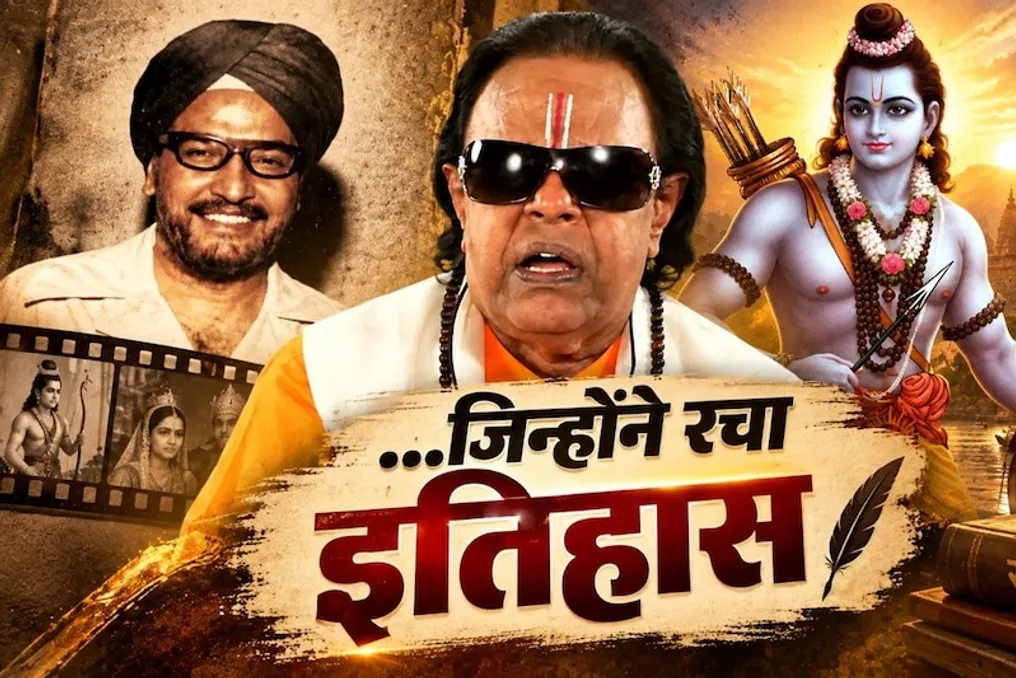
Ravindra Jain's musical composition that became a hit after 51 years, and information about the original performer

When it comes to the name Rama, music filled with devotion does not need time. This is exactly what happened with the melody created by Ravindra Jain, which remains easily memorable upon hearing it—'Ram Sia Ram, Sia Ram Jai Jai Ram.'

This religious hymn, which was created for the film 'Hit Ghata Chal' about 51 years ago, in 1975, remains as popular among people. Recently, this hymn and its history have once again become a subject of discussion following the appearance of new songs related to 'Ramayana,' which reflect the spirit of old spiritual music.

However, to fully understand this legendary melody, it is necessary to know two key figures: composer Ravindra Jain and singer Jaspal Singh.

Ravindra Jain is among the composers of Indian cinema who never allowed their physical difficulties to hinder their creativity. Despite being blind from birth, he reached such a level in the world of music that his melodies are still alive in people's memories.

Ravindra Jain's connection with music was deep from childhood. His journey began with bhajans and religious music, gradually transitioning into cinema. His main characteristic was that he imbued even simple melodies with such sweetness that the songs directly reached the hearts of listeners.

Although he created many memorable songs for films, his connection with spiritual music was special. Therefore, when he was entrusted with the music for Ramanand Sagar's 'Ramayana,' he did not just compose songs for the television show; he gave Ramakatha a musical language that penetrated every home.

The film 'Hit Ghata Chal,' starring Sachin Pilgaonkar and Sarika Starr, was released in 1975. In this film, Ravindra Jain wove the famous four-line stanza of the Ramayana, 'Mangal Bhavan Amangal Hari,' into his melody. Lines like 'Ram Sia Ram, Sia Ram Jai Jai Ram' infused the song with such a shade of devotion that it went beyond the film and became part of people's personal lives. The voice that performed this song belonged to the singer Jaspal Singh.

Jaspal Singh was one of the singers in the Hindi film music industry whose singing was distinguished by a special simplicity and sweetness. He is particularly remembered for the songs of the 1970s and 1980s.

'Mangal Bhavan Amangal Hari' also entered his iconic works along with the title track 'Hit Ghata Chal' and other songs from the film. His voice gave Ravindra Jain's melody a naturalness that played a huge role in conveying the spiritual hymn to the heart of the general public.

There was no artificial heaviness in Jaspal Singh's singing; his voice was direct, pure, and expressive. This is why the combination of his voice with Ravindra Jain's simple and gentle melody seemed extremely organic.

However, the true popularity of this hymn reached a new peak in 1987. When Ramanand Sagar's 'Ramayana' was broadcast, Ravindra Jain joined its music. The spiritual music of the show had a huge impact across the country, and the songs of 'Ramayana' became part of people's daily lives alongside the series itself.

It was then that this melody found new life. The composition, which first reached people through the film in 1975, became the voice of devotion in millions of homes after 1987. Whether it was a morning prayer, a temple, or a cassette playing at home, Ravindra Jain's Rambhakti melody was heard everywhere.

Ravindra Jain also lent his voice to a number of spiritual songs for 'Ramayana.' His musical self-improvement did not allow the story of Rama to remain limited to dialogues and acting, but connected it to emotions through music.

The story of this hymn does not end here. In 'Adipurush,' released in 2023, 'Mangal Bhavan Amangal Hari' was used in a new format. Now, the first track 'Jai Jai Ram' in 'Ramayana' featuring Ranbir Kapoor and Sai Palvi, directed by Nitish Tiwari, has once again evoked nostalgia for old spiritual music.

The new song was composed by A.R. Rahman and sung by Arijit Singh and Shreya Ghoshal. The spiritual melody born from Ravindra Jain's imagination in 1975, created a story through television in 1987, returned in a new guise in 2023, and is once again being discussed thanks to Ranbir Kapoor's 'Ramayana' in 2026.

Perhaps the reason lies not only in the music itself but also in the emotions contained within it. Ravindra Jain did not hide the name Rama behind elaborate music; he kept it extremely simple. Jaspal Singh's natural voice deepened this simplicity. This is why this melody belongs not just to one generation, even after more than five decades.

What Jaspal Singh sang in 1975 and what Ravindra Jain embodied in the melody, and what 'Ramayana' conveyed to every home in 1987, is now sounding in new harmonies among the new generation.

If any melody attracts a new generation after 51 years, it means that Ravindra Jain's music has become not just a song, but a legacy of Indian music and Rambhakti that time could not age.
Review of the song 'Jai Jai Ram' from the film 'Ramayana': Critics note the use of an old melody and question the originality of the project.
Read more
www.aajtak.in

Review of the song 'Jai Jai Ram' from the film 'Ramayana': Critics note the use of an old melody and question the originality of the project.

The film 'Ramayana', with a budget of 4000 crore, created by Nitesh Tiwari, generates high expectations as it tells a story familiar to all in India, connected to the deep faith of millions of people. Consequently, when the first track 'Jai Jai Ram' was released on the auspicious occasion of Ganpati Chaturthi, public interest was extremely high.

The combination of music by A.R. Rahman, vocals by Arijit Singh and Shreya Ghoshal, and lyrics by Dr. Kumar Vishwas presents a powerful musical project. The song brings a feeling of peace to the listener from its very first moments. Majestic scenes are visually presented: the love story of Rama and Sita, their wedding, the streets of Ayodhya, the people scattering flowers, and Rama's warlike appearance. The pairing of Ranbir Kapoor and Sai Pallavi looks harmonious on screen.

However, the question of the material's novelty arises. The strength of the song is also its weakness: the familiar melody 'Ram Siya Ram... Siya Ram Jai Jai Ram' instantly evokes memories of childhood and those feelings that people have been accustomed to for years.

This same melody was popular thanks to a 1975 song performed by Jaspal Singh and composed by Ravindra Jain. A dilemma emerges: does the listener like the song itself, or are it their personal emotions associated with this old melody that make them love it?

The reviewer believes that 'Jai Jai Ram' falls slightly short in this regard. Although he does not claim that the entire song is unoriginal or copied, the moment heard in childhood evokes strong emotions. In that case, the song is not perceived as 'Ramayana' as performed by Ranbir.

With such a huge budget of 4000 crore, a large cast, and the involvement of a composer like A.R. Rahman, it was expected that the musical component would possess its own unique characteristic. However, relying on an old melody makes the song feel more like a remake.

Furthermore, just like in the teaser and trailer, almost all key moments of the story are included in the song: from Sita's courtship to the marriage of Rama and Sita, preparations for coronation, and the sacrifice of Lakshmana and Bharata. This is more like a brief overview of the entire 'Ramayana' than a song. This tendency to display everything at once was also observed in the film's promotional materials, where a more gradual unfolding of events might have been more effective.

While giving the audience a song for Ganpati Chaturthi is a good gesture, this gift lacks the sufficient original touch from the creators that the public expects from this film. Despite Rama played by Ranbir, Sita by Sai Pallavi, and the entire world potentially being new, upon listening to the music, listeners return to the image of the old Rama.

Perhaps this is the main paradox of 'Jai Jai Ram': the song sends shivers down the spine but does not sound like the film's own voice. If the same devotion, the same feelings, and the same connection were evoked by a completely new melody, then the first track of this 'Ramayana' would be worth much more.

Popular