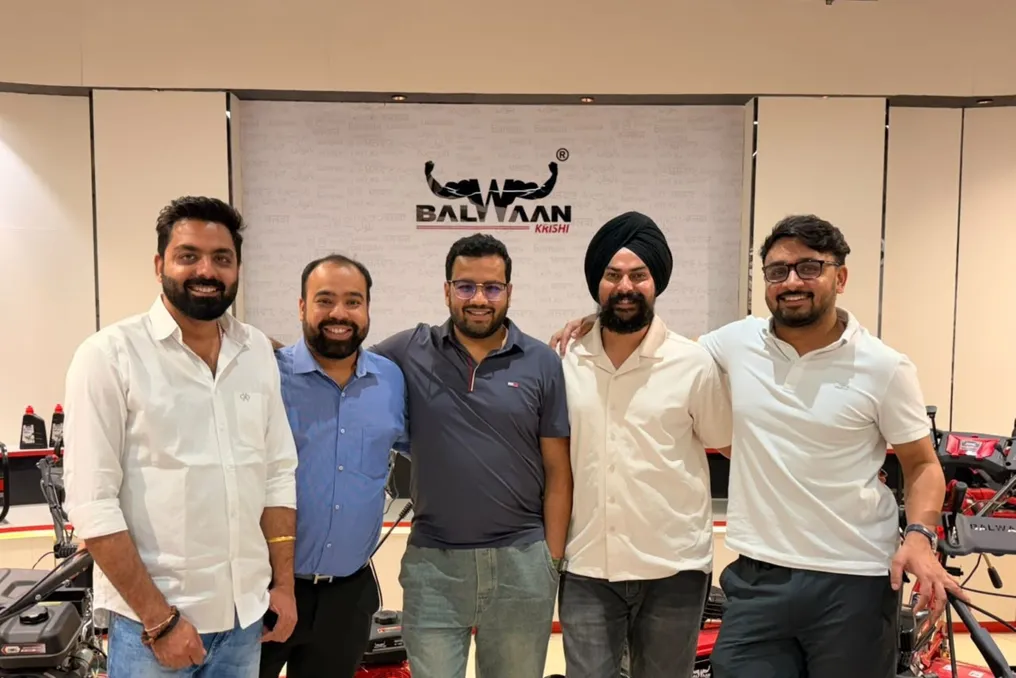
Balwaan Krishi raises ₹100 crore in Series B funding round
Read more
YourStory [india, en]
yourstory.com

Balwaan Krishi raises ₹100 crore in Series B funding round

Balwaan Krishi, a company specializing in agricultural machinery manufacturing, has successfully raised ₹100 crore in a Series B funding round. These funds are intended to support the company's next stage of growth across production, distribution, and product development sectors.

The round was led by First Bridge India Growth Fund Private Equity, with participation from other institutional investors. The company stated that the new capital will be directed towards realizing three main priorities.

These priorities include expanding internal production capacity, strengthening the dealer and service network in South India, and developing a new generation of farm equipment equipped with predictive maintenance and Internet of Things (IoT) features. Products mentioned include Power Weeders sprayers and battery-powered sprayers, as well as other mechanization solutions.

The financing will also help Balwaan deepen its manufacturing capabilities within India. This will give the company greater control over product quality, supply chains, and product availability, while reducing dependence on imported components and machinery.

Furthermore, Balwaan plans to increase its presence in South India by improving product accessibility and enhancing after-sales support in key agricultural markets. The company reported that over four hundred thousand farmers currently use Balwaan's equipment.

Balwaan's model targets the large yet underserved segment of Indian agriculture. Notably, about 86% of farmers in India are small and marginal landholders who cultivate less than two hectares, for whom large agricultural machinery is economically unviable and inefficient.

The company's product portfolio is built on affordability, offering equipment in a price range from ₹10,000 up to a maximum of ₹1 lakh. A hybrid B2B and B2C distribution model covers over 800 dealers across North India.

Rohit Bajaj, co-founder and CEO of Balwaan Krishi, noted that small and marginal farmers in India are increasingly facing rising labor costs and pressure to improve productivity, yet access to affordable mechanization remains limited. He added that the use of Balwaan machines by more than four hundred thousand farmers serves as compelling proof of demand for low-cost mechanization.

Bajaj emphasized: 'We built Balwaan around this opportunity, creating practical, reliable equipment that farmers can afford. This funding will allow us to strengthen production, expand our reach, and continue creating products specifically for the conditions of Indian farming.'

Similar stories

Karakalpakstan plans to increase the share of green energy to 76% by 2030
Read more
uzdaily.uz

Karakalpakstan plans to increase the share of green energy to 76% by 2030

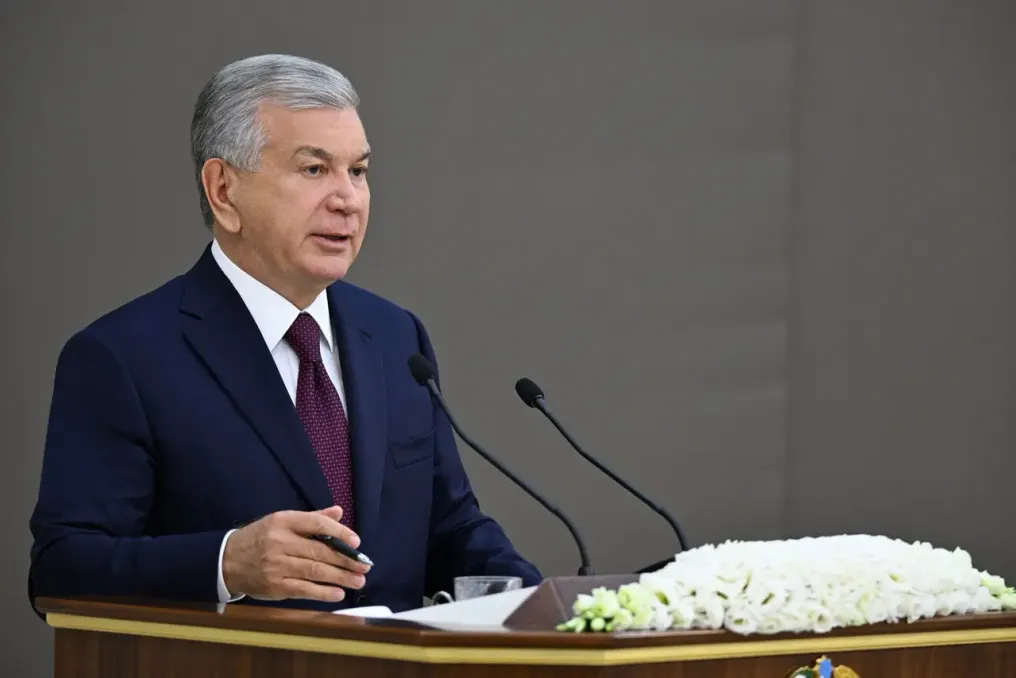
Uzbekistan President Shavkat Mirziyoyev stated that Karakalpakstan should become one of the largest regional centers for green energy production during a meeting on the socio-economic development of the republic held in Nukus.

Mirziyoyev noted that new energy facilities with a total capacity of 860 megawatts have been commissioned in Karakalpakstan in recent years. The construction of wind power plants in the districts of Beruni and Karauzyak has already raised the share of green energy in the region to 23%, and electricity generation has increased fourfold, reaching 5 billion 330 million kilowatt-hours, which is almost three times the annual demand of the republic's population and enterprises.

Furthermore, before the meeting, the construction of 47 new projects was initiated, including a wind power plant in Kungrad with a capacity of 1500 megawatts and a cost of 2.6 billion US dollars. This project involves the construction of 1500 kilometers of high-voltage transmission lines and three 500-kilovolt substations.

The President announced that by 2030, wind power plants with a total capacity of 3300 megawatts are planned to be commissioned in Karakalpakstan, which will allow the share of green energy to rise to 76%. Energy storage facilities with a capacity of 400 megawatts will also be created.

He emphasized that the republic possesses all the necessary resources to implement these plans, including land, mineral resources, solar and wind energy, as well as vast pastures. According to Mirziyoyev, these opportunities will form the basis for a new industrial and investment map of the region, based on the principle of transitioning 'from resources to finished products.'

Moreover, the Kungrad-Karauzyak-Takhytish direction should be transformed into a 'green industrial corridor,' which has been named the 'triangle of the smart economy' of Karakalpakstan. The President instructed responsible officials to develop a five-year regional energy development program by October 1st and ensure stable energy supply for investors with a capacity of 1 gigawatt.

Government increases gold stamping fee before holiday season
Read more
www.aajtak.in

Government increases gold stamping fee before holiday season

Before the start of the festive season, the Bureau of Indian Standards (BIS) has increased the stamping fee. This increase amounts to 67 percent. Previously, this fee was 45 rupees, but it has now been raised to 75 rupees.

The stamping fee applies to jewelry and works of art. Instead of 45 rupees per unit, 75 rupees will now be required. This change came into effect in accordance with the BIS (Stamping) Rules Amendments of 2026.

However, this fee increase does not mean that customers must bear an additional charge of 30 rupees. This fee must be paid by jewelers to the stamping centers. The official notification states that this fee cannot be charged directly to the consumer.

Jewelers can either absorb the additional cost of 30 rupees or include it in the manufacturing cost and the total price of the items.

The government notification also stipulates that stamping centers must remit 7.50 rupees per unit of gold (a minimum of 20 rupees for surrender) and 3.50 rupees per unit of silver (a minimum of 15 rupees for surrender) to BIS. Taxes will be levied separately.

The minimum surrender fee will remain at 200 rupees, meaning at least 200 rupees must be paid for one surrender. Furthermore, the rules for silver remain unchanged. The stamping fee for silver items is set at 35 rupees per unit, and the surrender fee is 150 rupees.

Popular