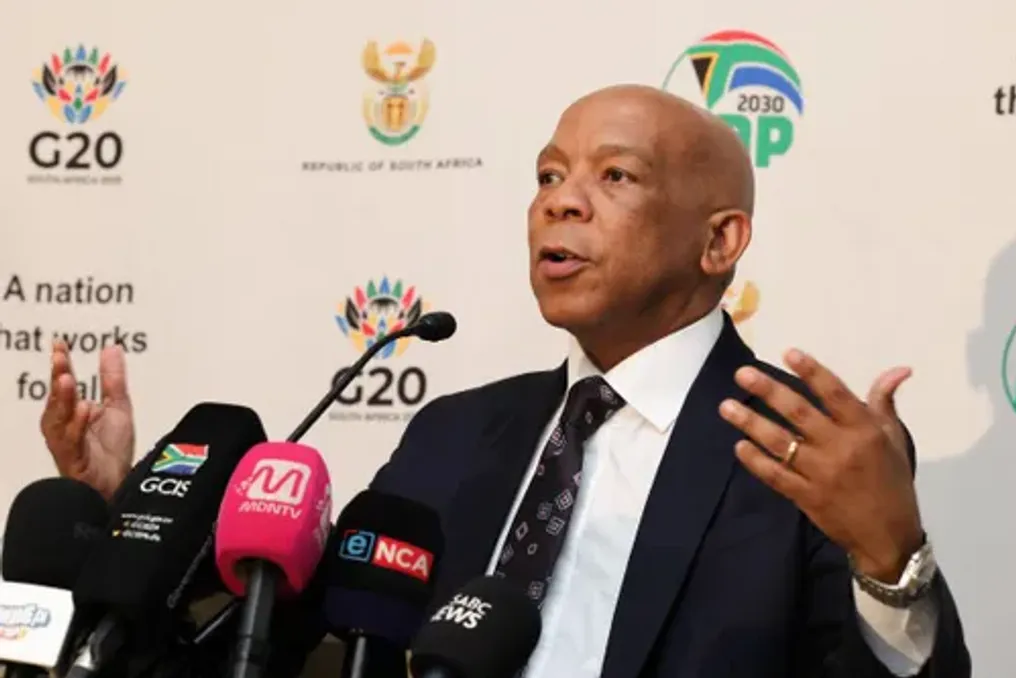
Minister of Electricity and Energy Kgosientsho Ramkogoppa presented the 'Eskom 2.0' strategy, under which the energy company must eliminate inefficiencies and achieve financial sustainability without reliance on state subsidies or significant tariff hikes.
Ramkogoppa stated on Friday the government's expectations for 'Eskom 2.0'—a large-scale repositioning of the state-owned company following improvements in power generation and reductions in power outages.
A central element of this plan is the requirement for Eskom to become financially self-sufficient while simultaneously lowering the cost of energy supply and preparing for increased competition in South Africa's liberalized electricity market.
Ramkogoppa emphasized that shareholders expect financial stability from Eskom, allowing it to meet its obligations without resorting to further fiscal support or maintaining double-digit tariff growth as a business model. He stated categorically: 'There will be no government bailouts. There will be no double-digit increase in electricity tariffs in this country. It will not happen. And Eskom must prepare for this.'
Requirements for Eskom to reduce inefficiency
Ramkogoppa noted that the cost of electricity remains a serious problem for businesses, households, and industrial competitiveness in South Africa. He specified that Eskom, which still accounts for the majority of generation in the country, must reduce technical losses, revenue leakage, and overall inefficiency so that consumers see relief.
The Minister called for moving beyond discussions and solving the electricity cost problem, assuring citizens: 'We feel your pain, we hear your cries, we understand your dissatisfaction, and I give you my full guarantee that we will resolve this.'
Although Eskom reported a second consecutive annual profit for the financial year ending March 2026, thanks to improved operational performance and cost discipline, Ramkogoppa warned that Eskom's future sustainable development will depend on reducing losses and improving revenue collection, rather than the state or consumers covering its expenses.
The board of directors is expected to develop a strategy aimed at combating electricity theft, inaccurate metering and billing, technical losses, and weak collections. Ramkogoppa insisted that Eskom must lower the cost of energy supply by increasing the productivity of equipment, procurement, maintenance, project implementation, and workforce efficiency. He added that the intention to lower electricity costs will not be realized until Eskom can solve these efficiency problems.
Expansion of Eskom's national network worth 440 billion rand
The government also plans for Eskom and the National Transmitting Company of South Africa to support a large-scale expansion of the national grid as more independent generation sources are introduced. Ramkogoppa announced plans to build 14,500 kilometers of new transmission lines, a program estimated at approximately 440 billion rand. He stressed that this program should stimulate local production and employment, rather than relying excessively on imported equipment.
The Minister stated the intention to industrialize based on this construction program, noting that they would not 'export jobs' nor allow 'these components to be dumped in the country.' Furthermore, Ramkogoppa noted that Eskom must expand beyond South Africa, as new private generators weaken its traditional dominance in the domestic electricity market. He welcomed the increased competition, warning against the dangers of complacency and inefficiency inherent in monopolies, which can 'drag the country down.'
The government wishes Eskom to utilize surplus generating capacity to increase electricity exports to South Africa while meeting new domestic demand from sectors such as data centers.
AI, nuclear energy, and renewables in the new strategy
Ramkogoppa also stated that the new Eskom strategy must clearly define positions regarding nuclear energy, gas, renewable energy, and the future of the coal fleet. He indicated that Eskom Green must develop a compelling portfolio of projects, and the company itself must make artificial intelligence central to its operations. The Minister strongly urged Eskom to aggressively develop its AI capabilities, mentioning immediate applications include reducing technical losses, improving weather and demand forecasting, and strengthening grid visibility.
The government expects Eskom's board of directors to present a unified 'Eskom 2.0' roadmap spanning three to five years, covering the company's public mandate, commercial stance, and investment program. This plan was developed after Eskom achieved 365 days of continuous operation without power outages in May 2026 and subsequently reported a second consecutive profit. However, Ramkogoppa cautioned that maintaining power supply is no longer the sole measure of success. He concluded that while power supply will remain, electricity costs could rise if the required management is not implemented, which could undermine South Africa's economic growth ambitions, as reindustrialization is only possible with stable, reliable, and affordable electricity.