China's Ministry of Commerce released details regarding the renewal of the so-called 'joint agreement,' established in Kuala Lumpur in October 2025. This extension prolongs the suspension of certain procedural and non-procedural measures implemented during the trade dispute between the two largest global economies.
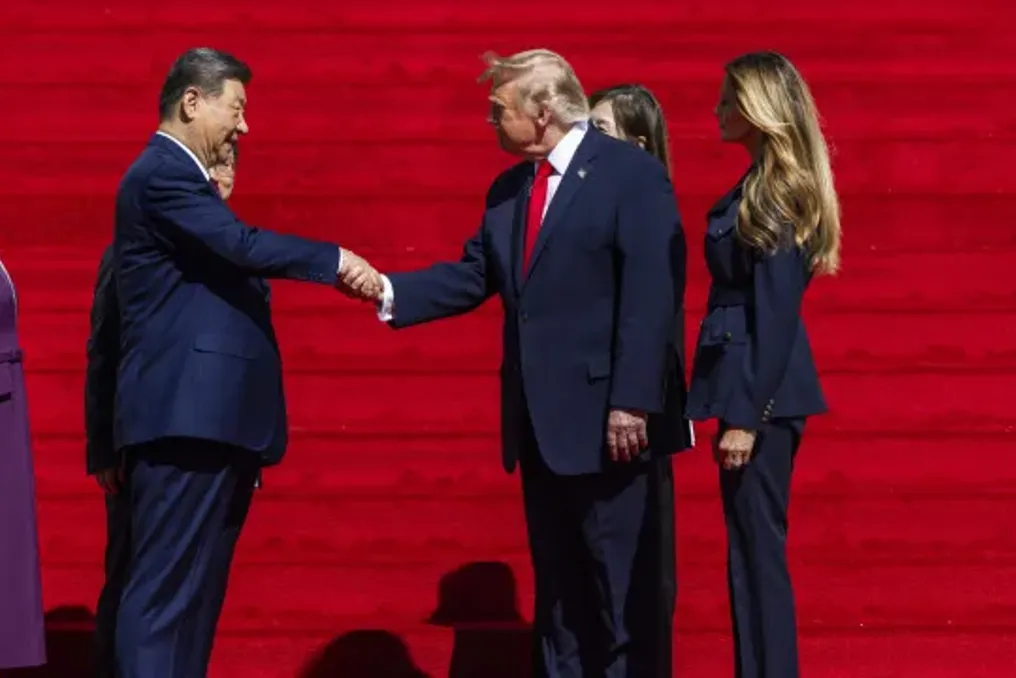
The decision was announced following the recent state visit of Chinese President Xi Jinping to the United States. The original agreement was valid until November of the current year, and the confirmation came after the meeting between Xi Jinping and his American counterpart, Donald Trump, held in the South Korean city of Busan.
Although Beijing avoided explicitly confirming the extension announced by U.S. Treasury Secretary Scott Bessent, the Chinese Ministry of Foreign Affairs merely mentioned that the economic teams had reached a new 'joint agreement' after the presidential summit.
The Ministry of Commerce stated that both nations will maintain negotiations during this extension period, aiming to reach an 'agreed solution.' According to the ministry, this pact allows both sides space to review and evaluate the application of the accord, as well as consider ways to boost trade and economic relations between China and the United States.
Furthermore, the ministry detailed other outcomes from the eighth round of economic and trade consultations, which took place between September 20 and 23 in New York and Washington, before the meeting between Xi and Trump. Among these points is a plan for mutual reduction of customs tariffs for products valued at about $30 billion (equivalent to more than 26 billion euros) per country.
Under this scheme, approximately 90% of the items involved will have their tariffs reduced to 'most favored nation' levels once internal legal processes are finalized. The two countries also agreed to establish a bilateral Trade Council, whose first function will be to address this tariff package, and an Investment Council focused on business opportunities and obstacles.
The Trade Council will include a working group dedicated to the agricultural sector, and American coal will be incorporated into the customs duty reduction regime. Beijing views this as a factor that will simplify its imports of this raw material during the years 2027 and 2028.
In the field of artificial intelligence, China confirmed that Vice Premier He Lifeng and Scott Bessent will conduct a specific dialogue. The first session of this dialogue has already taken place, and the parties will define a communication channel to handle technology-related 'incidents' before a new meeting scheduled for late November.