
IEX's subsidiary, Indian Coal Exchange, applies for license from CCO
Read more
Business Standard
business-standard.com

IEX's subsidiary, Indian Coal Exchange, applies for license from CCO

Indian Energy Exchange (IEX) announced on Monday that its wholly-owned subsidiary, Indian Coal Exchange Limited, has applied for a license from the Coal Controller Organisation (CCO) to establish a coal trading exchange. This marks the company's entry into the coal market.

The Coal Controller Organisation acts as the regulatory body for coal exchanges in India. As stated by the company in the exchange documentation, IEX incorporated Indian Coal Exchange on June 1 with an authorized share capital of 100 crore rupees.

Indian Coal Exchange will operate as a physical delivery coal trading exchange, offering a technological platform that brings together buyers and sellers on a single platform in accordance with the Coal Exchange Rules 2026.

The exchange will facilitate coal trading at specified delivery points, which, according to IEX, will enable price discovery and expand market access. The emergence of this new exchange signifies the entry of the IEX Group into the coal market and expands its presence in the energy value chain.

Currently, the group manages its power exchange business, as well as Indian Gas Exchange (IGX), a platform for natural gas trading, and facilitates the issuance of I-RECs in India. IEX operates a nationwide automated trading platform for physical delivery of electricity, renewable energy, renewable energy certificates, and energy saving certificates. The company has been listed on NSE and BSE since October 2017 and is regulated by the Central Electricity Regulatory Commission.
Similar stories

Center in Uri for trade across the Line of Control to be used as a border tourism hub
Read more
timesofindia.indiatimes.com

Center in Uri for trade across the Line of Control to be used as a border tourism hub

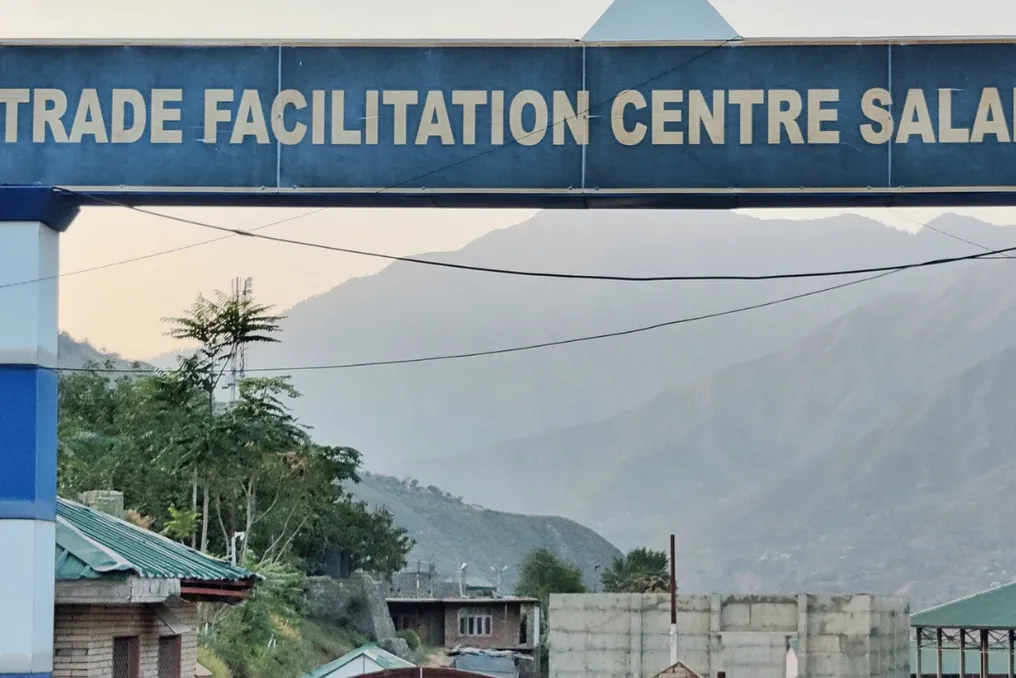
The Trade Facilitation Center (TFC) in Salamabad, located in the border town of Uri, which previously facilitated duty-free barter trade between Jammu and Kashmir (J&K) and Pakistan-occupied Kashmir (PoK), will now function as a tourist attraction. This decision concludes speculation regarding the resumption of trade along this route.

A high-ranking official from the tourism department confirmed that the government has permitted the department to use the TFC in the Baramulla district for tourism-related activities. The official noted that the main objective is to transform Salamabad into an entry point for a broader tourist circuit along the Uri border. Emphasis will be placed on 'regulated, responsible, and curated border tourism,' ensuring full compliance with safety requirements and administrative norms.

The TFC in Salamabad, situated approximately 100 km north of Srinagar, was originally established for cross-border trade across the Line of Control. After the suspension of such trade in 2019, the facility remained unused for its original purpose.

Following improved relations in 2008, India and Pakistan agreed to allow cross-border trade and travel across the Line of Control subject to certain conditions under Confidence Building Measures (CBMs). However, in April 2019, the Center suspended operations, stating that the trade routes were being used for the illicit smuggling of weapons, drugs, and counterfeit currency.

At the time, a statement from the Ministry of Home Affairs (MHA) indicated that current NIA investigations had found that a significant number of participants in cross-Line of Control trade operations were linked to banned terrorist organizations involved in inciting terrorism/separatism. The statement also mentioned that some individuals who crossed the border and joined terrorist groups were establishing trading firms in Pakistan.

Transport connectivity (bus service) and trade across the Line of Control were considered among the most significant confidence-building measures between the neighboring countries in recent decades. At that time, Prime Minister Manmohan Singh launched 'Karwan-e-Aman' (Caravan of Peace)—the first bus service across the Line of Control connecting Srinagar with Muzaffarabad in PoK, on April 7, 2005.

Barter trade across the Line of Control began on October 21, 2008, in two directions: Salamabad (Uri) – Muzaffarabad (PoK) and Poonch – Rawalakot (PoK). Traders on both sides were allowed to exchange 21 mutually agreed-upon goods.

TFCs were built on both sides at a distance of 5 km inside the Line of Control. In J&K, one TFC was established in Salamabad, and another in Chakan da Bagh in the Poonch district of Jammu. Trade was permitted on both routes four days a week.

Popular