क्विंटन डिकॉक and Captain Bavuma argue over DRS, recalling an old dispute
Read more
Aaj Tak
www.aajtak.in

क्विंटन डिकॉक and Captain Bavuma argue over DRS, recalling an old dispute

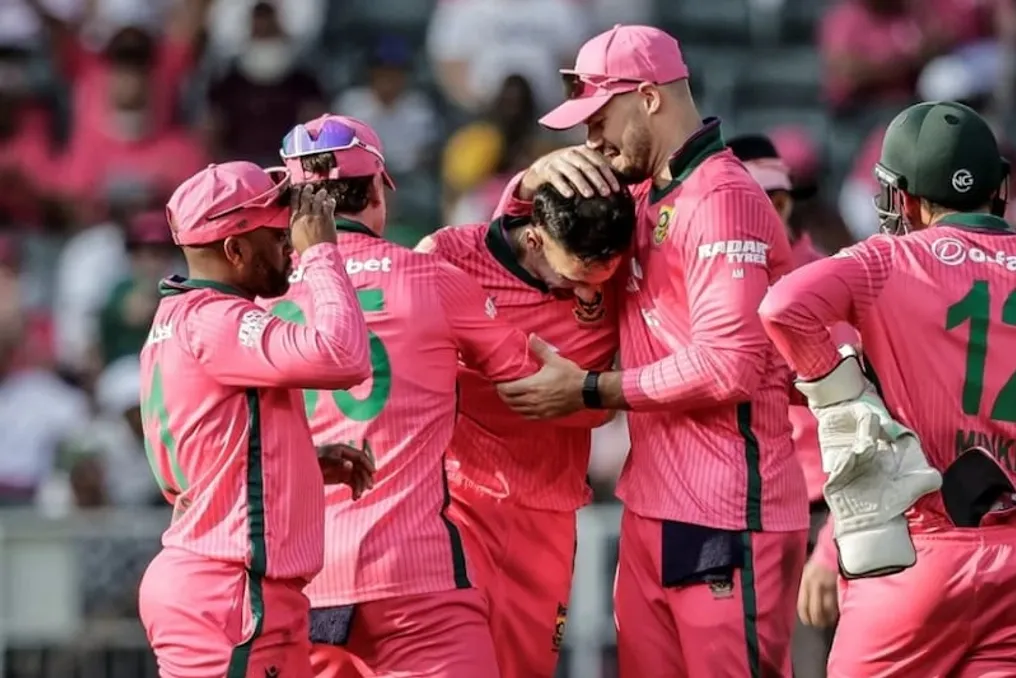
A moment during the second day/night match between South Africa and Australia sparked discussion not only about the DRS system but also about past conflicts. During the game, a sharp exchange occurred between Quinton de Kock and captain Temba Bavuma regarding the use of DRS, which was captured by cameras.

The situation arose in the 47th over against Australian batsman Javiere Bartlett. Lizard Williams bowled a magnificent yorker down the middle line, and leg stumped. Bartlett was unable to hit the ball, and it struck his pads. South Africa appealed for LBW, but the umpire initially ruled that it was not out.

Following this, the tension on the field around the review intensified. De Kock insisted that Bavuma listen to him immediately because the DRS timer was running out quickly. It is speculated that De Kock recalled a previous incident where his advice was ignored, and South Africa lost the right to review. This time, he demanded the captain make a decision faster.

Bavuma also tried to explain his point of view to De Kock. He noted that the bowler, Lizard Williams, was quite confident about the need for a review, as he believed the ball hit the stumps. Ultimately, Bavuma decided to use the review.

During the ultra-slow motion analysis, no signs of contact between the ball and the bat were found. However, ball tracking showed that it hit the left stump. Thus, the field umpire's decision that he was not out was overturned, and Bartlett was given out LBW.

Bartlett scored 50 runs in just 28 balls, including 2 fours and 5 sixes. At the end of the match, South Africa won by 32 runs, increasing their series lead to 2-0.

The dialogue between De Kock and Bavuma attracted public attention also because a very well-known incident occurred between them in 2021. Before the T20 Cup match in 2021 against West Indies, Cricket South Africa instructed players to kneel in solidarity against racism, known as 'taking the knee.'

De Kock refused to participate in this action and isolated himself from the match. At the time, Bavuma was the team captain and stated that the team was surprised by this decision, although he expressed respect for De Kock's choice and personal beliefs. Later, De Kock apologized and agreed to kneel with the team, while also reaffirming his commitment to fighting racism. It is precisely because of this old event that any sharp remarks between Bavuma and De Kock on the field are instantly linked in social media to that past dispute.

Currently, the most interesting aspect of this situation is that Bavuma accepted the review at De Kock's insistence, and the decision against Bartlett turned out to be in favor of South Africa.
Similar stories

Teboho Boengoe and क्विंटन de Kock's argument during the ODI match against Australia goes viral
Read more
iol.co.za

Teboho Boengoe and क्विंटन de Kock's argument during the ODI match against Australia goes viral

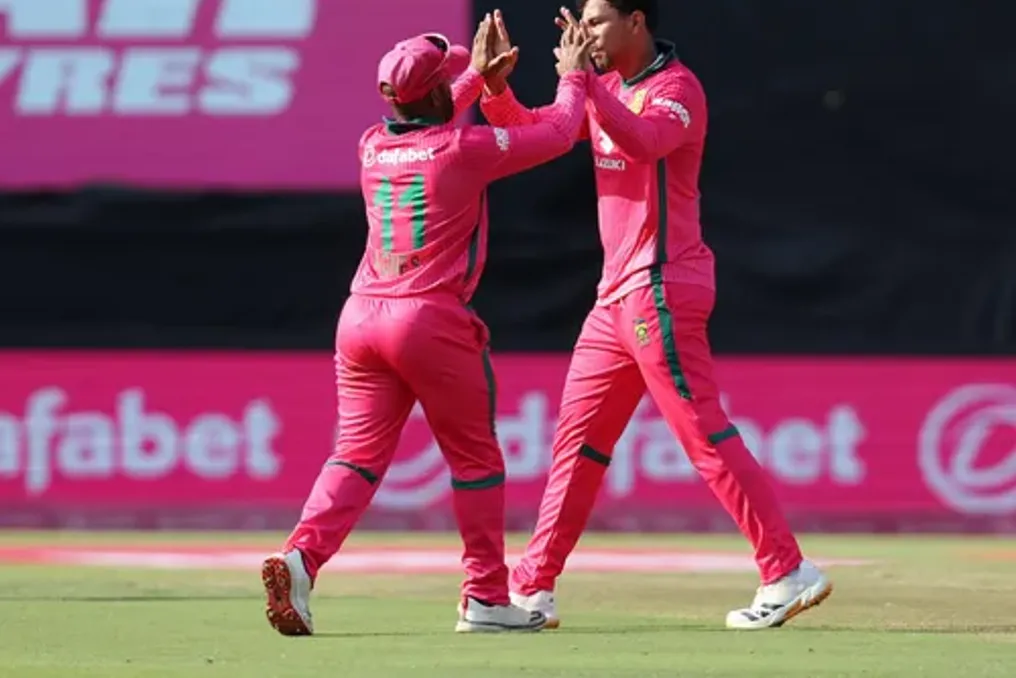
A tense argument, accompanied by profanity, between South Africa captain Teboho Boengoe and wicketkeeper Quinton de Kock during the Pink ODI match against Australia caused a wide resonance on social media.

Despite Proteas' convincing victory over Australia in the Pink ODI match, which took place at Wanderers Stadium on Sunday, the public's attention was drawn to the on-field argument between captain Teboho Boengoe and wicketkeeper Quinton de Kock, which quickly spread across X network.

In a video clip published by the account @Intengu_drongo, which garnered nearly 900,000 views, Boengoe signaled to the umpire at the end of the field for a review of the 'not out' LBW decision made against Xavier Bartlett, who was scoring an impressive 50 runs off 28 balls at that time.

At that moment, the game was in a critical phase: Australia had 322/8 and needed only 43 runs from the remaining 14 overs. At such an aggressive pace, Bartlett was still within reach of reaching the target.

However, de Kock openly expressed his disagreement using intense non-verbal communication, indicating that, in his opinion, the umpire's decision was absolutely correct and a review was unnecessary.

Ultimately, Boengoe's request to challenge the decision was successful. Lzad Williams removed a key player, and the match effectively concluded as Australia's last batsman left the field.

Nevertheless, the main subject of discussion remained the tense exchange between Boengoe and de Kock, where the wicketkeeper appeared clearly dismissive of his captain's judgment. Boengoe firmly defended his position, overpowering his passionate teammate with his decisive and profane demand to proceed to the review.

This incident caused a strong division among fans on social media; many condemned de Kock's behavior as inappropriate for a senior player, especially considering that his assessment turned out to be wrong.

It is worth noting that a similar situation occurred just minutes before this. On that occasion, Boengoe supported bowler Keshav Maharaj's request for a review despite de Kock's loud objection, but that review proved unsuccessful.

This previous failure undoubtedly amplified the frustration that led to the viral moment, making the wicketkeeper feel justified in challenging his captain's instinct. Although it was obviously a stressful moment in a decisive match, fans and experts continue to debate whether de Kock crossed the line or if it was merely a burst of emotional tension.

Question about including Rohit Sharma and Virat Kohli in the Indian squad for the 2027 World Cup
Read more
www.aajtak.in

Question about including Rohit Sharma and Virat Kohli in the Indian squad for the 2027 World Cup

In Indian cricket, the discussion is currently not so much about the runs scored by Rohit Sharma and Virat Kohli, but rather a more fundamental question: can the Indian team be considered complete for the 2027 World Cup without these two players?

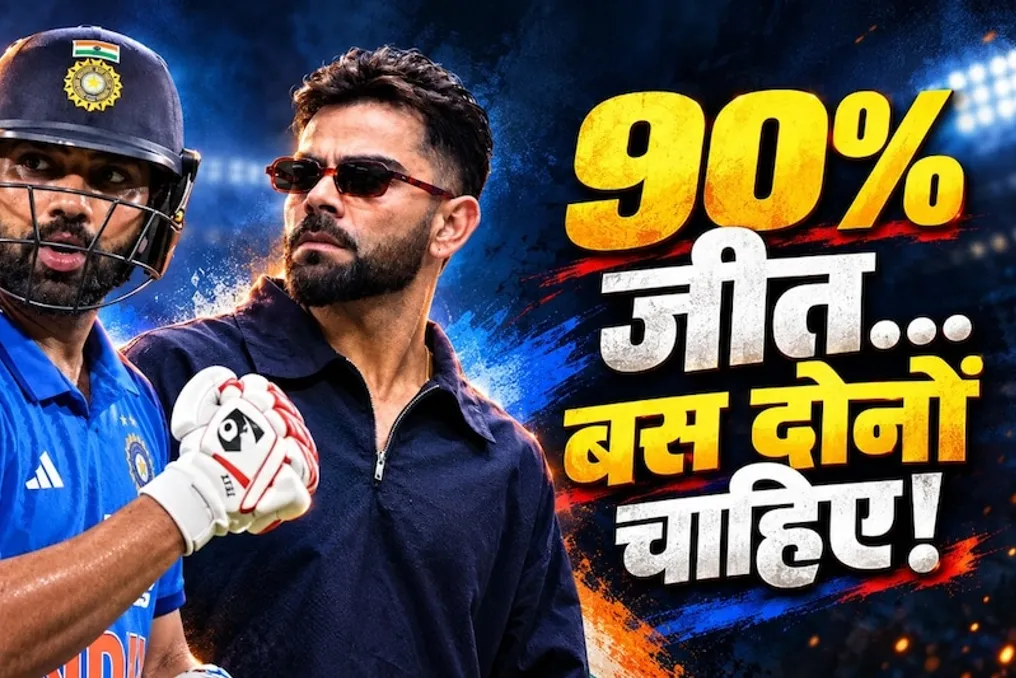
Suresh Rana shared his opinion on this matter. He believes that if Rohit Sharma and Virat Kohli are included in the Indian team for the 2027 World Cup, the probability of winning the title will reach 90 percent. This figure is Rana's assessment, not the result of statistical calculations, but his statement has once again raised a discussion that Indian cricket cannot ignore for several months.

Interestingly, this discussion is not only driven by Rana's statements. Gautam Gurwir also recently emphasized the exceptional importance of Rohit's and Virat's roles. He noted that Shubman Gill is very happy in the ODI format because he receives support from players like Rohit and Virat, both on and off the field. This means that the value of both players to the Indian team is not limited only to batting.

Naturally, questions arise regarding the age of Rohit and Virat. By the time of the 2027 World Cup, both players will be in a career stage where close attention is paid to their physical condition, reactions, and ability to perform regularly in matches. However, age itself cannot determine squad selection; the decisive criteria will be points, physical fitness, and the benefit they bring to the team.

The debate surrounding Rohit's case is sharper. Virat's place in the ODI squad currently looks relatively stable, whereas Rohit's future has been constantly questioned recently. Rumors about his future in ODIs intensified even during the tour in England, but he personally refuted these assumptions. The return of both players in the three-match ODI series against the West Indies is a sign that, at least for now, they are in the selection committee's plans.

Thus, over the next year, every ODI match for Rohit will be an opportunity to continuously prove his ability to be part of the 2027 picture.

If we look at Rana's statement through the lens of statistics, an interesting picture becomes evident. The 2027 World Cup will be held in South Africa, Zimbabwe, and Namibia. In this regard, the experience of Rohit Sharma and Virat Kohli in South African conditions naturally becomes the center of discussion. This is made particularly interesting by Virat's record there in ODIs. He has scored 993 runs in 18 matches in South Africa with an average of 76.38.

Rohit's statistics are significantly weaker: 256 runs in 13 matches with an average of 19.69. This means that simply stating that both players have experience playing in South Africa does not reveal the whole picture. Both have experience, but its transformation into performance was much more effective in Virat's case.

Nevertheless, it is not easy to exclude Rohit solely based on this data. In a tournament like the World Cup, a player's usefulness is determined not only by past records of one country. Match situations, current form, team composition, and their role in the dressing room also play an equally important role.

Perhaps the most interesting picture of 2027 is as follows. Shubman Gill leads the Indian ODI team and has become the face of the new generation of leaders. However, the presence of two former captains, such as Rohit and Virat, alongside him gives the transition period a completely different character. Gurwir clearly stated that Gill receives help from Rohit and Virat both on and off the field. He also acknowledged that it is not easy in Indian cricket to exclude a player from the starting lineup, especially when it comes to such big names.

This is where the true value of Rohit and Virat lies. If the batting works, they can win the match. If the batting doesn't work, their experience can support Gill's captaincy. But there is one condition: this role cannot be based solely on prestige. By 2027, both must retain their spot through performance and physical fitness. And this is the biggest turning point.

India has alternatives. Former selection committee member Sandeep Patil also spoke about this. He believes that Rohit and Virat are great players, but if they have to give way to new players in the future, the depth of the Indian bench is such that it will not create a more serious problem.

Thus, the picture is twofold. On one hand, the experience of Rohit and Virat, their ability to handle pressure in major matches, and their influence in the dressing room. On the other hand, young alternatives like Yashasvi Jaiswal, who are constantly knocking on the door. It is this clash that will determine the direction of the Indian ODI team over the next year.

Therefore, reducing the story of the 2027 World Cup to the question of 'will Rohit and Virat be there?' would be premature right now. The right question is: will both remain good enough by 2027 so that India does not risk by leaving them out? If the answer is yes, it will be difficult to ignore the experience. If the answer is no, then the future team cannot be built solely on the past greatness of names. Rana claimed 90 percent, but over the next year, India needs to prove that statistics...

 }
Former player Krishnamachari Shrikant criticizes decision not to include Vaibhav Suryavanshi in the Indian squad
Read more
www.aajtak.in

Former player Krishnamachari Shrikant criticizes decision not to include Vaibhav Suryavanshi in the Indian squad

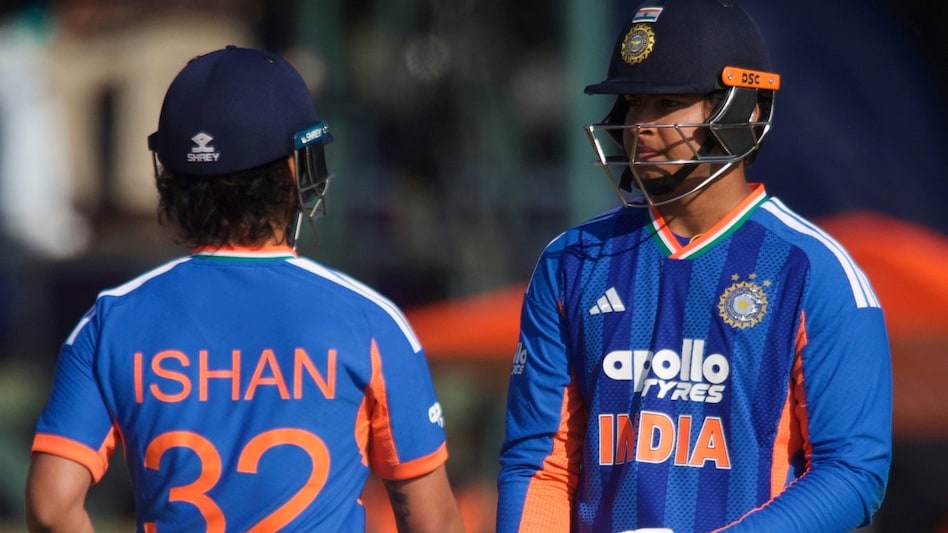
The Indian team defeated Afghanistan in the first match of the three-match T20 series, winning by seven wickets. After a confident start, the Indian squad aims to win the second game to gain an advantage in the series.

Young 15-year-old batsman Vaibhav Suryavanshi, who impressed with his powerful batting during the visit to Zimbabwe, did not get a chance to play in the first match against Afghanistan. Before the game, there were active discussions among fans regarding Vaibhav Suryavanshi's participation.

Despite India's comfortable seven-wicket victory, the decision not to include Vaibhav in the starting lineup sparked controversy. Former Indian selector and experienced player Krishnamachari Shrikant sharply criticized this decision by the team management.

Speaking on his YouTube channel, Shrikant noted that it was completely unclear why the player, who was the best in the previous match of the series, was suddenly excluded. He joked that when Vaibhav Suryavanshi didn't play yesterday, they started watching movies instead of the match on TV. His wife also expressed dissatisfaction, questioning why the star from the previous match was absent from the team today. He added that if such an ordinary viewer asks this question, one should consider what the player himself is going through.

Shrikant believes that constantly including and excluding a young athlete undermines his confidence. He stated that the team is treating Vaibhav incorrectly. Now, when he steps onto the field for the next match, he will have the fear of being excluded again if he does not score runs.

Shrikant emphasized that this young batsman, who has proven his worth in domestic cricket, India-A, IPL, and international T20, should be given consistent opportunities. Furthermore, he expressed regret over the treatment of Sanju Samson. He noted that Samson is sometimes included in the team and sometimes suddenly excluded, which does not contribute to the stability of any player.

It turned out that Vaibhav Suryavanshi participated in the final match of the Theleef Trophy, a red-ball tournament, just two days before the series against Afghanistan. Because of this, he had fewer opportunities to train with white balls (T20). In the first match, Sanju Samson played in place of him in the opening batting alongside Abhishek Sharma. Although Samson was dismissed after scoring 10 runs, the Indian team achieved the target of 157 runs in just 13.4 overs.

Popular