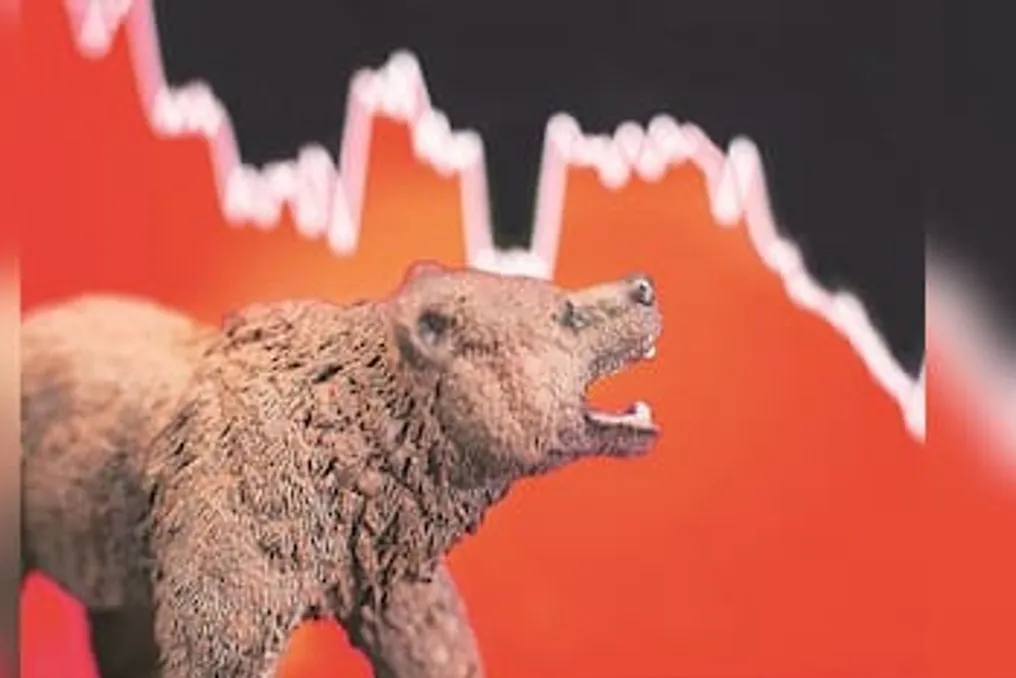
A correction continues among India's largest companies, with 18 out of 50 Nifty index stocks trading more than 20% below their 52-week highs. This situation has led to a decline in market capitalization by a total of ₹31.35 trillion.
When a stock falls by 20% or more, it is technically considered to have entered a bear phase. According to data collected by BS research, the Nifty 50 index was at 23,140.5 points, while its 52-week high was reached on January 5, 2026, at 26,373.2 points.
Among the 18 stocks that have fallen more than 20% from their 52-week high, Infosys showed the largest decline at 42.1%, followed by Wipro (39.9%), Tata Consultancy Services (37.9%), ITC (36.9%), Tata Motors Passenger Vehicles (35.1%), and HDFC Life Insurance (32.7%). However, it should be noted that the decline in Tata Motors Passenger Vehicles is occurring against the backdrop of Tata Motors' previous business split.
Santosh Meena, Head of Research at Swastika Investmart Ltd, noted that this correction reflects a significant overvaluation of assets. He emphasized that many of these stocks grew sharply in previous years and traded at inflated multiples.
Meena added that the overall Nifty index has declined by 10–12% from its peak values. This is due to a combination of profit booking, rising global yields, increasing crude oil prices, and specific industry issues. This situation has forced a reassessment of valuations, especially in the high-growth sectors of IT and banking, which have become expensive relative to short-term growth prospects.
Other major lagging companies include Maruti Suzuki India (down 30.5%), HCL Technologies (29.3%), Jio Financial Services (28.4%), HDFC Bank (27.9%), Hindustan Unilever (26%), Reliance Industries (23.9%), Tata Consumer Products (23.3%), Oil & Natural Gas Corporation (23.3%), Trent (21.5%), NTPC (21.2%), Mahindra & Mahindra (21%), and State Bank of India (20.4%).
The impact on market capitalization is particularly significant among the index heavyweights. Reliance Industries' market capitalization has decreased from ₹21.35 lakh crore at the 52-week level to the current ₹16.59 lakh crore, representing a drop of approximately ₹4.76 lakh crore. Similarly, HDFC Bank's market capitalization has fallen from ₹15.49 lakh crore to ₹11.34 lakh crore, and State Bank of India has decreased from ₹11.29 lakh crore to ₹9.07 lakh crore.
Infosys lost about ₹2.82 lakh crore in market value, as its capitalization fell from ₹6.88 lakh crore at the 52-week high to the current ₹4.05 lakh crore. TCS also showed a decrease in market capitalization from ₹11.67 lakh crore to ₹7.53 lakh crore.
Despite the significant fall, Prathamesh Kadival, an analyst at Bonanza, believes that these companies retain strong fundamentals. He stated that the decline in blue-chip stock prices is driven by sentiment, not fundamental problems, as they possess strong earnings, low debt, and stable cash flows.
Kadival explained that the recovery of these stocks typically begins when valuations become attractive and selling by FIIs decreases. Inflows of domestic capital, improved quarterly results, and stable interest rates often signal an approaching turnaround. The most affected sectors are IT and banking. Meena added that IT is facing difficulties due to ongoing concerns about the erosion of traditional revenue from application development/maintenance caused by artificial intelligence. As for the banking sector, besides global yields and crude oil prices, there are regulatory risks related to proposed reforms by the insurance commission and expenses, as well as FII outflows and some margin pressure due to funding costs. Meena noted that banks have a high weight in the index, which amplifies the impact of the downturn. Kadival concluded that IT remained a clear weak link because global clients postponed technology spending, and the rupee remained stable. Money flowed from IT to the financial sector, which widened the correction. Meena also noted that many lagging companies remain fundamentally strong with solid balance sheets and long-term earning potential. Selling appears excessive in some parts of the market, especially where valuations have significantly compressed while business quality remains unchanged. A recovery is likely after the stabilization of global yields, a decrease in crude oil prices, sustained positive FII flows, and clarity regarding specific sectors.