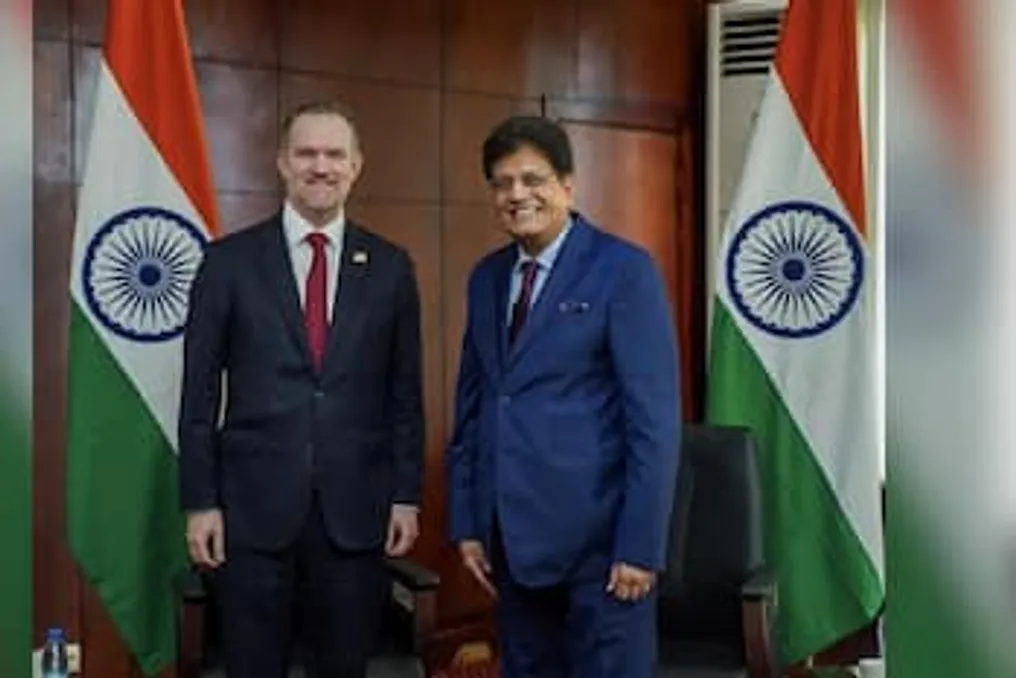
Union Trade Minister Piyush Goyal is likely to hold a bilateral meeting with US Trade Representative (USTR) Jamison Greer on the sidelines of the G20 Trade Ministerial Meeting, scheduled for Wednesday and Thursday in Wisconsin. According to official data, Goyal is expected to begin his trip to the US late Monday.
This meeting takes place against the backdrop of threats from the US regarding tariffs and the Section 301 investigation. Meanwhile, New Delhi and Washington continue negotiations aimed at finalizing a bilateral trade agreement.
Tariff and Investigation Issues
The situation is complicated by the fact that the US passed legislation granting President Donald Trump the authority to impose tariffs of up to 100 percent on Indian imports related to energy purchases from Russia. However, the final decision on imposing these tariffs, as well as their rate and scope, remains with Trump.
In addition to the tariff threat stemming from the Graham Act, Washington is also investigating India under Section 301 of the US Trade Act concerning allegations of excess production capacity. The USTR office has already imposed an additional 10 percent tariff on Indian goods following a separate Section 301 investigation in July, which cited forced labor in the supply chain.
Issues of forced labor and excess capacity are also on the agenda for the G20 Trade Ministerial Meeting. The USTR office stated in a press release that Greer will lead discussions with G20 trade ministers on a wide range of issues, including eradicating forced labor in global supply chains, updating the Most Favored Nation (MFN) principle, condemning the use of trade in food as a weapon, and addressing structural excess capacity and production.
Expectations of Indian Exporters
Ajay Sahai, Director General of the Federation of Indian Export Organisations, noted that Indian exporters hope to gain clarity on trade between India and the US through this week's meetings, but some uncertainty may persist given events of the last two years.
Sahai added that the Indian delegation should emphasize New Delhi's concerns and elaborate on its position regarding Russia-related tariffs and the Section 301 overproduction investigation. He also advised that the delegation should clarify that Indian imports of Russian oil are solely intended to ensure the country's energy security, and that claims of excess capacity should be refuted by pointing out that production aligns with the pace of growing economy.
Meanwhile, India continues dialogue with the US regarding a trade agreement, the terms of which, according to Goyal on Thursday, were 'almost ready.' New Delhi now expects Washington to develop a mechanism that grants India a tariff advantage over other competing economies. Goyal has repeatedly reiterated this position previously, including on Thursday.
Discussions on this agreement are expected this week. However, Sahai believes that any concrete outcome on the trade deal will likely depend on the other party (the US), as they must develop a mechanism guaranteeing a competitive tariff for India.
Both sides proposed a Bilateral Trade Agreement (BTA) in February of last year and published a joint statement in February of this year on the first tranche of the agreement, agreeing on a lower mutual tariff rate of 18 percent for Indian goods. Nevertheless, shortly thereafter, the Supreme Court of the United States overturned the legal basis for this mutual tariff. Since then, both sides have held several rounds of negotiations to update the terms of the deal.