Plastique Fantastique's auruBOROS Installation Transforms Urban Image in New York
Read more
ArchDaily Brasil
archdaily.com.br

Plastique Fantastique's auruBOROS Installation Transforms Urban Image in New York

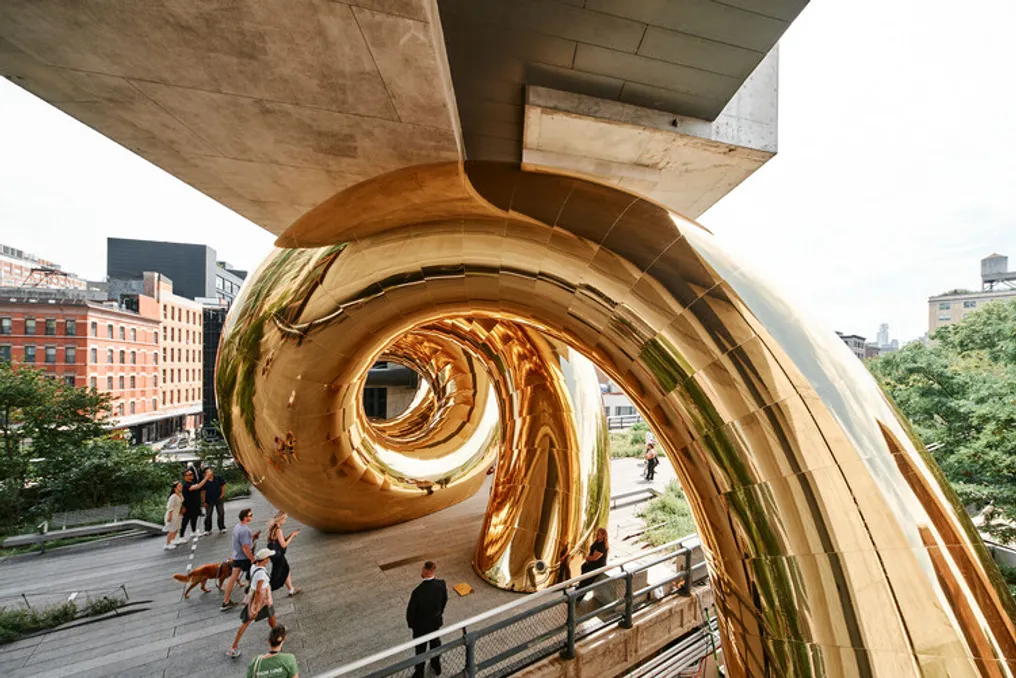
The auruBOROS installation, conceived by the Berlin-based artist duo Plastique Fantastique, transforms the traditional representation of the Ouroboros into an ephemeral urban organism traversing New York. This project connects elements of architecture, public space, and collective experience.

The work was commissioned by Bvlgari as part of the Serpenti Infinito collection. The artists developed the installation for the High Line, located beneath The Standard hotel. The concept addresses the themes of renewal, continuity, and transformation inherent to the Serpenti line, utilizing the studio's established practice of pneumatic architecture.

Instead of presenting the serpent as a static emblem, the artists chose to unfold the classic circle of the Ouroboros, allowing its body to extend toward the urban landscape. The chosen environment, the High Line, is crucial to the work because it encompasses various layers of the city: the elevated park, the underpass, The Standard, neighboring buildings, vegetation, and constant pedestrian traffic.

The Plastique Fantastique team designed auruBOROS as part of a larger organic system that invisibly circulates through these layers, with only fragments of its golden body being visible. Constructed with light, reflective membranes and maintained solely by air pressure, the installation balances imposing scale with physical lightness.

The piece's geometry was shaped by factors such as wind, circulation, anchor points, lines of sight, public safety, and the local architecture itself. The golden, reflective surface is fundamental, as it captures daylight, buildings, flora, the sky, and moving individuals, continuously altering the appearance of the city. At certain moments, the structure can appear extremely prominent or almost merge with its surroundings.

The name auruBOROS combines 'aurum,' the Latin term for gold, with Ouroboros. Gold is interpreted here not primarily as a symbol of opulence, but rather through the alchemical notion of transmutation, representing the passage of matter from one state to another. This mutable change makes the transformation perceptible in real time.

As a transient intervention, auruBOROS investigates how memory is constructed in the present moment. Unfamiliar individuals briefly share the same space, image, and instant, which the artists define as a modality of 'Public Love.' Although the structure is removed after ten days, the experience may persist through memory, discussion, and a new way of seeing the location. Thus, the work adds a temporal dimension to the urban memory of New York, encouraging a collective imagination about the city's future.
Similar stories

Uzbekistan plans to turn Khiva into an international tourist city and create a 'smart' museum there
Read more
uzdaily.uz

Uzbekistan plans to turn Khiva into an international tourist city and create a 'smart' museum there

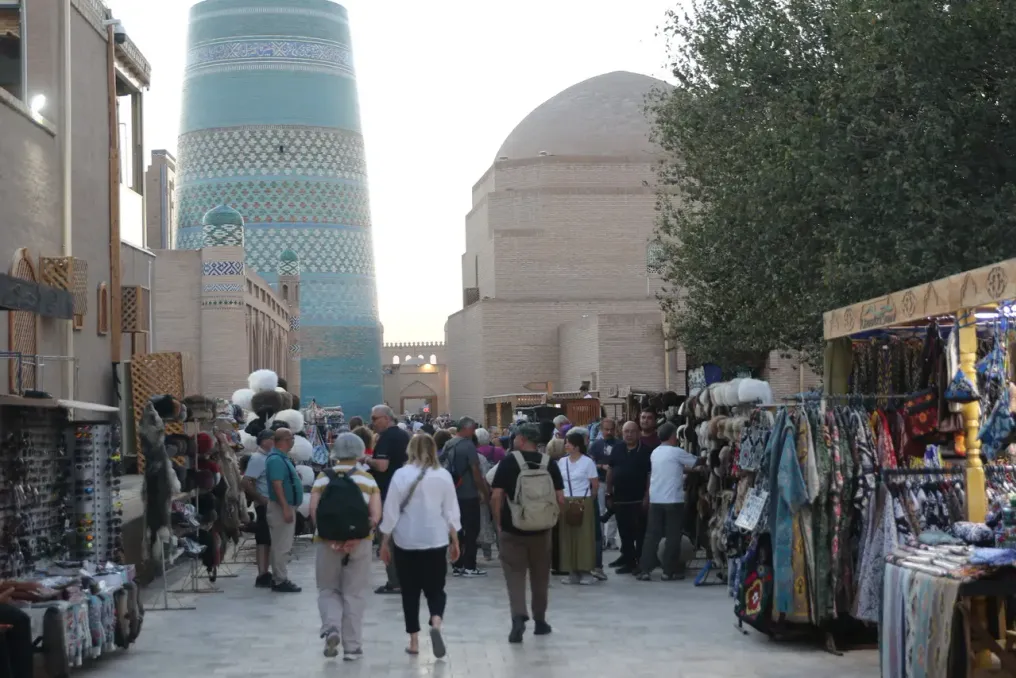
Uzbekistan intends to establish an international tourist city in the city of Khiva, as well as a center for conferences and an historical and ethnographic park. Furthermore, the ancient Ichan Kala complex will be transformed into a 'smart' museum complex using digital technologies.

These plans were announced by President Shavkat Mirziyoyev in his message dedicated to Tourism Day, which is celebrated on September 27. According to the President, the new facilities in Khiva should harmoniously combine history and modernity.

These projects are part of Uzbekistan's broader efforts to transform the country into one of the world's most popular tourist destinations by developing modern infrastructure for travelers. Khiva has become the first region included in the list of places where new tourist facilities are planned to be built.

In addition to Khiva, a Silk Road Museum will be built in Samarkand, new routes to archaeological sites in Karakalpakstan will open, the Gilon complex in the Shahrisabz district of Kashkadarya region will be developed, and the Arashan complex will be created in Namangan region.

The planned digital transformation of Ichan Kala aligns with the priorities set by the President for the entire tourism sector. These priorities include the wide implementation of modern technologies, the launch of a unified national tourism platform, integration into a single system of tourism services, the use of artificial intelligence, and regular professional development of industry workers.

Special attention will be paid to accelerating the development of high value-added tourism segments. Such segments include gastronomic, ecological, pilgrimage, medical, mountain, adventure, business, ethnic, and rural tourism.

The new initiatives are tied to the goals set for 2030. By this date, Uzbekistan aims to increase the number of foreign tourists to 20 million annually, raise the share of tourism in GDP to 7%, increase the export of tourism services to more than 8 billion US dollars, and double the number of high-class hotels.

According to the data provided in the congratulatory message, nearly 12 million foreign tourists visited Uzbekistan in 2025, which is six times higher than the figure in 2016. The export of tourism services increased elevenfold, reaching 4.8 billion US dollars.

First museum dedicated to prehistoric flying reptiles opened in China
Read more
iol.co.za

First museum dedicated to prehistoric flying reptiles opened in China

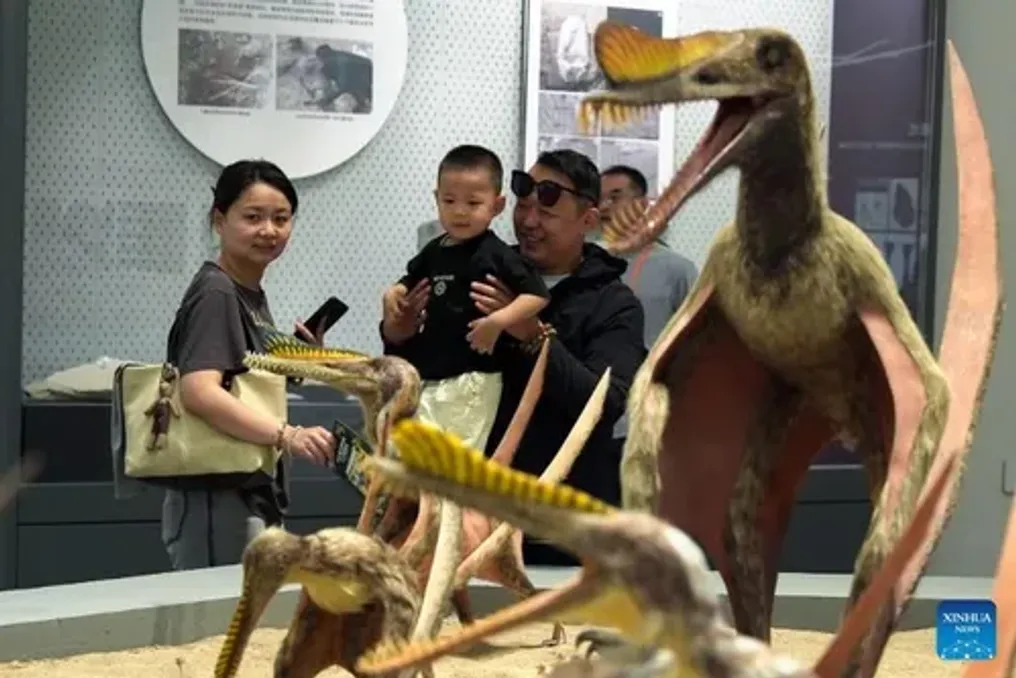
A scientific museum specializing in pterosaurs—winged reptiles closely related to dinosaurs—has opened in the Xinjiang Uyghur Autonomous Region of northwestern China.

This museum, the first of its kind globally, is located in a national geopark in the Hami region of Xinjiang province, which is known for its abundance of pterosaur fossil finds.

The 'Hami Pterosaur Museum' covers an area of about 4,600 square meters and consists of six oval halls arranged in a stepped pattern. From an aerial view, it resembles a cluster of pterosaur eggs lying in the desert.

The exhibition features specimens discovered during excavations conducted over two decades by researchers from the Institute of Vertebrate Paleontology and Paleoanthropology of the Chinese Academy of Sciences (CAS). It also displays the world's first three-dimensionally preserved pterosaur eggs and embryos, as well as large pterosaur specimens presented to the public for the first time.

The museum announced that all these specimens are being displayed together for the first time. The exhibits offer a panoramic recreation of the life and evolution of pterosaurs during the Cretaceous period, approximately 130 million years ago.

Xu Xing, director of the CAS institute, noted that the museum not only highlights China's leading role in global pterosaur research but also provides the public with the opportunity to see scientific discoveries up close and appreciate the wonders of ancient life.

Full Tilt combines circus and live music at District Six Heritage Centre
Read more
iol.co.za

Full Tilt combines circus and live music at District Six Heritage Centre

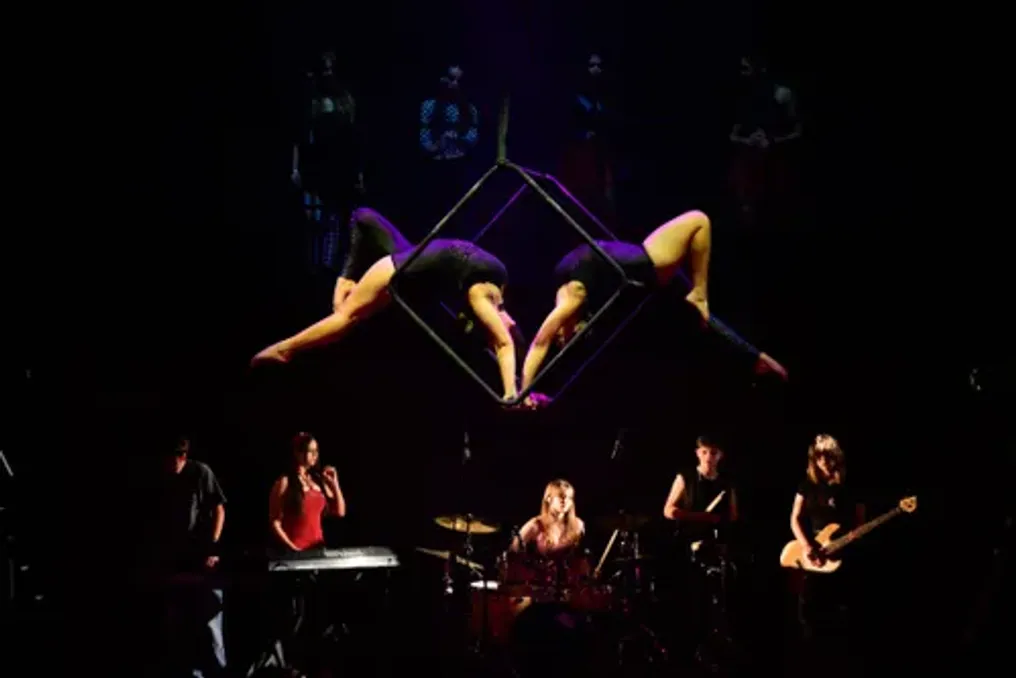
As part of the Cape Town Heritage Month celebrations, the four-day 'Full Tilt' performance took place, uniting young acrobats and musicians. This joint show by Zip Zap Circus and School of Rock ran at the District Six Heritage Centre from September 23rd to 26th.

The production merged contemporary circus arts with live rock music. It featured 25 artists from Zip Zap and 11 musicians from School of Rock, aged between 11 and 33. Over seven energetic performances, a mix of classic circus acts, acrobatics, and live music was presented, with all musical accompaniment performed live on stage.

For Zip Zap co-founder Brent van Rensburg, this project embodied the core idea of the organization he founded with his wife Lawrence Estev van Rensburg in 1992. After years of performing abroad as a circus artist, Van Rensburg aimed to create a platform capable of bringing together children from diverse cultures, religions, and races through the art of the circus.

The social project began modestly at Zimasa Primary School in Lange, possessing only a dining hall pull-up bar, a few costumes, and a tree. Van Rensburg recalled Nelson Mandela telling him when Zip Zap performed for him in 1995: 'We wanted to be part of your rainbow nation. We wanted to contribute.'

Since its first major tour in Grahamstown in 1994 with 20 children, Zip Zap has significantly expanded while maintaining its fundamental principles over more than three decades. This non-profit, public benefit organization continues to offer all training sessions free of charge, having accepted 1493 young people in 2025 alone and over 25,000 participants since its inception.

Currently, Zip Zap operates 10 programs—five focused on outreach and five on skill development—from its academy in Salt River. Through this organization, young people gain practical skills for the performing arts industry, employment, and entrepreneurship. Vanessa, Partnerships Manager at Zip Zap, notes: 'It is about giving young people a sense of power, providing them with opportunities to determine their own future.'

She also emphasized that all funds generated from local or international tours are reinvested back into funding the programs. A prime example of this journey is Phlelani Ndakrokra, who joined Zip Zap in 2010. Having never seen a circus before, Ndakrokra was captivated after watching performances involving the unicycle and juggling, ultimately choosing the circus over dance and football. He trained as a professional artist and teacher through Zip Zap's three-year 'Dare to Dream' program, subsequently touring internationally and performing with Freshlyground, The Parlotones, and the Cape Philharmonic Orchestra.

Ndakrokra mentioned that during performances, he shares his story, adding that performing with a live band gives Full Tilt a unique dynamic because the artists must react directly to the musicians on stage rather than following a pre-recorded track. The program is supported by the Western Cape Government's Department of Cultural Affairs and Sport, and ticket revenue directly supports Zip Zap's free educational programs, continuing a 34-year mission of using circus arts to foster unity, talent, and creative self-expression.

Popular