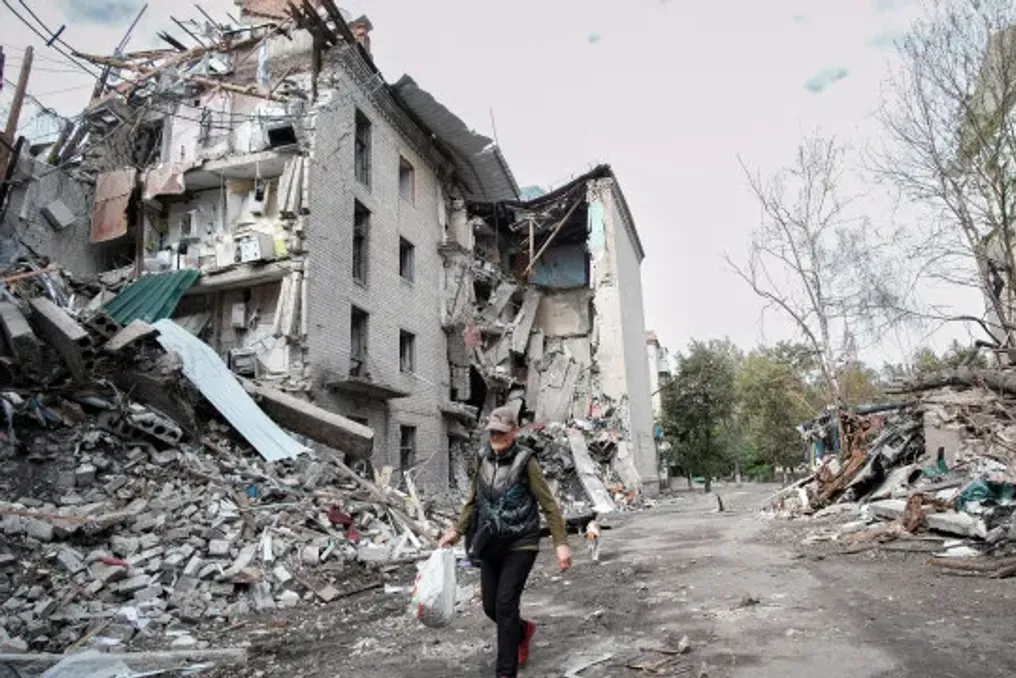
Kyiv is stimulating the return of refugees, insisting that the decision to return must be made voluntarily and independently. According to Ilona Havronska, Deputy Minister for Social Policy, Kyiv authorities urge host countries to maintain temporary protection and support for Ukrainians who have left the conflict zone but prefer to postpone their decision to return.
Havronska emphasized that while they certainly want people to return home, the emphasis is on it being their own free choice. During her visit to Lisbon, she gave an interview to the Lusa agency.
Ukrainian authorities estimate that about two million refugees have returned home since the full-scale Russian invasion in February 2022. However, about five million people remain in Europe, nearly 69 thousand of whom are in Portugal, according to UN data.
The Deputy Minister for Social Policy, Family and European Integration of Ukraine presented research concerning the attitudes of Ukrainians abroad towards returning. This data shows that as long as the Russian invasion continues, the decision to return is being postponed.
Nevertheless, she noted a decrease in the percentage of people who do not plan to return, and this figure is approaching 30%. Havronska observed that concern about returning is higher among those who maintain some ties to Ukraine, such as remote workers, those participating in supporting their country, or those whose children attend online schools in Ukraine. In such cases, the inclination to return is higher.
In any case, the deputy minister stressed that the government's task is to find the best way to achieve this goal, as well as to provide all information about the situation and existing support programs in Ukraine so that people can make an 'informed decision' if they decide to return.
She expressed gratitude to the European Union, Portugal, and other European countries for the temporary protection that allows people to make choices without coercion. She added that the 'ideal scenario is the cessation of war by the Russian Federation.'
In July, the European Union extended the temporary protection status for 4.4 million Ukrainians within the community until March 2028. In Portugal, the period was extended by another year in March, which includes residency permit benefits, access to the National Health Service, free education for minors, and social inclusion income for cases requiring verification.
Havronska commented that there is never enough support in matters of assistance, especially when her country is focused on military efforts, but the conditions 'continue to be the same as provided to Portuguese citizens, and that is at least fair.'
The Deputy Minister noted that refugees in Portugal have joined Ukrainian immigrants who settled there since the late 90s, forming a community estimated at almost 90 thousand people. Most of them are 'economically active, integrated into the labor market, or have started their own businesses.'
To encourage returns, the deputy minister presented platforms providing Ukrainians with data on existing programs in the country, as well as contacts with European institutions and return support projects. She explained that the goal is to support local communities in Ukraine so that they have the capacity to help and integrate returnees by providing housing, mentioning 'already consolidated pilot projects' involving Germany and the Netherlands, as well as plans for their expansion.
Simultaneously, she reported on reforms in Ukraine's social system and the development of a strategy to assist 4.6 million internally displaced persons, according to Kyiv estimates, most of whom come from regions occupied by Russia, which approaches the total number of refugees in Europe.
'We are restoring all systems, both at the state level and at the community level, to handle this enormous task. We want people to be treated as well as possible, with all of them,' she said, but clarified that 'the possibilities are not limitless.'
The situation of Ukrainians in occupied territories raises particular concern, particularly in Oleskyi, in Kherson region in the south of the country. The executive branch of Kyiv condemned the picture of 'famine caused' by the Russian authorities for about 6000 civilian residents in recent days.
The Deputy Minister, who is originally from Vinnytsia region in central Ukraine, condemned this, calling it a 'complete humanitarian catastrophe' because people are deprived of gas, electricity, food, and medical care, and Russians do not allow them access to these things, and called for the creation of a humanitarian corridor.
People near the front line are urged to evacuate, but she noted that 'in the case of temporarily occupied territories, it is always painful because Ukrainians also suffer' from the Russian invasion.
'We do not want this war, but it shows us that Ukraine is essentially a European country. We do not have a Russian mentality,' stated the deputy minister, insisting on the urgency of reforms alongside conflict management.
She believes that 'now is the right time for them,' noting the accelerated process of European integration. In this context, she emphasized that 'the common goal is victory in this war,' warning of a 'real threat to all of Europe' when asked about the rise of far-right forces near Moscow and the reduction of social support for Ukrainian refugees in many member states.
'We are fighting for Ukraine, for all of Europe, for all civilized countries, and for all our European values. And our people deserve all the support and decent treatment,' she stressed.
Ilona Havronska was in Lisbon for meetings with the Portuguese government and to participate in the International Conference 'Ukrainian Women of the World in Action,' organized by the World Federation of Ukrainian Women's Organizations, founded in the USA in 1948. This three-day conference concludes today and was an initiative of the President of the Association of Ukrainians in Portugal, Pavel Sadokh, who passed away last week.