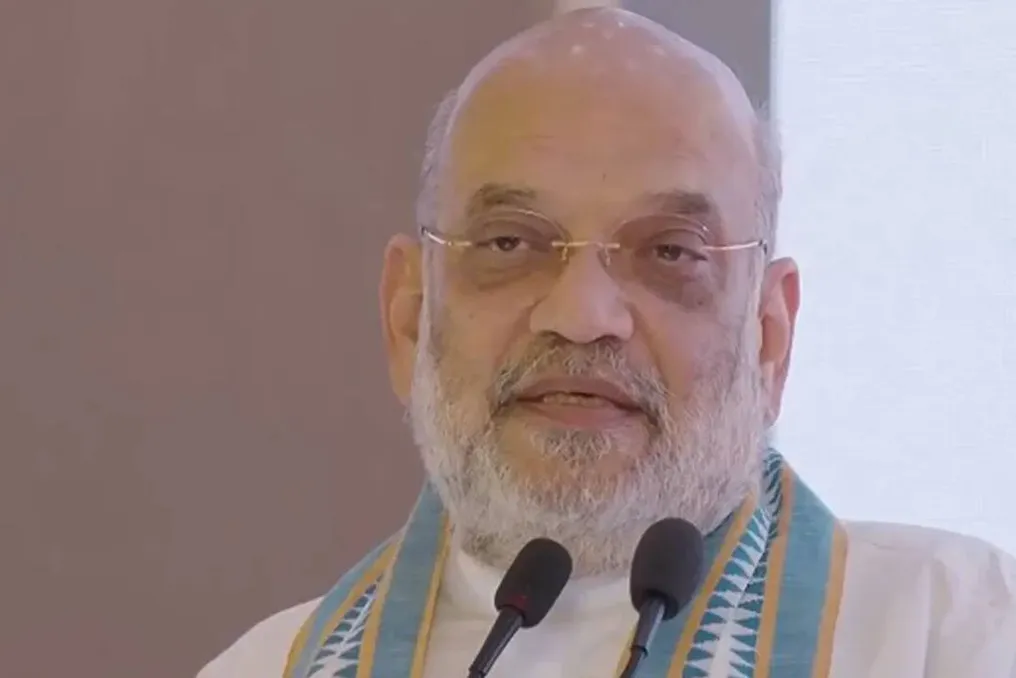
India's Minister of Home Affairs and Cooperation, Amit Shah, on Sunday solemnly launched the first train running on liquefied natural gas (LNG) in the state of Gujarat. Additionally, in Sabarmati, he opened a number of railway projects with a total value exceeding 1,542 crore rupees.
Similar stories

Fast sleeper train Vande Bharat planned to run between Delhi and Varanasi
Indian Railways plans to introduce a second Vande Bharat sleeper train for long-distance travel. The first Vande Bharat sleeper train operates on the Hauzdara – Chamakharia route and has received positive feedback from passengers.
The launch of the second Vande Bharat sleeper train is currently being prepared, which will operate between New Delhi and Varanasi.
According to the proposed schedule, the train will depart from Varanasi Cantt at 21:20 and arrive in New Delhi around 5 am the next day. This means the journey will take only 8 hours. The return route will have the same schedule: departure from New Delhi at 21:20 and arrival in Varanasi at 5 am the following day.
This will allow passengers to spend the night comfortably and reach their destination early in the morning.
The maximum speed of the train is expected to be 130 kilometers per hour. However, the final schedule and other operational details will only be known after an official announcement by the railway, as the presented data is only preliminary.
According to media reports, the ticket price for Vande Bharat sleeper trains may be slightly higher than for Rajasthan or Tejas Express trains. The cost of these trains usually starts at approximately 960 rupees for Three-Tier AC and can be higher in higher classes (First AC). The final price will be announced after the railway's official decision.
Although there is no official statement yet, estimates suggest that given the high demand, the train could be launched by Diwali. The total capacity of the train will be 800 passengers. The train composition may include 11 three-tier AC coaches, 4 two-tier AC coaches, and 1 first-class coach.
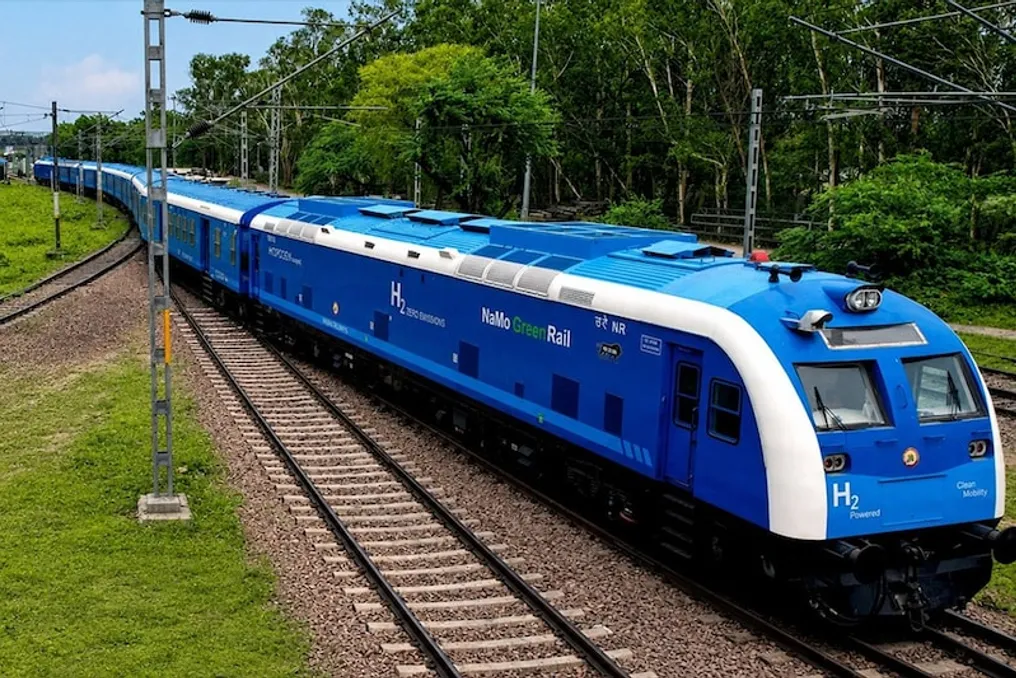
Railway department considers route extension to Delhi due to low passenger load on hydrogen train
The hydrogen train, which has the capacity to carry 2600 passengers, is experiencing extremely low occupancy, with only about 40 or 60 people typically traveling on it. This situation is characteristic of the country's only hydrogen-powered train operating between Jind and Sonipat. Due to the small number of passengers, the railway is forced to consider extending the route.
Currently, the train operates on an 89-kilometer section connecting Jind and Sonipat. According to officials, despite the capacity for 2600 people, only 40 to 60 passengers arrive daily along this entire route. Consequently, the train makes only one round trip per day, whereas the initial plan called for two trips between Jind and Sonipat. The Northern Railway has been operating this train for about two months, and a team of experts is continuously monitoring its operation and new technology.
Given the low ridership, the railway is studying the option of extending the route to Azadpur in Delhi. Azadpur is a major wholesale market for fruits and vegetables in Delhi. The railway believes that access to Delhi by train will make it more convenient for passengers. Local residents have also long demanded the line be extended to the capital. Currently, the railway is working on various aspects related to this expansion, and a final decision will be made after assessing safety issues, technical requirements, and practical feasibility.
The first hydrogen train in India began operations on July 17. This train is entirely domestically produced and was presented as an important step towards clean and sustainable railway transport technologies. Unlike diesel engines, it does not use direct diesel fuel; instead, electricity is generated from hydrogen, which is then used to power the train. Because of this, it is considered an environmentally friendly railway technology. According to the railway, India is among the few countries developing hydrogen-based railway transport technologies.
The problem of low passenger load is not new for this route. Railway staff note that even previously operating EMU trains on this route had a relatively small number of passengers. In addition to the hydrogen train, three other EMU trains are currently running on this section, but they are also not highly popular. Railway workers explain this by stating that the number of passengers commuting to work in Jind and Sonipat, as well as employees of various enterprises, is not large enough, leading to insufficient ridership on the trains.
Although the idea of extending the hydrogen train route to Delhi seems simple, the railway faces several practical challenges. This hydrogen train consists of 10 coaches and has a capacity of about 2600 passengers. However, according to railway officials, transporting a large number of passengers on trains departing from Delhi might require 18, 20, or even more coaches. Furthermore, Delhi's busy rail network already has significant train traffic, making it difficult to determine track availability and scheduling for a new train.
Regarding fuel, no serious problems have been identified. According to railway representatives, one tank allows the hydrogen train to travel about 250–300 kilometers after being fully refueled. The distance between Delhi and Jind is approximately 130 kilometers, meaning the train can cover this distance on a single tank. Nevertheless, currently, hydrogen refueling is only available in Jind, so when expanding service to Delhi, both the fueling system and the train's operational plan must be taken into account.
Although local residents insist on the extension to Delhi, an alternative solution has been proposed in case of operational difficulties on the Delhi route. Local passengers suggest running the train from Sonipat via Panipat, and then through Safidon to Jind, which would create a closed loop. Panipat is a major industrial center. Local residents believe this route could increase the daily number of passengers and improve train utilization. According to this proposal, the train could depart from Jind, pass through Sonipat, Panipat, and Safidon, and then return to Jind, thus creating a cycle of about 180 kilometers.
On the issue of safety, the railway emphasizes that since the hydrogen train is based on new technology, there should be no rush to expand it. The expert team is closely monitoring both the current operation of the train and the tests and technical aspects related to its possible expansion to Delhi.
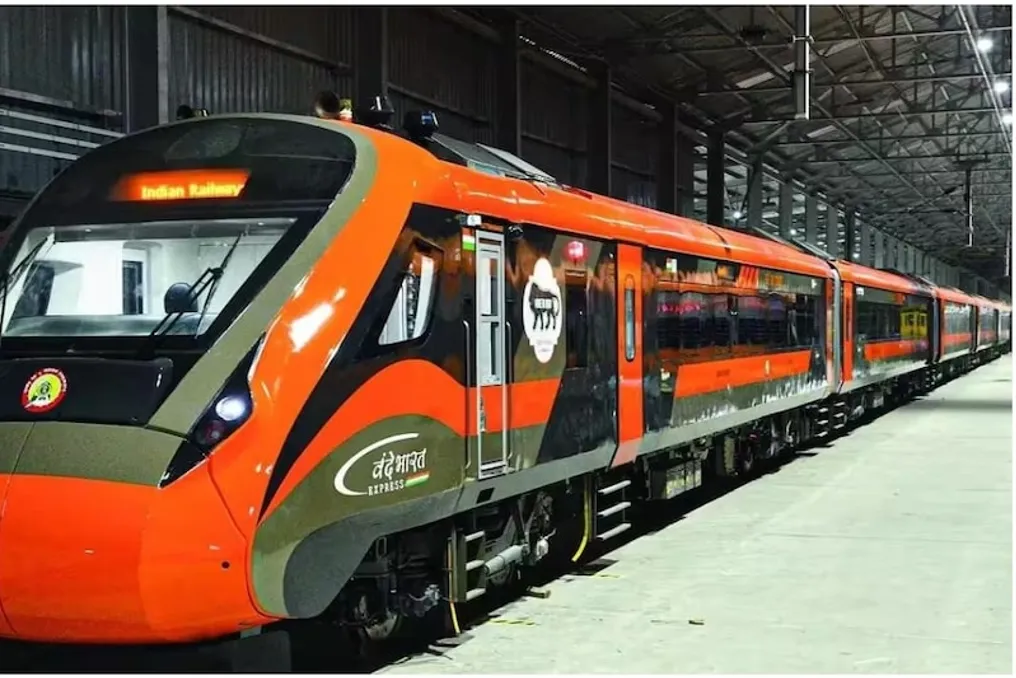
Two companies assume responsibility for maintaining 80 Vande Bharat sleeper coaches for 35 years
It is planned that the responsibility for the technical maintenance of 80 Vande Bharat sleeper coaches will be carried out over 35 years. This major railway initiative goes beyond simple manufacturing. The responsibility for the long-term maintenance of these sets will be entrusted to a joint venture between Titagarh Rail Systems Limited (TRSL) and Bharat Heavy Electricals Limited (BHEL).
Previously, in April 2023, Titagarh Rail Systems and BHEL signed a contract worth approximately 24,000 crore rupees for the construction of 80 Vande Bharat sleeper coaches. Now, a corresponding structure is being developed to ensure the maintenance of these trains for 35 years, cementing the service system alongside production.
According to regulatory filings, BHEL and Titagarh Rail Systems will each hold a 50% stake in the proposed joint venture. Both companies will contribute equally to the share capital. This joint venture will be registered as a private company with an initial paid-up share capital of 50 thousand rupees and a registered office in Delhi.
Both companies are guaranteed equal representation on the joint venture's board of directors. BHEL will appoint two directors, and Titagarh Rail Systems will also appoint two directors. This agreement ensures equal participation of both companies in management and decision-making within the joint venture.
The main task of the proposed company will be to advance the planned activities in partnership between BHEL and Titagarh Rail Systems. It is through this structure that the responsibilities for maintaining the 80 Vande Bharat sleeper coaches will be assumed. According to regulatory documentation, the joint venture will utilize the technical potential and experience of both companies.
The focus will be on maintaining the operational readiness, safety, and reliability of the sets. This system is being created considering the projected 35-year lifespan of these trains, thus forming the institutional basis for long-term maintenance after construction completion.
Indian Railways is preparing to significantly expand the series of Vande Bharat sleeper coaches. According to the current plan, a total of 260 Vande Bharat sleeper coaches should be prepared. This will increase the network of fast and modern trains for long-distance night travel.
Under the existing plan, 260 Vande Bharat sleeper coaches will be manufactured by various companies and production units. India Earth Movers Limited (BEML) will be tasked with manufacturing the first 10 sets, consisting of 16 coaches each. Chennai Integral Coach Factory (ICF) will produce 50 sets. The 24-coach sets from ICF will also include a restaurant coach, for which production drawings have already been prepared. According to officials, RVNL and the Russian company Transmashholding (TMH) will manufacture 120 sets through the joint venture Kinet Railway Solutions. All these sets will be built in Latur, and each train will consist of 16 coaches. RVNL has reported that production has begun. At the 23rd annual general meeting, Chairman Salim Ahmed noted that the prototype manufacturing deadline was changed: it was originally planned for June 2026 but has now been extended to March 31, 2027.