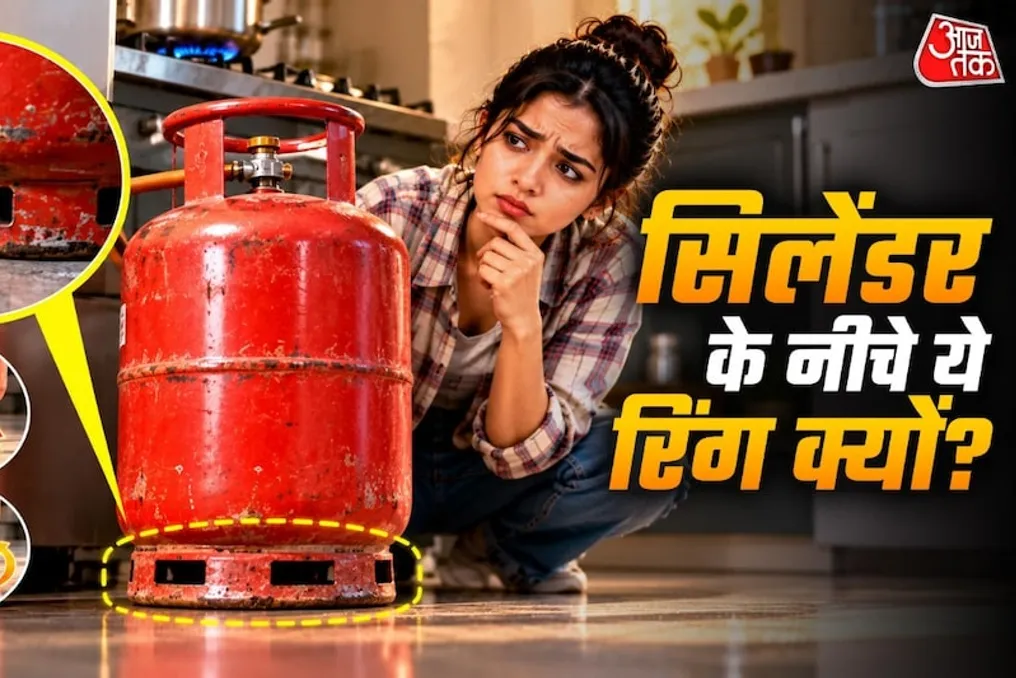
Anyone who uses a kitchen gas cylinder has probably encountered it. We lift the cylinder, place it next to the stove, attach the regulator, and start cooking. However, you may never have paid attention to the metal ring located at the very bottom of the gas cylinder. Most people simply accept this ring as a normal part of the cylinder and ignore it. Nevertheless, this ring is not installed for no reason; it plays an important role in ensuring the reliable and safe storage of the cylinder.
The shape of the gas cylinder is not perfectly flat. The ring at the bottom serves as a base, allowing the cylinder to stand upright and stable on the ground. If the bottom part of the cylinder were to come into direct contact with the ground without a solid base, it would be difficult to keep it upright. The ring helps support the weight of the cylinder and fixes it in place. This is why it is always recommended to use the cylinder in an upright position.
In the kitchen, the cylinder is placed on the floor, where water, oil, moisture, dust, and other substances may be present. If the bottom part of the cylinder constantly contacts the floor, the risk of corrosion of metal elements increases. The ring at the bottom helps slightly raise the main body of the cylinder above the floor. This prevents direct contact of the bottom part with the entire surface and to some extent reduces moisture exposure. However, this does not mean that the ring completely eliminates rust; it is still important to store the cylinder in a dry and clean place.
The ring also contributes to easier placement of the cylinder. It helps distribute the weight of the cylinder when setting it down on the ground, facilitating fixation. Have you noticed that the cylinder remains in a certain position when placed on the floor, and the ring at the bottom participates in this? You must absolutely not attempt to remove, cut, or modify this ring in any way yourself. It is an integral part of the cylinder's design intended to provide a stable base. If the ring is broken, heavily rusted, or the base of the cylinder looks damaged, it is better to contact a gas distributor rather than trying to repair it yourself.
Sometimes, due to the cylinder being moved or falling, the bottom ring may appear slightly deformed. In such cases, do not try to straighten it with a hammer. Any damage related to a gas cylinder should not be underestimated. If the bottom part of the cylinder or the ring is seriously damaged, you must report it to the gas service and follow their recommendations.
When using a gas cylinder, it must always be kept in an upright and stable position. Using it lying down or upside down is not the correct method. Liquefied petroleum gas (LPG) is inside the cylinder under pressure, so it is crucial to store the cylinder safely. During cooking, the cylinder should be placed at a sufficient distance from the stove and in a place where it does not receive direct heat. The condition of the bottom ring alone does not allow one to conclude the complete safety of the cylinder; the condition of the body, valve, seals, and other components is also critical.
It is necessary not to ignore the cylinder if deep dents, heavy rust, leakage, or any other unusual situation is visible on it. If you smell gas, do not immediately touch electrical switches or fire, but after safely shutting off the gas supply, contact the gas service or relevant emergency services.
The next time you look at the cylinder, be sure to pay attention to its bottom. Although the ring at the bottom of the gas cylinder seems very simple, its function is very important. It helps ensure a stable base and protects the bottom part from direct contact with the ground. Therefore, it should not be ignored by considering it just a piece of metal. And if this ring or any part of the cylinder looks damaged, it is safer to seek help from the gas service than to try to fix it yourself.