The National Gallery of Modern Art (NGMA) in Bangalore is hosting two significant exhibitions this month: 'One Mother, Many Mother Tongues' and 'One World: The Divine Thread Connecting Humanity and Nature.'
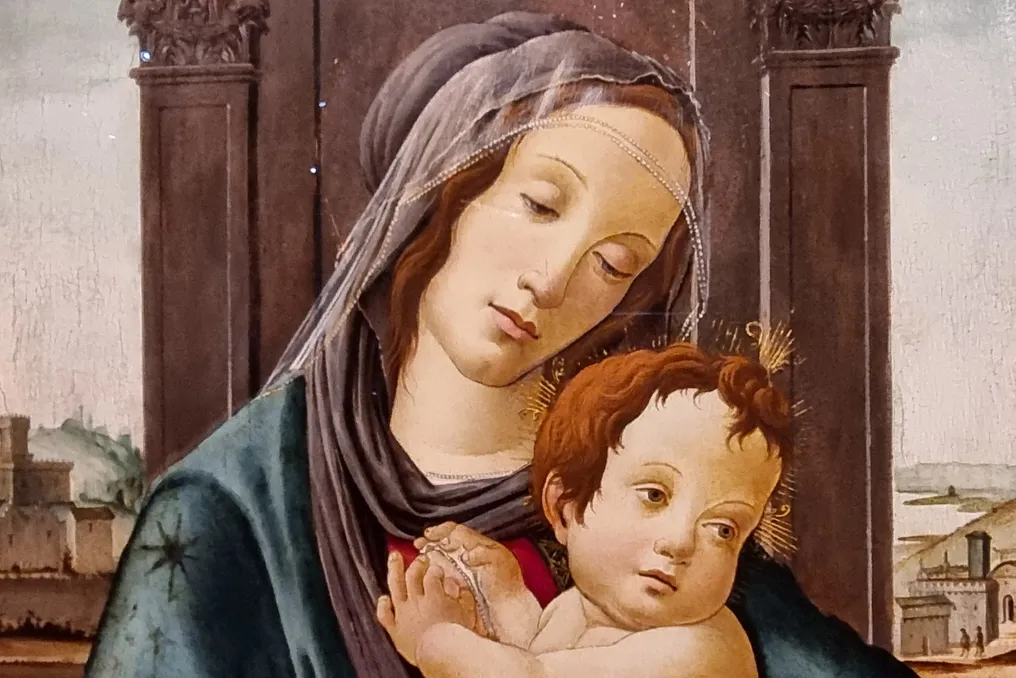
The first exhibition features an original work by the Italian Renaissance master Sandro Botticelli. This painting was delivered to India for display at NGM New Delhi and Bangalore for the first time.
As part of a unique intercultural dialogue, the exhibition unites ancient Etruscan sculptures from Italy with outstanding sacred works of Indian art. Together, they demonstrate how the universal concept of motherhood finds expression across different cultures, historical periods, and artistic traditions.
The curators of this exhibition are Naman Parmeshwar Ahuja and Andrea Anastasio. Key works presented in the photo essay include Sandro Botticelli's Madonna and Child, painted around 1490, as well as pieces such as Mata Matuta, Hariti, Skandamata, and Chamunda.
The Indo-Italian exhibition is a result of collaboration with the Consulate General of Italy in Bangalore and the Ministry of Culture of the Government of India. It invites visitors to explore how such diverse societies can arrive at similar visual ideas concerning motherhood, fertility, care, divinity, and the relationship between mother and child.
The opening ceremony was attended by KJ George, Minister of Energy and Tourism of the Government of Karnataka; Giandomenico Milano, Consul General of Italy in Bangalore; Reswan Razak, Managing Director of Prestige Group; and Priyanka Mary Francis, Director of NGMA.
Reswan Razak is also known as a major collector of Indian currency. His collection, spanning over five decades, now has a permanent home in Bangalore with the opening of the Museum of Indian Currency.
Giandomenico Milano joined the Italian Ministry of Foreign Affairs in 2011, undertaking diplomatic missions to Sri Lanka, Ethiopia, and Indonesia. Notably, India and Italy jointly celebrate 2027 as the Year of Culture and Tourism to strengthen shared historical ties between the two ancient civilizations.
Mary Francis has overseen curatorial work for NGMA exhibitions such as 'Srishti,' dedicated to the eminent artist Pushpa Dravid, and 'Caravaggio: Magdalene in Ecstasy,' which included a major work by the Italian master. She actively promotes cultural exchange, public participation, and educational initiatives to ensure art is accessible to the general public.
The co-authors of the current exhibition place Indian and Italian traditions side-by-side rather than viewing them as isolated art histories. As viewers move through the gallery, they traverse centuries and various art forms, examining the connections between religious imagery, religious practice, and depictions of femininity.
Curatorial notes explain that the image of a mother with a child is one of the most enduring visual narratives in human history. Various deities and rituals have addressed the fragility of infant life in ancient societies.
Artworks found in different cultures repeatedly portray mothers as divine pioneers tasked not only with protecting their offspring but also society as a whole. This exhibition explores these ideas in a transcultural context.
For instance, Mata Matuta is an ancient Roman figure of the mother associated with motherhood and protection. Hariti is a Buddhist mother goddess offering a different South Asian representation of fertility and maternal care. Indian matrikas, including figures like Skandamata and Chamunda, explore these relationships through Indian traditions.
Curator Naman Ahuja explains: 'While the title One Mother suggests a common human archetype, Many Mother Tongues indicates that this archetype speaks in different visual and cultural languages.' He drew attention to the linguistic similarities between the words mother, mata, madre, matrika, and matrix. By presenting similarities and differences in artworks from various cultures, the exhibition prompts viewers to consider what happens when different traditions of motherhood enter into dialogue with each other.
NGMA has organized multilingual tours of the gallery in Hindi, Kannada, Marathi, and Malayalam. Poetry, storytelling, and pottery classes are also offered for children.
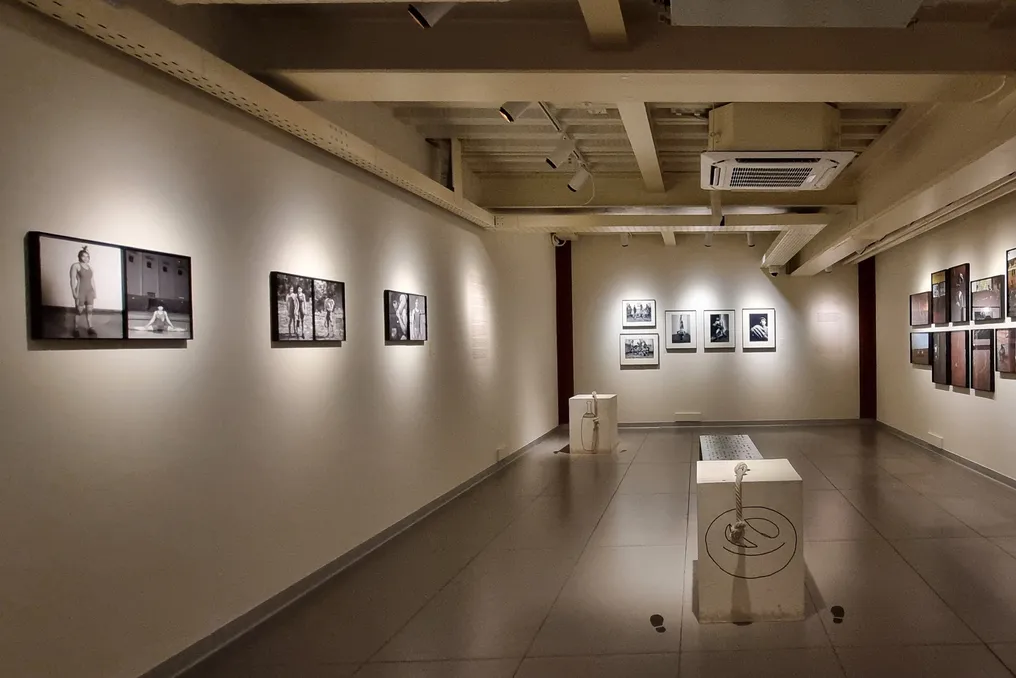
NGMA is also showcasing another major exhibition titled 'One World: The Divine Thread Connecting Humanity and Culture.' Principles of motherhood and feminine energy are also central to this exhibition. It is presented in partnership with the Ministry of Culture of the Government of India. It explores the deep connections between human life, diverse cultures, and the natural world through sculptures, paintings, engravings, and photographs.
The exhibition calls on viewers to look beyond viewing Mother Nature merely as a backdrop for human life. Nature is rightly depicted as an integral part of human imagination, spirituality, identity, and collective existence.
'The divine thread' is this invisible connection that links people to each other and to larger ecological and cultural systems. Art serves as an effective conduit for tracing this connection and contextualizing humanity's place in nature.
As seen in the latter half of this photo essay, the exhibition also depicts and mourns the suffering that people have inflicted upon each other through conflict, oppression, and discrimination. Other artworks refocus on celebration, community, and camaraderie, thereby calling for greater balance and sustainability in society.
The exhibition is particularly interesting because the NGMA collection in Bangalore spans a wide period of Indian art, from the 18th century to the present day. Art serves as a chronicle of changing perceptions of community, environment, spirituality, and identity.
NGMA has also held artist talks in connection with the exhibition, including presentations by Rekha Rodditty and K.P. Raja.