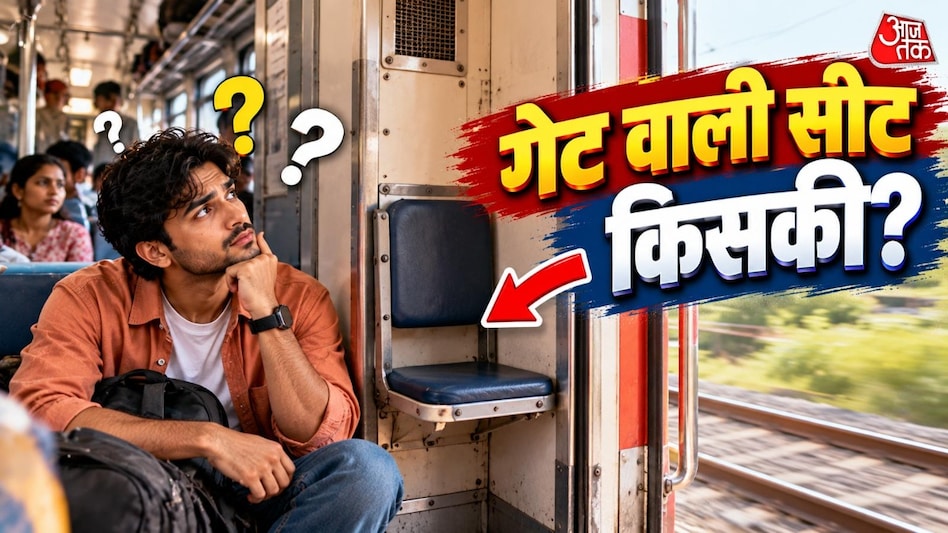
If you travel by train often, you have probably noticed a small seat near the carriage door. During the journey, many people wonder whether this spot is intended for passengers or if it is designed for TTE and other railway personnel. It is important to understand that not all places on a train are meant for passenger seating. Therefore, let's consider what the true function of this small seat at the entrance is and who has the right to use it.
Why is such a seat located by the door? Various zones related to the work of railway employees are located near the carriage doors. In many carriages, there is a similar or folding seat near the entrance that staff members on duty may use. Because of this, many passengers mistakenly believe that this place is exclusively for TTE. However, one cannot claim that the seat by every train door is only for TTE.
Can an ordinary passenger sit there? If this seat is not a designated passenger seat and is intended for use by railway personnel, passengers should not occupy it. Every place and space on a train has a specific purpose. Nevertheless, if the seat at the entrance is installed as a passenger seat and included in the seating plan, only the passenger whose ticket provides for that seat can sit on it. Thus, one cannot conclude that the seat by the door belongs to the TTE just by seeing it; the true purpose of the seat is determined by where it is located in the carriage and how it is defined in the railway seating system.
Does the TTE always sit by the door? The TTE's duties are not limited to sitting in one place. They check tickets and passengers throughout the carriage. As necessary, they communicate with passengers and solve their problems. Consequently, if you see a small seat by the train door, you cannot immediately conclude that it was created only for the TTE to sit on. Next time you see such a seat by the train door, be sure to check whether it is a passenger seat or a seat for railway personnel before sitting down in it.