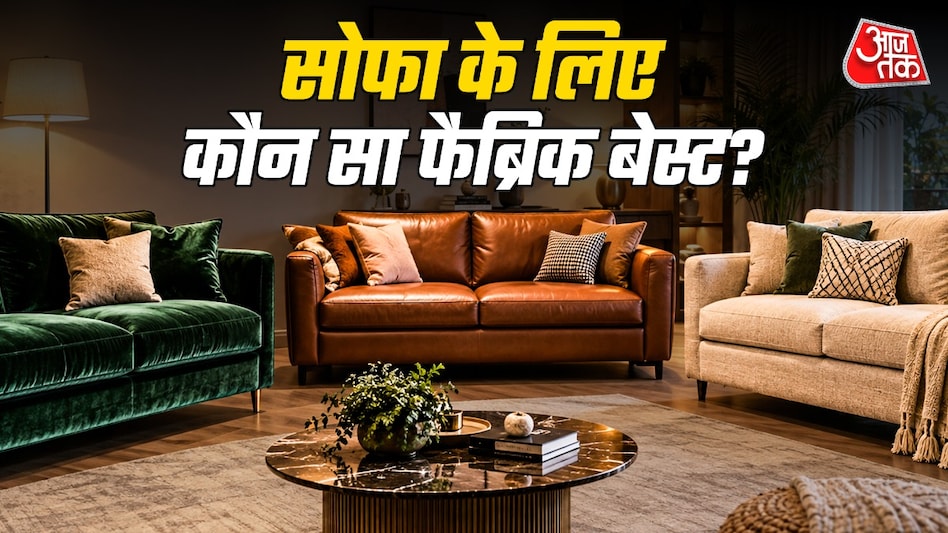
When purchasing a sofa in a showroom, customers primarily focus on design, color, and price. However, there is one aspect that, if ignored, can turn an expensive and beautiful sofa into a source of problems shortly after purchase—the upholstery fabric. If there are children at home, juice or tea spills might occur; if there are pets, issues with fur and scratches may arise; and in the summer, some fabrics can cause discomfort while sitting. Furthermore, there is a concern that some types of fabric might tear or snag quickly.
Therefore, when buying a sofa, it is not enough to simply assess the material's beauty; it is crucial to understand its durability. It is also necessary to consider which of the three options—velvet, eco-leather, or linen—will be most suitable given the characteristics of your home and daily needs. Each of these fabrics has its own advantages and disadvantages. Let's examine which material is best suited for a sofa.
If you aim to give your living room a luxurious and royal look, a velvet sofa might suit you. Its soft texture and rich colors lend a premium appearance to the room. Shades such as bottle green, dark blue, rust, and burgundy look particularly striking on velvet.
High-quality velvet can look delicate, yet it is quite durable. According to reports, quality velvet with a density over 300 g/m² does not tear easily. In winter, sofas made from this fabric feel warm and cozy.
Disadvantages of Choosing Velvet
However, before choosing velvet for your home, you need to know its drawbacks. Velvet can quickly collect dust and pet hair. If food or drinks are regularly consumed on the sofa, spilled liquids must be cleaned up immediately, otherwise, stains may appear. Sitting on it for long periods in the summer without air conditioning can be uncomfortable.
Thus, velvet is suitable if your sofa is used infrequently, and you are willing to dedicate time to its care. But if the sofa is used intensively, this could increase your hassle.
Eco-leather is also called artificial leather or rexine. Its main advantage is that daily cleaning of dirt is easy. If tea, juice, or anything else spills on the sofa, it is usually enough to wipe it with a damp cloth, as the material does not absorb liquid like fabric.
Therefore, eco-leather can be the best choice for homes with small children and where the sofa is used very frequently. However, the biggest problem with eco-leather is that cheap or low-quality versions can start peeling over time. This is especially noticeable when heated and constantly used. Additionally, in hot weather, it can feel sticky on the skin. Scratches from keys, nails, or pet claws are also easily visible.
Therefore, when choosing eco-leather, you should not base your decision solely on the low price; you must check the quality of the fabric itself.
If you like a light and natural look in your home, linen can be a good option. It pairs well with natural materials such as wood, jute, and rattan. The texture of linen gives the room a soft and relaxing look. A feature of linen is that it allows air circulation, so in hot weather, it can feel cooler than other fabrics.
Linen Stains Easily
The main disadvantage of linen is that it wrinkles quickly, and it is also capable of absorbing liquids and stains. If tea, oil, or turmeric spills, it must be removed immediately, without delay. If you want to buy a linen sofa, you can consider blended fabrics. In such blends, for example, linen-viscose, wrinkles may appear less often than in pure linen.
When buying a sofa, do not just ask for the fabric name. Simply asking in the showroom whether it is velvet or linen is not enough. You need to get information about the material's quality. It is also important to find out whether the fabric is pure or blended. Often, blended fabrics are more convenient for daily use.