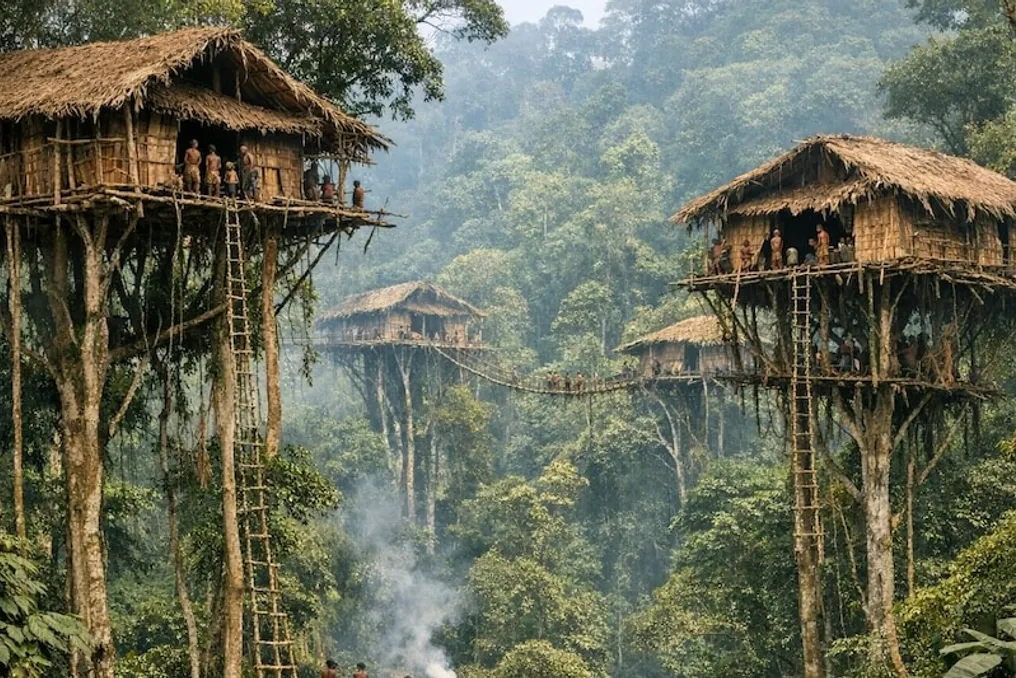
Korowai Tribe in Papua (Indonesia) Lives in Trees, Preserving Ancient Hunting Traditions
Read more
Aaj Tak
www.aajtak.in

Korowai Tribe in Papua (Indonesia) Lives in Trees, Preserving Ancient Hunting Traditions

There are communities and tribes on Earth that continue to live according to their prehistoric traditions. Some of these groups avoid interaction with the modern world, while others attempt to negotiate with it. One such community is the Korowai tribe, which lives in the dense forests of Papua, Indonesia. They do not build dwellings on the ground but spend their entire lives in trees.

According to a report by the New York Post, certain practices of cannibalism still exist within this tribal society. Their most unusual characteristic is that they do not live in ground-level houses; instead, they construct straw huts in trees, 15 to 20 meters high, where the entire family resides.

They have practiced this way of life for millennia. The Korowai tribe is often referred to as tree dwellers or tree people. They are one of the indigenous communities of Papua, and their unique way of life has attracted worldwide attention. These people remain out of reach of modern people and build beautiful houses in the trees.

Today, the Korowai tribe continues to live in the dense forests away from the rest of the world, much like people did in the Stone Age. Their existence depends on hunting, as well as wild tubers and other natural resources gathered in the forest. The ancient traditions and primitive customs of the Korowai are still alive.

The reasons for living in trees are varied. Among them are protection from snake attacks and other wild animals, as well as the belief that evil spirits inhabit the ground. This community is very wary of evil spirits, which explains the presence of cannibalistic practices in some cases.

The residents of the Korowai tribe build their treehouses using natural materials readily available in the forest, such as wood, rattan, and sabudana leaves. They demonstrate exceptional skill in creating sturdy and durable structures in the trees. In addition to protection from dangers and evil spirits, living in trees facilitates their search for food, such as fruits and small animals. They rely on the forest to meet their daily needs.

Men are responsible for hunting and gathering food, while women take care of household chores and childcare.
Similar stories

There is a village in Afghanistan where people sell kidneys for survival
Read more
www.aajtak.in

There is a village in Afghanistan where people sell kidneys for survival

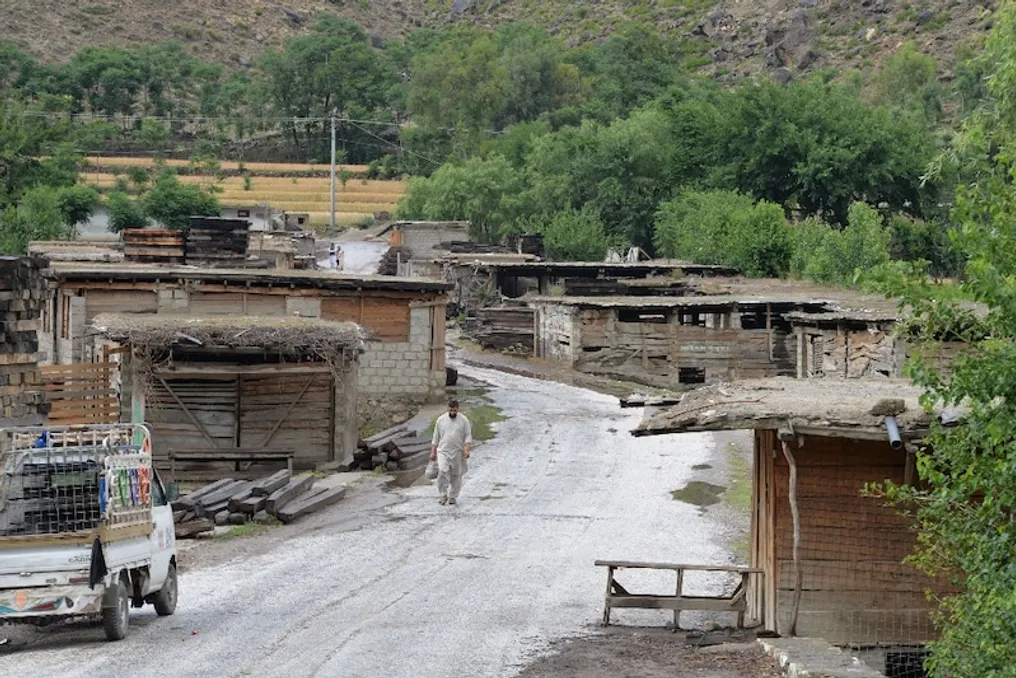
There is a village known as 'One Kidney Village,' where most residents have only one kidney. This is not related to any mysterious illness or disorder; completely healthy children are born in this village, and some people have two kidneys. However, due to the circumstances, eight out of ten adults have had their kidneys removed.

'One Kidney Village' is located in Afghanistan. Most men and women here have already sold their kidneys, and this is not due to illness. People are forced to sell their organs to feed their children.

According to Al Jazeera, such a village is called Saishamba Bazar and is located on the outskirts of the city of Herat in western Afghanistan. Many people who have been forced to relocate here after years of struggling to make a living live here. This village received the name 'One Kidney Village.' Reports suggest that every household here has already sold a kidney.

One family of five brothers sold kidneys one by one over the past four years in the hope of avoiding poverty. A former surgeon from a hospital in the northern city of Mazar-e-Sharif noted that there are no laws regulating organ donation or sale, but donor consent is required.

Most transplants conducted in Herat take place in two hospitals. A surgeon working in one of them confirmed that the most important thing is the donor's consent. He added that they obtain written permission and make video recordings. Hundreds of operations have been performed in Herat over the past five years, but he stated that he has not checked where or how patients or donors arrive, as it is not his responsibility.

By December 2021, the United Nations High Commissioner for Refugees (UNHCR) estimated that 55% of the Afghan population, about 23 million people, were facing severe hunger. The organization also predicted that 9 million of these people were at risk of starvation.

According to The Guardian, the problem of kidney trafficking in Afghanistan existed long before the Taliban took power. However, after seizing control, this trend has intensified not only in 'One Kidney Village' but in all regions of Afghanistan. That is, there is not just one such village in Afghanistan, but the number of people willing to voluntarily sell their organs has significantly increased.

Because of this, the price of a kidney has dropped: if up to 2023 a kidney could fetch between $3,000 and $4,000, now people are willing to sell it even for $1,500. According to public health officials in Herat province, approximately 250 official kidney transplants have been performed in hospitals in this province over the past five years. Very few cases are related to family donations. The cost of a kidney transplant is 400,000 Afghanis, plus the kidney itself is paid for separately.

However, the actual number of transplants may be much higher. A doctor working in hospitals where predominantly unofficial operations are conducted reported on condition of anonymity that the number of kidney sellers in Herat is growing, and most of them live in IDP camps or slums in Herat. Buyers also visit IDP camps looking for cheaper kidneys.

Popular