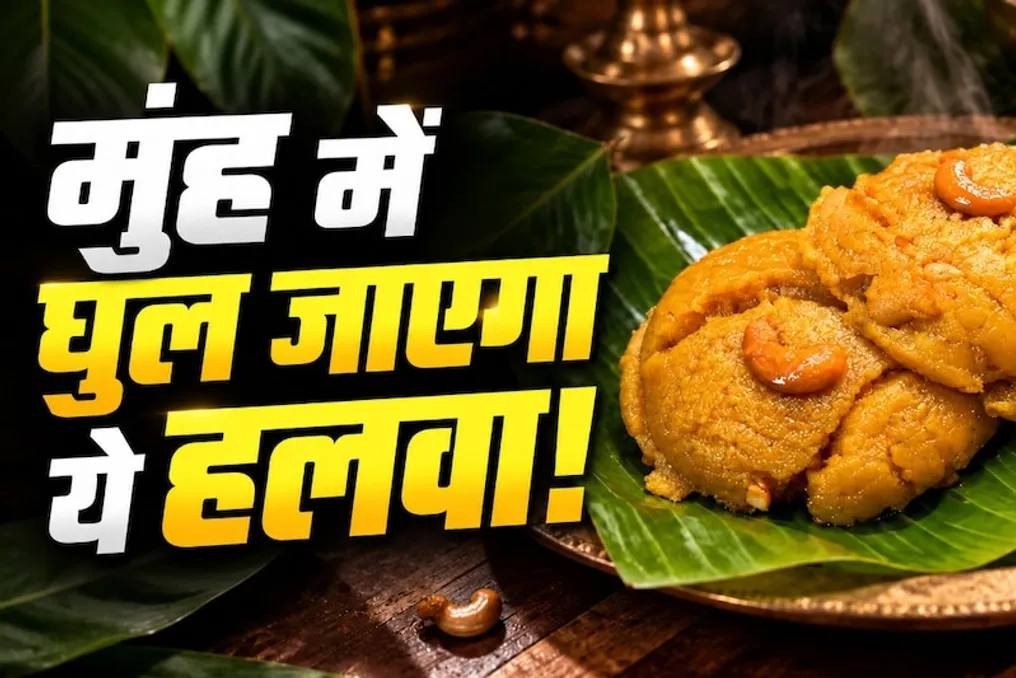
There are many recipes among the sweets of South India whose taste is remembered for a long time. One such famous dessert is Ashoka Halwa from Tanjavur. Although this halwa may look ordinary on the outside, its specialty lies in its texture: it is so soft and smooth that it melts in your mouth, and the taste prompts you to make it again and again.
To prepare this dessert, you do not need many expensive ingredients. It can be made at home using products such as moong dal, wheat flour, sugar, ghee, and some dried fruits. This halwa can compete with any store-bought sweets.
Ingredients for Ashoka Halwa
Note: if you want to make a smaller amount of halwa, you can use 1/2 cup of moong dal.
Preparation Method
The first step is to thoroughly wash the moong dal and place it in a pot or multi-cooker, adding about 3 cups of water. The dal needs to be cooked under a lid until completely soft; the better the dal breaks down, the smoother the texture of the halwa will be.
After the dal is cooked, let it cool slightly, and then blend it in a blender. Add a little water as needed, ensuring that the paste does not become too runny. You must obtain a completely uniform paste from the dal.
Next, pour a little ghee into a pan and fry the cashews or almonds until lightly golden brown. Remove the dried fruits and set them aside, as this will give them a good flavor and crunch when added to the halwa later.
Add 2 tablespoons of wheat flour to the same pan. Fry it over medium heat, stirring constantly. It is important not to cook the flour quickly over high heat, but to roast it slowly until the raw taste disappears and a light aroma appears.
When the flour is well roasted, add the prepared moong dal paste. Then add 1/2 cup of sugar and mix both components thoroughly. Initially, the mixture may seem thick or sticky, but it must continue to cook while stirring constantly.
Now add about 1/4 cup of ghee and cook the halwa over medium heat, stirring continuously for about 8–10 minutes. During this process, the halwa must not stick to the bottom of the pan, so constant stirring is essential.
Understanding that the halwa is well cooked and the ghee has started to separate means it is almost ready. After this, add cardamom powder. If desired, food coloring can be added for color, or saffron can be soaked in a small amount of warm water and this water can be added to the halwa. Finally, sprinkle with the fried cashews and almonds and mix well.
Your soft, smooth, and melt-in-your-mouth Tanjavur-style halwa is ready. It can be served placed on a banana leaf.