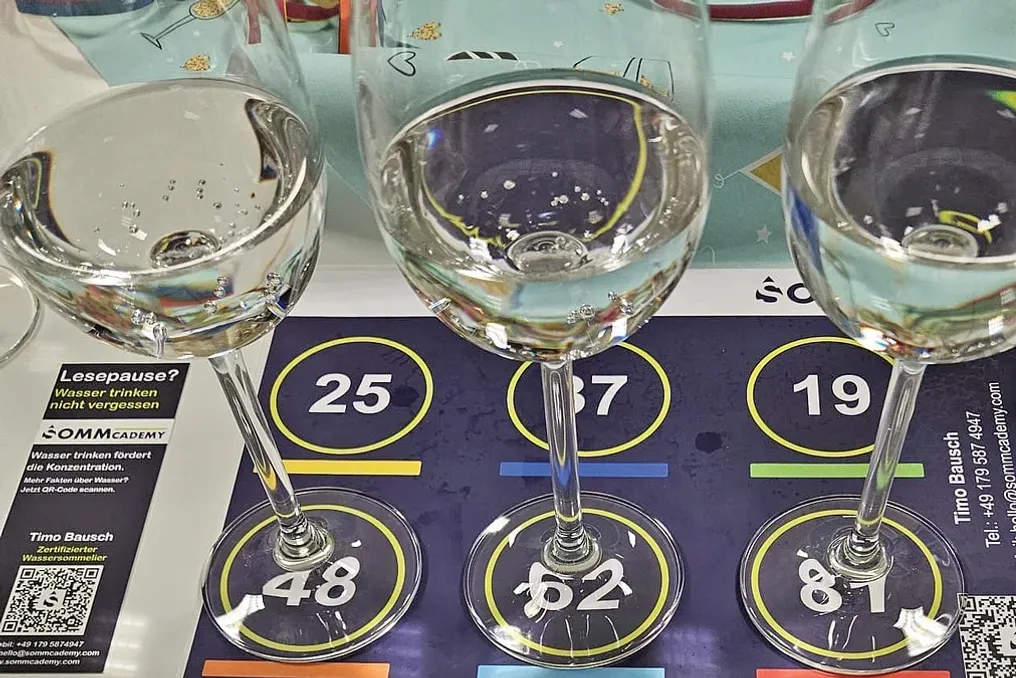
Water is traditionally considered tasteless, but in specialized tastings, it can possess a metallic or slightly bitter aftertaste depending on its level of mineralization. This phenomenon is becoming a growing trend in the United Arab Emirates (UAE). Timo Bausch, a water sommelier from Dubai who moved to the city last December, notes that water tastings and water bars are becoming increasingly sought after worldwide.
Since his arrival, Bausch has conducted about six tastings at corporate events, friends' gatherings, and in the fan zone during the 2026 FIFA World Cup in Dubai. Water sommeliers explain the heightened public interest stems from a desire to learn about various water characteristics: its origin, mineral content, taste, and mouthfeel, exhibiting curiosity usually reserved for coffee and other beverages.
Bausch emphasizes that in cities like Dubai, luxury lies in creating memorable experiences rather than merely displaying expensive items. During a conversation on Google Meet, he showcased bottles marked with the Emirates Quality Mark (EQM), which appear highly valuable. Bausch, who also sells natural mineral water online, reports that imported water costs between 9.50 and 40 dirhams on his online store, whereas high-end restaurants may charge 80 or 90 dirhams for it. The price varies significantly depending on the brand, rarity, and place of consumption.
Pat Eckert, a water sommelier from Germany, CEO and founder of Fine Liquids, a supplier and retailer of bottled mineral water, conducts virtual tastings for clients in the UAE. These clients include organizers of large corporate events, members of the royal family, and travelers who fell in love with a specific water while abroad but cannot find it at home. Eckert receives many inquiries from countries in the Gulf Cooperation Council (GCC). He believes the rise in tasting popularity is driven by two factors: people are better understanding what constitutes good water, and there is a conscious shift away from alcoholic drinks or sweet cocktails, making such tastings an excellent choice for events.
Tastings also serve as a great icebreaker. Bausch shares that people approach his water bar amazed that water can have a sour or bitter taste. He usually starts with low-mineral water because it is familiar to people; after the first sip, they feel almost nothing, but upon consuming the second water, they notice a significant difference. Bausch also experiments by pairing different foods with water to demonstrate how water affects flavor. Even mocktails and coffee can differ depending on the water used.
Alison Poerner, the first water sommelier in the GCC region and business owner, notes that this trend is developing 'very slowly' in the Middle East. She also organizes tastings for corporate events, pointing out that since water is beneficial, healthy, and engaging, many things can be done with it.
Eckert explains the process of a virtual tasting: after selecting a tasting type on the Fine Liquids website, clients receive a 'video guide.' The selected waters are delivered directly to them. Before the tasting, he provides recommendations: the water must be brought to room temperature at least 48 hours in advance, and participants should avoid spicy food for an hour and coffee for 10 minutes before starting. He advises choosing beautiful glasses to mark the occasion. Then, participants taste the water together during a video call, looking at each other.
The key to all tastings, according to Eckert, is to 'drink mindfully.' He monitors the pace of swallowing and encourages participants to slow down. He decides which water to start with, what stories to tell about its source, and what impact this water has on health. He urges people to pay attention to the sensation from the first sip, how the water moves in the mouth, and the aftertaste, helping to appreciate the complexity of textures.
Bausch supplies water from countries such as Italy, Norway, and Georgia in Dubai. Some clients seek very exclusive varieties not found in regular supermarkets.
Science and geography play a role in water production. The region from which the water comes is important: for example, water from a volcanic area in a European city will contain more minerals, giving it a more intense, salty, or sweet taste. If one moves towards Scandinavia, where there are fewer mountains and lower mineral content, the water is usually bitter. Bausch continues that rainwater seeps through layers of earth; the deeper and longer it passes, the more time it has to absorb minerals and become more flavorful. As Eckert notes, ultra-pure water is 'glacial water that never touched the earth and hasn't had time to accumulate minerals,' so after melting, it seems 'ultra-empty.' Different minerals have distinct tastes: for instance, water high in calcium can be strong and cause dry mouth, while magnesium-rich water might taste bitter.
However, precisely describing the taste of water is difficult because it is quite subjective. For example, some people find bicarbonate-rich water 'flat,' while others describe it as 'earthy' or 'like a breath in the forest.' Poerner plans her tastings based on the event. If food is served at an event, she chooses different water; for example, sparkling water like San Pellegrino pairs well with hot, spicy food because it slightly relieves the burn but simultaneously enhances the flavor. She also starts with low-mineral water, then moves to medium, high, and very high mineralization. Additionally, there is sparkling water, starting with a light fizz that 'whispers like an angel on the tongue,' progressing to a stronger carbonation similar to Perrier to enhance the experience.
Bausch himself consumes about four different types of water throughout the day: early in the morning, he drinks high-mineral or electrolyte water, and during the day, he prefers less mineralized water. After workouts, he again drinks high-mineral water, such as calcium and magnesium.
Danya Shafei, a resident of Dubai, utilized Bausch's tasting over a month ago. She had heard about the tastings but did not want to try them alone, so she booked an hour-long session when her friends came to her home. Initially, they couldn't understand how water could have different tastes, but once Bausch explained its history and composition, they understood. She noted that it was a 'stunning and amazing experience' because the water had density, was sweet, and the minerals could be felt.