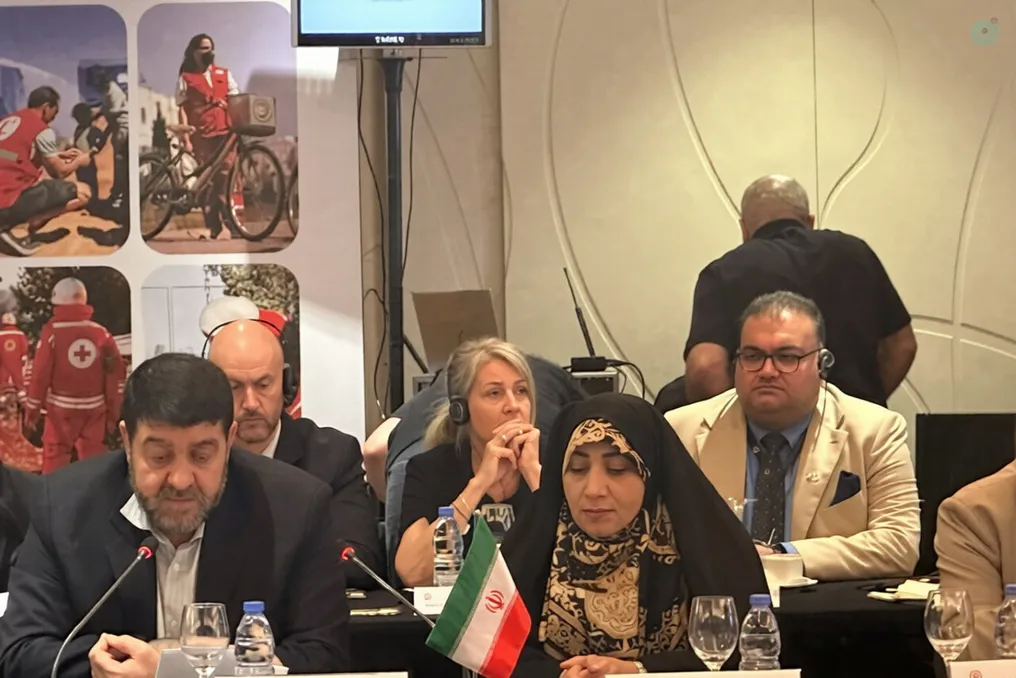
Iranian Red Crescent calls for strengthening regional cooperation among Red Cross and Red Crescent societies
Read more
Tehran Times
www.tehrantimes.com

Iranian Red Crescent calls for strengthening regional cooperation among Red Cross and Red Crescent societies

The Iranian Red Crescent Society (IRCS) has called for strengthening interregional interaction between Red Cross and Red Crescent societies. In particular, the importance of expanding joint training and exercises, experience exchange, and building common operational capabilities was emphasized.

The head of IRCS, Pirhossein Kolivan, stated that no national society should remain isolated during crises. These remarks were made while participating in the XII Regional Conference of Red Cross and Red Crescent Societies, held in Beirut, Lebanon, on September 24 and 25.

Summarizing IRCS's achievements over the past two years and analyzing lessons learned from recent crises, Kolivan highlighted the need to enhance regional preparedness. He also noted the importance of ensuring the safety of both humanitarian workers and civilian populations, removing obstacles to aid delivery, and carefully studying the consequences of using artificial intelligence and automated systems in armed conflicts.

Speaking about IRCS's changing approach, the official representative noted that the society has managed to transform the concept of 'preparedness' from an organizational concept into a real, intellectual, and actionable capacity on the ground. Over the past years, more than six million young volunteers have been trained, and about 120,000 search and rescue specialists have been organized into operational and rapid response teams.

Furthermore, IRCS has developed a comprehensive risk map, an atlas of hazard-prone areas, and an emergency response map. These tools have formed the basis for decision-making and guiding operations based on a more precise understanding of the needs, capacities, and risks of each territory.

Kolivan also commented on the country's reaction to recent crises, noting that regional problems are no longer isolated, short-term, or single-factor. He stressed that one crisis can simultaneously affect civilians, hospitals, pharmaceutical supply chains, critical infrastructure, mental health, as well as the financial and logistical capabilities of humanitarian organizations. Therefore, he insisted that preparation and response to humanitarian needs must begin before a crisis occurs, not just after it starts.

The official representative particularly highlighted the necessity of protecting civilian populations and humanitarian personnel amid the growing use of artificial intelligence, automated systems, and new technologies in military actions. He added that the application of these technologies should not lead to a reduction in human and legal responsibility, nor should it undermine the principles of distinction, proportionality, and precaution or the protection of civilians and humanitarian personnel.

In July, the Secretary General of the International Federation of Red Cross and Red Crescent Societies (IFRC), Jagan Chapagain, highly praised IRCS's efforts during the 40-day US-Israel war against Iran in a letter to Kolivan. Emphasizing the significance of immense operational, logistical, and humanitarian challenges, Chapagain stated that 'the Iranian Red Crescent Society demonstrated decisive and effective leadership, acting as the country's primary humanitarian player.'

The coordination of emergency medical services, round-the-clock assistance operations, psychosocial support, and community work, along with bold and highly professional search and rescue operations, reflect not only technical excellence but also deep trust within local communities. Such trust is the foundation of effective humanitarian action and underscores the unique auxiliary role of IRCS and its presence across the vast territory of Iran. IFRC reaffirms its full commitment to supporting IRCS in its current activities and in addressing evolving humanitarian needs.

Similar stories

Compulsory collection of alimony funds is carried out in Navoi region
Read more
uza.uz

Compulsory collection of alimony funds is carried out in Navoi region

The Investigative and Administrative Department of the Enforcement Authority of Navoi region conducts a number of practical measures related to documents concerning the fulfillment of alimony obligations for the past year of the current year.

Safe spaces for neurodivergent adults are being created in Dubai where they can socialize and express themselves
Read more
www.khaleejtimes.com

Safe spaces for neurodivergent adults are being created in Dubai where they can socialize and express themselves

At the end of August this year, the first meeting of The Spectrum Circle community, founded by Tavi, took place at a cafe in Jumeirah. The goal of this new group was to organize gatherings for neurodivergent individuals.

Tavi, who also runs the event and marketing agency True North Marketing, planned an evening filled with specially designed activities and reserved a space for about ten people. However, she would be satisfied even with just two attendees, as she herself is neurodivergent and is well aware of the various mental challenges that must be overcome when participating in such social situations.

Organizing the event involved several difficulties. When she first announced the group on Threads, some people mistakenly thought it was a community for single people, and she had to filter hundreds of messages. Furthermore, she approached at least four cafes, and their reactions ranged from extremely irritating to openly disrespectful. Tavi notes: 'The first few cafes wanted me to guarantee that everyone would order for 50 dirhams,' even though she did not want any such conditions. Other cafe managers did not understand what 'neurodivergent' meant, and those who did understood did not want to provide the space. 'As soon as I said the word 'spectrum,' I saw how their tone and attitude changed,' she adds.

Eight people gathered at the cafe. They chatted during icebreaker games where they shared one interesting fact about themselves unrelated to work, as Tavi aimed to avoid the 'standard script' of typical networking events. There were also other smaller games promoting one-on-one interaction. Tavi emphasized: 'I made it very clear that there was no pressure to participate. You can come to the event and sit quietly the whole time if you want.'

Tavi is one of the few who has launched such spaces for neurodivergent people in the UAE where they can relax, unwind, and socialize. These places function as judgment-free zones where they can 'take off the mask'—a process often described as not hiding one's neurodivergent traits or behavior to appear neurotypical—and interact with like-minded peers.

There is also Dice and Divergence, which positions itself as a 'relaxed board game evening for neurodivergent adults' and meets on Wednesdays. According to its website, 'the plan is for it to grow into a full-fledged small community.' Event details listed on Meetup and the group's website indicated that the first game was scheduled for September 23rd at Tile Board Game Café, and participants could choose red, amber, or green markers to signal readiness to socialize. (The host declined to give an interview for this article).

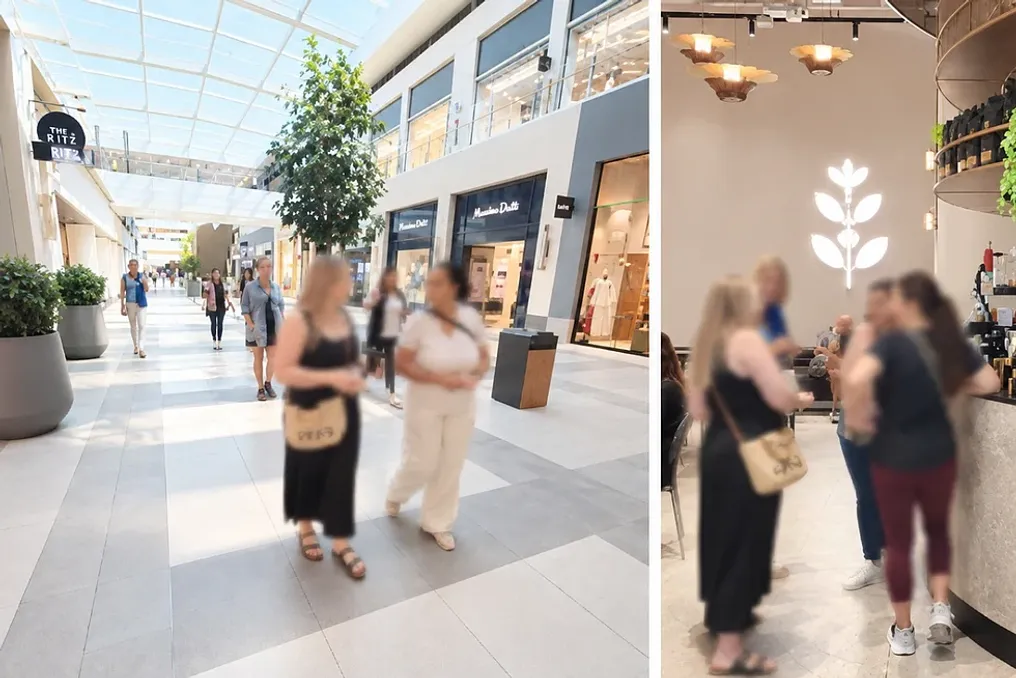
Sara Youssef launched Neuroaffirm Hub last November. Her idea is to hold about five different meetings per month through this community. Youssef held the first meeting of her community, titled 'Walk and Talk,' this month at Boon Speciality Coffee Roasters in Dubai Hills Mall. Speaking about it the next day, she explained that participants could have coffee and walk around the mall either alone or together. She chose this activity deliberately because walking side-by-side reduces the pressure of maintaining eye contact.

Eight people attended, mostly aged 30 and 40. One of them, according to Youssef, felt relief by allowing themselves to relax. There was no formal agenda, and people were free to follow what suited them best—for example, some started walking alone and then returned to chat with the others. Several people stayed after the walk to get to know each other better. 'It was supposed to last an hour, but we spent hours there,' she smiles.

Youssef herself is neurodivergent, as are her children. 'And in this journey of navigating our own home, school, and everywhere else, I felt quite lonely and isolated... so I decided to create this platform where people could gather, show up, without feeling judged, and have a safe space,' she explains.

Navid Saed started the ADHD Mastery: Support and Solutions project last year but took a long break before reviving it this year. The group meets at various cafes in Mall of the Emirates every Saturday afternoon. He reports: 'Some people who come have autism, giftedness, bipolar disorder, or borderline schizophrenia. And we have people from all over the world—Egypt, Sudan, India, Japan, Pakistan, Ukraine.'

These meetings serve as an opportunity for participants to socialize, exchange information about good doctors, survival tips in the workplace, and even share employment opportunities. Saed explains: 'We also discuss our difficulties in the corporate world with task completion and punctuality.' He adds that 'some members financially support themselves by starting their own businesses or becoming investors, as it was painfully impossible for them to survive in the corporate world,' and hopes to host future 'dopamine and adrenaline-filled events,' such as picnics, board games, bowling, and paddle tennis.

Popular