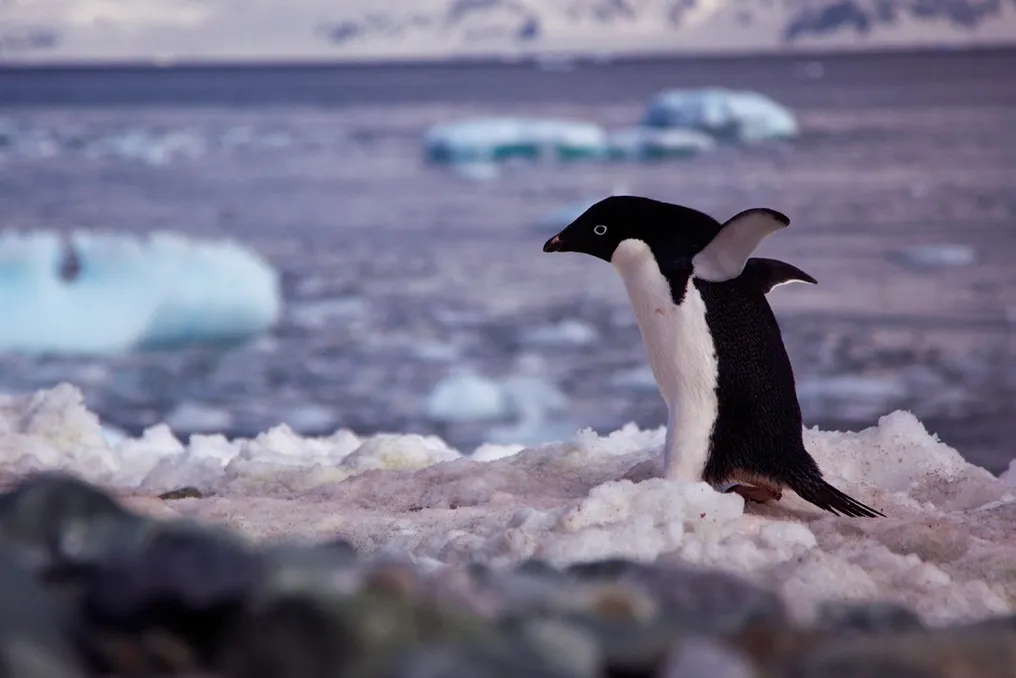
Adélie penguins, which reside on the coast of Antarctica and adjacent islands, have a habit of consuming small pink crustaceans known as krill. Due to the high consumption of this krill, the birds' excrement (guano) acquires an intense reddish-pink hue. This coloration is so noticeable and abundant that it can be observed even from space.
This chromatic characteristic is intrinsically linked to krill, and more specifically, to the diet of this crustacean. Krill exhibits this pink coloration because it feeds on phytoplankton, which are marine microalgae. Therefore, the pigment responsible for the pink color in the feces comes from carotenoids found in these algae.
Carotenoids are colored pigments produced by various sources, including plants, algae, certain fungi, and bacteria. They display variations of colors ranging from yellow to orange and red. These compounds are widely distributed, giving color to vegetables such as carrots, daisies, papayas, pumpkins, oranges, and tomatoes, in addition to coloring flamingos, salmon, and, of course, penguin droppings.
Although other animals can utilize carotenoids, modifying and integrating them into their bodies, they lack the ability to produce them. The feces themselves offer valuable information about Adélie penguins; for example, the intensity of the pink tone can signal the stage of the reproductive cycle the penguins are in.
During periods of higher energy demand, the penguins' hunting pattern undergoes significant changes. This tends to occur when the waters are warmer, facilitating access to krill during the chick-rearing phase. Furthermore, the feces serve as an indicator of trends related to climate change in the region. When there is a large amount of sea ice near the colony, penguins begin to rely more on fish intake.
This connection between sea ice availability and diet has serious implications for the species' survival. Chicks fed with fish tend to weigh more than those fed with krill, and greater weight increases the chances of surviving to adulthood. It is notable that in areas where the penguins' fish consumption has decreased, the population has shown a decline in recent decades. In the specific case of Adélie penguins, this impact has been recorded since 2010, as the sea ice around Antarctica is drastically decreasing, a trend projected to continue in the coming decades, making the monitoring of the penguins' reproductive calendar increasingly crucial.