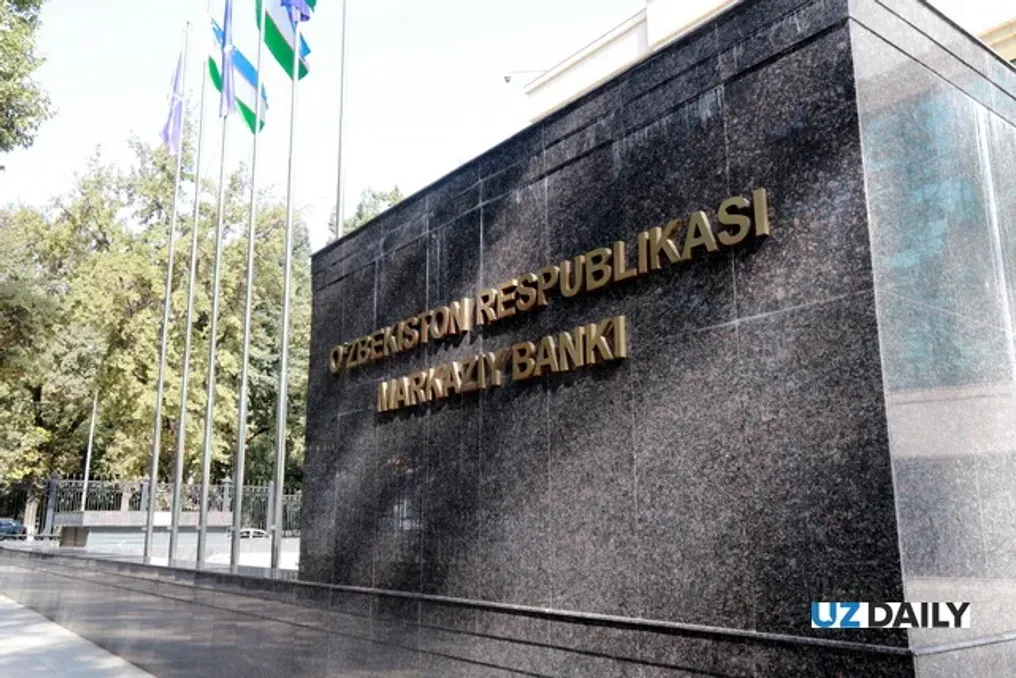
Bank deposits in Uzbekistan grew by 33.9% year-on-year
Read more
UzDaily
uzdaily.uz

Bank deposits in Uzbekistan grew by 33.9% year-on-year

According to data from the Central Bank of Uzbekistan, bank deposits in Uzbekistan reached 482.7 trillion soms as of August 1, 2026, representing a growth of 33.9% compared to the previous year. Over the same period, the portfolio of loans in the banking sector increased by 11.9%, totaling 644.6 trillion soms. This indicates that the growth in deposits almost three times outpaced the growth in loans.

During the year, the ratio of loans to deposits in the banking system decreased from 159.9% to 133.6%. In state-owned banks, this ratio fell from 211.5% to 170%, while in other banks, it decreased from 105.1% to 95%.

Short-term deposits with maturities of up to one year showed the fastest growth, increasing by 45.8% to reach 175.7 trillion soms. Demand deposits grew by 33%, amounting to 142 trillion soms, while long-term deposits with maturities over one year increased by 24% to 164.9 trillion soms. Consequently, the share of short-term deposits in the total deposit volume rose from 33.4% to 36.4%, and the share of long-term deposits decreased from 36.9% to 34.2%. Demand deposits accounted for 29.4%.

Corporate deposits amounted to 297.5 trillion soms, and individual deposits to 185.2 trillion soms. Deposits denominated in the national currency increased by 42.6% to 390 trillion soms, while foreign currency deposits grew by 6.6% to 92.7 trillion soms.

UzNatsBank, with 58.4 trillion soms, Kapitalbank with 48.9 trillion soms, and Agrobank with 43 trillion soms held the largest deposit bases.

The liquidity of the banking sector improved during the year. High-quality liquid assets increased by 52.8%, reaching 222.8 trillion soms, and their share of total assets rose from 17.8% to 22.7%. The liquidity coverage ratio increased from 206% to 265.4%, and the net stable funding ratio rose from 117% to 133.1%. The minimum required level for both ratios is 100%. Meanwhile, the immediate liquidity ratio decreased from 121.8% to 98.7%, with a minimum requirement of 25%.

The capital adequacy ratio of the banking sector increased from 17.5% to 18.4%, and Tier 1 capital adequacy increased from 14.6% to 15.4%. Regulatory capital grew from 140.3 trillion to 168.3 trillion soms.
Similar stories

Uzbekistan Banks Issued Mortgage Loans totaling 18.3 Trillion Uzbek Sums
Read more
uzdaily.uz

Uzbekistan Banks Issued Mortgage Loans totaling 18.3 Trillion Uzbek Sums

The Central Bank of Uzbekistan reported that commercial banks in Uzbekistan provided mortgage loans for housing purchases totaling 18.3 trillion Uzbek sums to nearly 59,200 citizens between January and August 2026. This figure exceeds the volume issued during the same period last year by 4.9 trillion Uzbek sums.

Average interest rates on the issued mortgage loans ranged from 16.9% to 21.6%, depending on the source of financing.

Distribution of Mortgage Loans by Market

Approximately 74% of all mortgage loans, amounting to 13.6 trillion Uzbek sums, were directed to the primary housing market, serving 43,757 borrowers. The secondary housing market received 26% of the loans, or 4.7 trillion Uzbek sums, covering 15,422 people.

Among borrowers, men accounted for 53%, and women for 47%. By age group, the largest share—64%, or 37,980 people—was comprised of citizens aged 31 to 50 years. The 18–30 age group provided 26% of borrowers (15,224 people), while 10% (5,975 borrowers) were over 51 years old.

Geography and Leaders of the Banking Sector

The largest volume of mortgage lending was registered in Tashkent, amounting to 5.592 trillion Uzbek sums. This is followed by the Andijan region with 1.591 trillion Uzbek sums and the Fergana region with 1.264 trillion Uzbek sums.

Among the banks leading in issuance volume, Halk Bank ranked first with 2.845 trillion Uzbek sums. Following them are Agrobank (2.771 trillion Uzbek sums), National Bank (2.212 trillion Uzbek sums), and Ipoteka-bank (2.167 trillion Uzbek sums).

It is also noted that over the past five years, the volume of issued mortgage loans has almost doubled: it grew from 9.8 trillion Uzbek sums in 2021 to 21.2 trillion Uzbek sums by the end of 2025.

Foreign currency purchase volume in Uzbekistan grew by 17.3% in the first eight months
Read more
podrobno.uz

Foreign currency purchase volume in Uzbekistan grew by 17.3% in the first eight months

According to data from the Central Bank of Uzbekistan, the volume of foreign currency acquisition in the country for the period from January to August increased by 17.3%, reaching $44.3 billion.

The majority of these purchases were made by business entities, accounting for $34.7 billion. Citizens of Uzbekistan acquired currencies totaling $9.6 billion during the specified eight months.

Simultaneously, there was an increase in currency supply from the population, which grew by 25.5% to reach $38.2 billion. In this context, the population transferred about $16.6 billion to banks, and companies contributed another $21.6 billion.

During January–August, the dollar exchange rate fluctuated between 11,779 and 12,320 soms, showing an overall increase of 1.5% by the end of this period.

It was previously announced that the Central Bank adjusted the methodology for determining the official currency exchange rate in Uzbekistan. Starting September 15, operations on both the currency exchange and the interbank market will be taken into account when calculating the rate.

Uzbekistan's total credit balance reached 644.6 trillion sums
Read more
uzdaily.uz

Uzbekistan's total credit balance reached 644.6 trillion sums

According to data on outstanding loans by category, the total outstanding loan balance issued to individuals and legal entities in Uzbekistan amounted to 644.6 trillion sums as of August 1, 2026. This figure showed an increase of 6.7% compared to the beginning of the current year.

In the segment of loans to individuals, the outstanding balance reached 239.8 trillion sums, which is an increase of 8.9% since the beginning of the year. This segment became the fastest-growing among the main categories of the credit portfolio.

Mortgage loans accounted for the largest share in the retail portfolio, with their outstanding balance increasing by 11% to reach 88.1 trillion sums. The balance of microloans grew by 4.7% to 51.1 trillion sums, and the balance of microcredits increased by 15.5% to 46.7 trillion sums. Auto loans grew by 2% to 40.5 trillion sums.

The only retail lending category that showed a decrease was educational loans, whose outstanding balance decreased by 1.3% to 6.8 trillion sums. Consumer loans increased by 3.3% to 508 billion sums. The most significant growth among all individual loan categories was recorded for other loans, including credit cards and overdrafts, whose balance grew by 33.5% to 5.9 trillion sums.

Regarding loans to legal entities, their outstanding balance as of August 1 was 404.8 trillion sums, which is 5.5% higher than at the beginning of the year. The main part of this segment is comprised of loans to legal entities that are not credit institutions, and their balance increased by 4.9% to 377.5 trillion sums.

Interbank loans showed the fastest growth among corporate credit categories, increasing by 58.2% to 1 trillion sums, although this category remains relatively small in absolute terms. Leasing and factoring balances grew by 27.5% to 4.9 trillion sums, and microcredits for legal entities increased by 22.1% to 17.9 trillion sums. Syndicated loans were the only category to record a significant reduction, with their outstanding balance decreasing by 26.1% to 3.5 trillion sums.

Popular