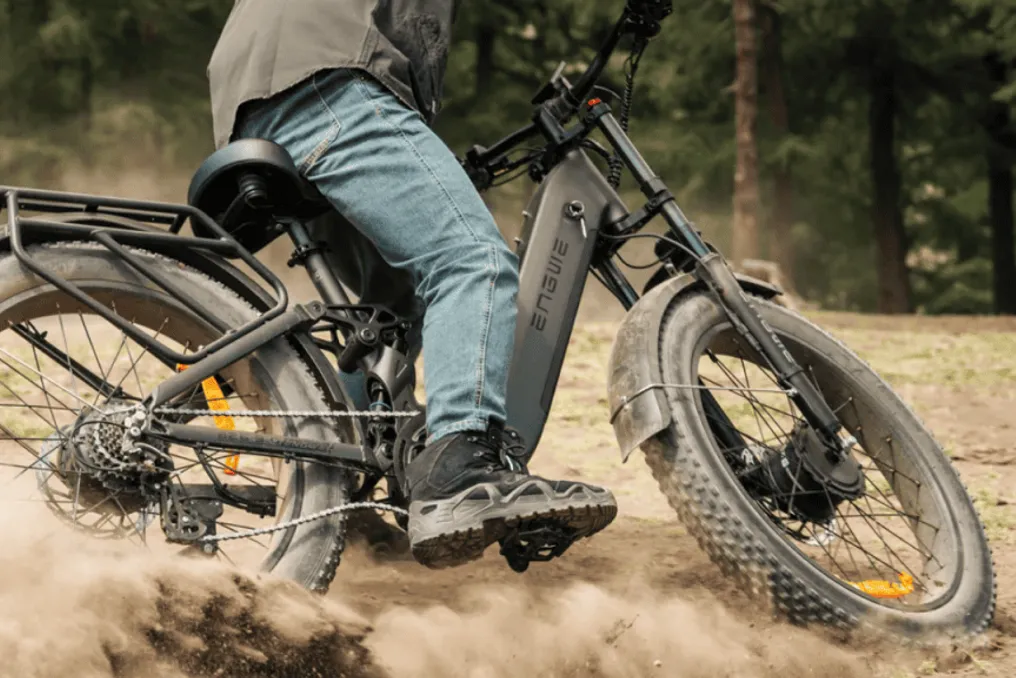
ENGWE launches E26 3.0, an electric bicycle with two motors, 2,000 W, and up to 161 km range
Read more
Olhar Digital
olhardigital.com.br

ENGWE launches E26 3.0, an electric bicycle with two motors, 2,000 W, and up to 161 km range

ENGWE has launched the E26 3.0, a new electric bicycle designed to combine high power and great versatility, moving away from more compact urban models. This model weighs approximately 39 kg and is equipped with two motors, in addition to reaching speeds of up to 50 km/h.

Each motor is positioned in the hub of one of the wheels, allowing the cyclist to choose to use only one or both simultaneously. This dual configuration influences both performance and battery consumption. Together, the motors can generate up to 2,000 W of power and 160 Nm of torque, as specified by ENGWE.

The maximum achievable speed is higher than that of many common electric bikes; the manufacturer indicates up to 50 km/h with pedal assistance and 45 km/h when using the accelerator. The two-motor system does not need to be constantly active, allowing only one to be turned on to conserve the other's battery.

Regarding energy, the E26 3.0 operates with 48 V and 20 Ah systems, totaling a capacity of 960 Wh. ENGWE calculates that using only one motor and the first level of electric assistance, the bicycle can travel up to 122 km. With both motors running under the same conditions, the range drops to about 74 km. At higher assistance levels, such as the fifth level, the estimate is up to 80 km with one motor and approximately 60 km with both.

Features and Equipment

The E26 3.0 features suspension on both wheels: the front offers a 120 mm travel, while the rear suspension uses an air shock absorber with 80 mm of travel. Another highlight is the 26 x 4 inch tires, which are wider than those on typical urban bikes and have puncture protection, making it suitable for 'off-road' terrain.

The set is also equipped with hydraulic brakes, front LED lighting, a small color screen displaying the speed, and a rear rack. Although it supports a load of up to 181 kg, the total weight of the bicycle is considerable, reaching about 38.96 kg, which may be a relevant factor for manual transport.

On the official ENGWE website, the E26 3.0 is available on promotion for US$1,499 (equivalent to about R$7,786), while the reference price established by the manufacturer is US$2,399 (R$12,463). The original article on this topic was initially published by Olhar Digital.
Similar stories

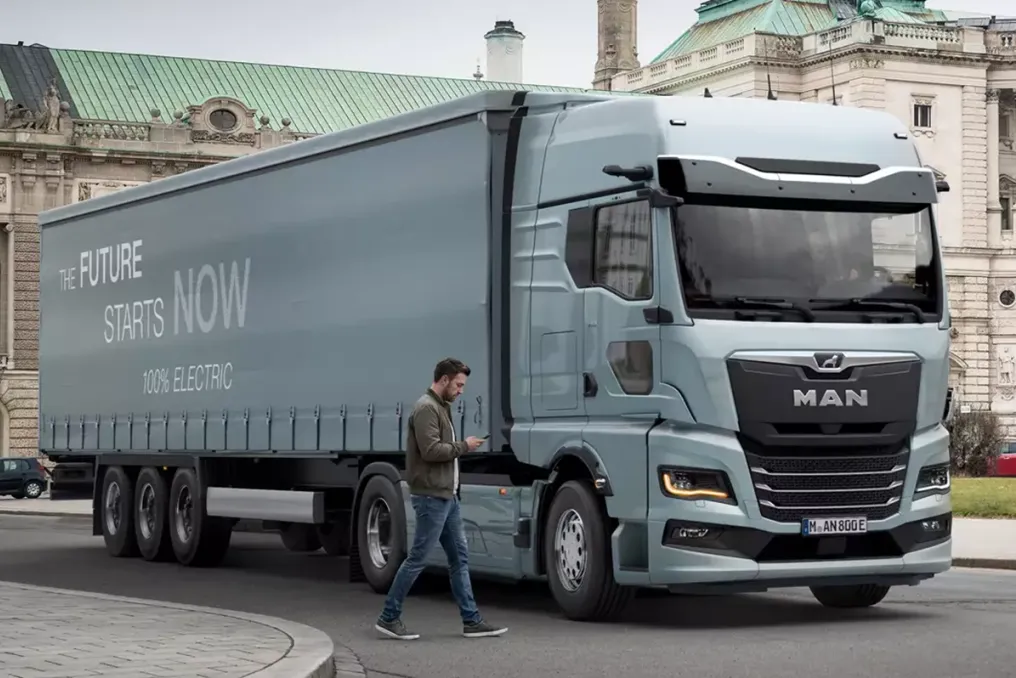
MAN launches electric truck eTGX with autonomy of up to 720 km for long routes
Read more
autopapo.com.br

MAN launches electric truck eTGX with autonomy of up to 720 km for long routes

MAN has updated its heavy electric truck, the eTGX, designed for long-distance operations, incorporating higher capacity batteries, a more efficient regenerative braking system, and aerodynamic modifications.

In its most robust version, this model can travel up to 720 km with a load, positioning it among the longest-range electric trucks in Europe. The public launch of this vehicle will take place at the IAA Transportation fair in Hanover.

The main innovation lies in the battery modules. They have been enhanced, moving from 89 kWh gross and 80 kWh net to 92 kWh gross and 88 kWh net, using nickel-manganese-cobalt cells manufactured by the automaker itself in Nuremberg.

The previous generation was limited to six modules, resulting in a set of 534 kWh gross and 480 kWh usable. With the new configuration, the truck can receive a seventh package when configured as a 6x2 tractor unit, reaching 644 kWh gross and 616 kWh net. It is with this last configuration that MAN projects the 720 km, although the company itself indicates that over 600 km is a more realistic figure for daily use.

The additional axle installed in this version supports greater weight and load per axle. As a point of comparison, the Volvo FH Aero Electric 6x2 has an autonomy rating of up to 700 km.

In the 4x2 configuration, considered the most popular, the limit remains at six batteries, totaling 552 kWh gross and 528 kWh usable, with a maximum autonomy of 660 km and an expectation to exceed 500 km in real conditions.

The front of the vehicle has been extended by 12 cm, a change made possible by European regulations allowing extensions on zero-emission trucks. According to MAN, this new design contributes to improving aerodynamics, increasing safety, and optimizing driver visibility.

Furthermore, the efficiency of regenerative braking has been increased by up to 20%. The eTGX supports megawatt charging (MCS) of up to 750 kW, while the conventional CCS connector limit is 375 kW.

These figures have no parallel in the Brazilian market, as the eTGX is not sold in the country. In Brazil, the Volkswagen e-Delivery, the first electric truck produced in series nationally at the Resende (RJ) factory, offers an autonomy of up to 250 km with six battery modules.

The 720 km achievable by MAN is equivalent to the trip from São Paulo to Florianópolis without needing a recharge.

At the same stand, MAN also presented two electric variants of the TGE van, a relative of the Volkswagen Crafter, developed in collaboration with the Swiss company Flux. These vans are intended for applications where electric vehicles often face difficulties, such as emergency services, fire departments, and municipal operations.

These vehicles feature a 119 kWh battery, an autonomy of up to 480 km, and a DC charging capacity of up to 140 kW, which allows the battery to charge from 10% to 80% in less than half an hour.

The two configurations have gross weights of 4 and 5.5 tons, with the larger one capable of carrying up to 2,500 kg and towing up to 3,500 kg. MAN is working with Volkswagen Commercial Vehicles on the successor to the eTGE, which was discontinued in 2024, and this is expected to be launched alongside the next generation of the e-Crafter, scheduled for around 2028.

Popular