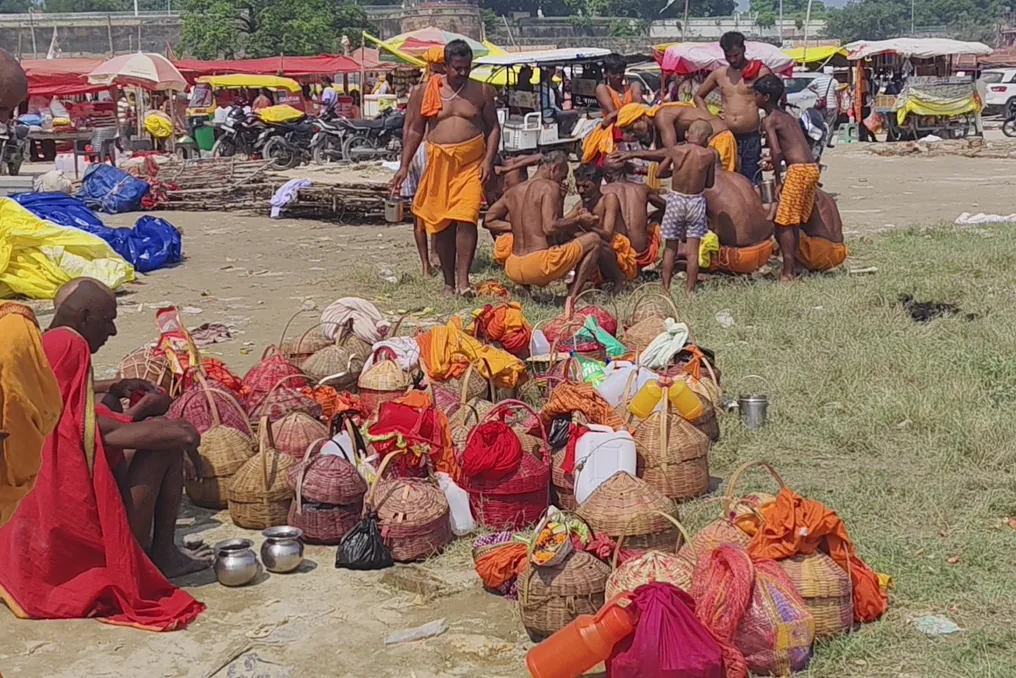
The Pitr Paksha period began today, September 26th. Consequently, pilgrims have started arriving in Prayagraj. People perform Tarpan, Sharadh, and Pindana at the confluence of the Ganges, Yamuna, and the invisible Saraswati to attain peace for the souls of their ancestors.
However, for those who cannot visit Prayagraj for any reason, there is now an option to conduct Pindana and Tarpan through online means. According to the Tirthapurohits, many people from different countries and regions wish to come to Prayagraj during Pitr Paksha, but this is impossible due to distance, time, or other reasons.
For such individuals, the Purohits have organized a system for conducting religious rituals remotely. This allows pilgrims to participate in the worship process while being far away and to perform Tarpan or Pindana in memory of their ancestors.
In Hinduism, Prayagraj is known as Tirathaj—the king of holy places. The confluence of the Ganges, Yamuna, and the invisible Saraswati is the main center of religious faith. The tradition of performing Pindana and Tarpan at this confluence during Pitr Paksha has existed for a long time.
According to religious beliefs, during Pitr Paksha, people remember their ancestors and perform Sharadh rites according to the date of their death. Through Pindana and Tarpan, respect is shown to ancestors, and peace is wished for their souls.
According to the Tirthapurohits, within the online system, pilgrims can join the ritual via video call or other digital channels. The Purohit performs the religious rituals at the confluence or at the place of worship, while the pilgrim participates in the worship from their location.
In some cases, pilgrims are provided with information about the necessary materials for worship in advance. Then, at the appointed time, Tarpan and other religious procedures are conducted in the presence of the Purohit.
Nevertheless, religious views on online Pindana and Tarpan are not uniform across all traditions. Therefore, pilgrims usually choose this system by following their family traditions and the advice of the relevant Tirthapurohit.
The Tirthapurohits of Prayagraj note that the online format has made life easier for those who cannot reach Prayagraj during Pitr Paksha due to work, business, living abroad, or other circumstances. Such pilgrims try to remain connected to their family's religious traditions despite the distance.
With this system, the pilgrim does not travel to Prayagraj themselves, but the Purohit is present at the confluence area to conduct the religious ceremonies. Thus, through digital means, pilgrims and Tirthapurohits establish a connection with each other.
During Pitr Paksha, a large number of pilgrims arrive in the Prayagraj confluence area. People from various states of the country, including Andhra Pradesh, come here to perform Pindana and Tarpan for their ancestors.
For many families, this is not just a religious ritual but a tradition of remembering previous generations and expressing respect for them. Some families have been performing ancestral rites at the confluence through their Tirthapurohit for many generations.
This religious belief in the Prayagraj confluence is now reaching people through digital means. On one hand, pilgrims perform Pindana and Tarpan in person by coming to the confluence, and on the other hand, people living far away connect to this religious process through online means.